

 Online Reporter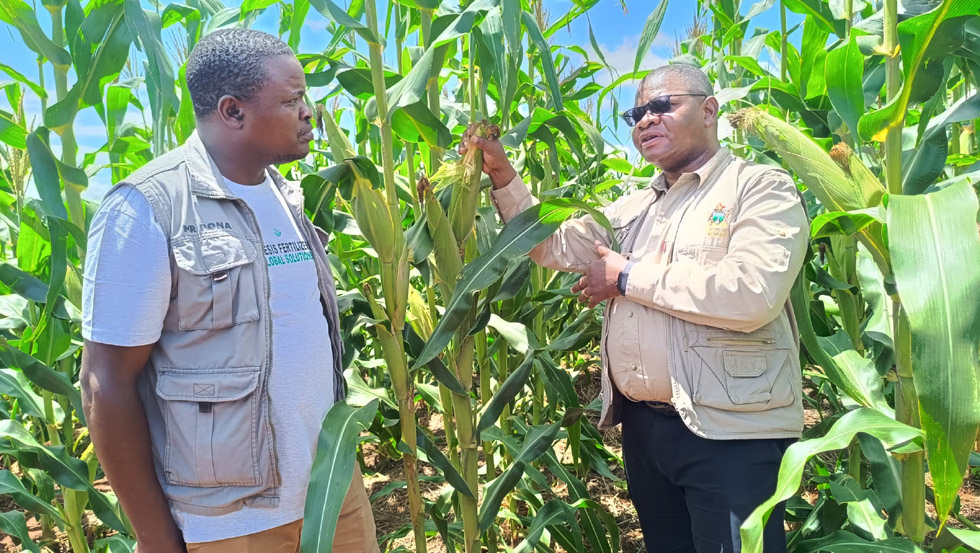
Theseus Shambare-Herald Correspondent
THE 2025/26 summer cropping season, now at its halfway mark, is showing strong signs of success, with crops and livestock countrywide reported to be in good to excellent condition, buoyed by favourable rains, timely Government support and the widespread adoption of climate-smart farming techniques.
Early forecasts by national and regional meteorological bodies had projected normal to above-normal rainfall, a prediction that has largely materialised.
The steady rains have enabled early planting, strong crop establishment and improved pasture regeneration across most provinces.
However, authorities have warned of possible nutrient leaching in areas that received excessive rainfall and are urging farmers to apply appropriate fertiliser management and drainage measures to safeguard yields.
Lands, Agriculture, Fisheries, Water and Rural Development Permanent Secretary Professor Obert Jiri said the overall outlook for crops and livestock was highly encouraging.
“We are receiving good rains that are improving our crops,” he said. “Indeed, we are heading for a bumper season.
“After our collective preparations, nature has also come to our side, as we are witnessing in the fields. Moreover, livestock body condition is improving across the country as animals continue to have access to lush rain-fed grazing, but monocalcium supplementation should be practised.”
Chief director in the Directorate of Veterinary Services (DVS), Dr Pious Makaya, said the national herd was in good condition.
“Livestock is healthy countrywide and farmers are encouraged to adopt preventative methods such as regular dipping, vaccination and disease surveillance to preserve the national herd,” Dr Makaya said.
Reports from across the country indicate that favourable rainfall has supported strong crop performance and pasture growth, with most crops now at early to late vegetative stages.
Extension officers are continuing to guide farmers on crop management, pest control and conservation agriculture.
In Midlands Province, crops are flourishing following early land preparation and timely access to inputs.
Provincial Agriculture and Rural Development Advisory Service (ARDAS) director Ms Busiso Mavankeni said maize was performing well across most districts.
“The crops are looking good, especially maize, with farmers taking advantage of early rains. Those on irrigation are also doing well,” she said.
She urged farmers who are yet to plant sorghum and sunflower to do so promptly and to maintain proper drainage to prevent waterlogging.
Mashonaland Central Province is also positioning itself for sustained agricultural growth following a historic surge in tobacco production alongside strong performance in food crops.
Acting provincial ARDAS director Mr Misheck Chitokomere said the province exceeded its tobacco planting target by 34 percent, with a record 51 169 hectares planted this season.
“With these expanded hectares, sustainability becomes central to our planning. We are strengthening collaboration with the Tobacco Industry and Marketing Board and forestry stakeholders to promote efficient curing technologies and woodlot establishment to protect our forests,” Mr Chitokomere said.
He said favourable rainfall, averaging 260 millimetres in November, boosted crop establishment, enabling the province to surpass its maize planting target at 101 percent, while traditional grains such as sorghum, pearl and finger millet continued to show strong resilience.
“We are now shifting focus to crop management, intensifying farmer training on timely weeding, pest control and post-harvest handling to minimise losses and maximise returns,” he said, adding that preparations were already underway for the 2026 winter cropping season.
At national level, the tobacco sector has recorded a sharp expansion in planted area, reflecting renewed confidence among growers and improved sector stability.
Industry data shows that farmers planted more than 162 000 hectares of tobacco this season, a 42 percent increase from last year’s approximately 114 000 hectares, marking one of the strongest year-on-year expansions in recent seasons.
Tobacco Industry and Marketing Board board chairperson Mr Patrick Devenish said the surge demonstrated growers’ willingness to scale up production following policy support measures.
“The increase in planted hectarage reflects growing confidence among farmers and a more stable operating environment in the tobacco sector. If we maintain good agronomic practices and the weather remains favourable, this expansion has the potential to translate into higher output and improved export earnings,” he said.
Tobacco remains one of Zimbabwe’s key foreign currency earners, supporting hundreds of thousands of households directly and indirectly through farming, contract schemes and downstream activities.
The marketing season is expected to open later in the year.
In Matabeleland North, Government has intensified pest-control efforts after infestations affected early-stage crops.
Acting provincial ARDAS director Mr Mkhunjulelwa Ndlovu said pesticides had been dispatched and extension officers deployed.
“We have moved in swiftly to support farmers in Tsholotsho, Binga and Hwange to control the pests and protect their crops,” he said.
Commenting on the broader season, Zimbabwe Commercial Farmers Union president Mr Shadreck Makombe said conditions were largely favourable despite isolated challenges.
“Crops are generally in good condition, although in some areas maize is showing signs of leaching due to persistent rains.
“Farmers should use split fertiliser application and ensure proper drainage,” he said.
Tobacco Farmers union Trust president Mr Edward Dune said the season had also started on a positive note for tobacco growers.
“Some farmers are already at the height of harvesting irrigated tobacco. While persistent rains are affecting weed management, overall crop conditions are encouraging,” Mr Dune said.



