

 Online Reporter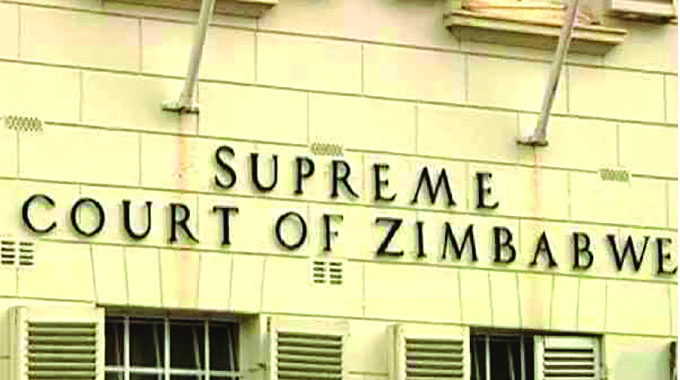
Yeukai Karengezeka-Chisepo
Court Correspondent
THE Supreme Court has overturned a US$500 000 default judgment previously granted by the High Court against Harare businessman Luka Ignatius Fabris in a case filed by fellow businessman Tendai Mashamhanda.
The Supreme Court, sitting on March 19, ruled in Fabris’s favour, setting aside the earlier judgment and allowing the case to proceed under normal court procedures.
The appeal was heard by a three-judge bench comprising Justices Tendai Uchena, Nicholas Mathonsi, and Alphas Chitakunye, who collectively ruled that the High Court had erred in granting the default judgment.
“The application for rescission of the default judgment is granted. The default judgment granted in HCH 7983/23 on 23 May 2024 is rescinded. The case under HCH 7983/23 shall proceed in terms of the rules. The respondent shall pay the costs of suit,” read the judgment in part.
Fabris’s legal troubles date back to December 2021, when he borrowed US$500 000 from Mashamhanda under an agreement to repay the loan by February 2022 at a 1 percent monthly interest rate. However, after defaulting on the repayment terms, Fabris became embroiled in a legal dispute.
Mashamhanda pursued legal action, leading to a High Court ruling in May 2024 that granted a default judgment against Fabris after he failed to respond to the lawsuit.
The court’s decision came amid allegations of negligence on the part of Fabris’s then-lawyer, Mr Alex Mambosasa, who reportedly failed to file a plea on time, claiming he had been in South Africa negotiating an out-of-court settlement.
Justice Jacob Manzunzu, who presided over the initial case, dismissed Fabris’s application to overturn the default judgment, arguing that Fabris could not entirely shift the blame onto his lawyer.
Justice Manzunzu emphasised that courts should not show leniency to litigants who fail to comply with procedural rules due to their legal representatives’ negligence.
Fabris, however, maintained that the circumstances surrounding his failure to respond to the lawsuit were not adequately considered and took his fight to the Supreme Court.
Represented by Advocate Tawanda Zhuwarara, Fabris argued that the High Court’s decision was unduly harsh and failed to account for his valid defence and the broader context of his case.
After reviewing all submissions, the Supreme Court found merit in Fabris’s arguments and ruled that the default judgment was unjustified.



 Bongani Ndlovu