admin
admin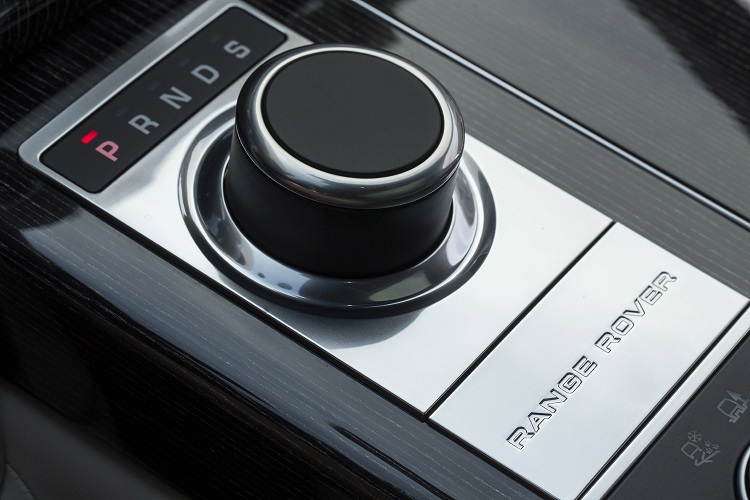

Lovert Mafukure
BUYING a car can be a cause of a serious crisis for most people because what you settle for will decide whether you buy yourself a bundle of joy or a bag of problems. Most of us if not all are keenly concerned with long term reliability before buying, so on your next buy, are you looking at a manual transmission, automatic transmission or CVT transmission? Which one will prove more reliable in the long term? Your transmission and engine are the heart and soul of your car. Without them a car is as good as a dead body.
The Manual Transmission
All I ever knew growing up was a manual transmission but now times are changing, there are less and less cars that you can import with a manual transmission, at least not from Japan. A manual transmission has advantages that may be worthwhile to any car owner. It can award the owner hundreds of thousands of trouble free mileage. As much as I can give you a million reasons why we all should have a manual transmission, I will keep it short. In a nutshell, a manual transmission equals less trouble.
I’m sure most of the petrol-heads or car owners in general out there have had a battery problem at one time, when the car just won’t start. It may have been a cold winter morning or just a weak battery that has seen better years. Should you have a battery problem with a manual transmission you can just give it a light push, slide it into second gear, let go of the clutch and voila . . . a rolling start. It’s like free insurance or simple roadside assistance, no stress, no drama. You may be far out in the bush with no help whatsoever. I speak from experience. At one point I had to drive to a farm to jump-start a friend whose car battery had died and no one could help jump-start it — you see with all the man and donkey power out there no one could help him . . . because he had an automatic. It gets me wondering why there’s so much unnecessary display of excitement over these automatics . . . like I always say . . . more trouble they’re worth.
The one major reason I will always choose a manual transmission over an automatic one is simply the longer lifespan. A manual transmission lasts longer than an automatic and most of the time if you drive well all you will ever need to change is the clutch kit. Clutch kits however, last longer depending on the different driving styles but as long as you don’t “ride” the clutch you will be alright. Another plus is that manual transmissions will show signs of wear when they are about to pack up unlike their automatic counterparts. An automatic transmission can start slipping and take you home if you are lucky or like some Mazda transmissions, without warning it will just go out when you are miles away from home, it’s like a power-cut in Zimbabwe. While they are also relatively more expensive, according to some forums automatic transmissions last perhaps around 200 000km depending on the brand. A lot of people with ex-Japanese cars can testify to that. All manual gearboxes are inexpensive to fix but an automatic will mean a costly replacement because we do not have skilled expertise in that area.
The Automatic Transmission
Automatics are a breeze to drive. They are so easy and convenient and one doesn’t really have to put any effort to drive an automatic. Automatics also accelerate faster than manuals but not faster than CVTs and that’s just about the summary of the main benefits of an automatic. Automatic transmissions are more trouble than they are worth . . . pardon me but I will keep saying it. They come in handy for those of us less perfectly able to manoeuvre in a manual transmission car. Some people need them as they may have physical hindrances that won’t allow them to drive manual cars, and others, well, it’s pure laziness or maybe they just can’t get the hang of it. Automatics however, as I mentioned earlier, cost more to buy and to replace when they fail. They do not last that long either. Our situation in Zimbabwe is a bit different now with the importation of Grey imports. It’s now the other way round, if you do find a car with a manual transmission, its more expensive than an automatic . . . perhaps laws of demand and supply come into play.
Not to downplay all automatic transmissions. There are cars that have proven to be worth every dime. Toyotas have a superb record for reliability and durability, some of these cars have been abused and seen all kinds of torture from the bad roads to pure African negligence and you will still find them battered but still running. That is less than I can ever say about other brands from Japan. When buying a car, those are some of the things you have to know and compare. How often will it breakdown? How much will it cost to repair, or to replace? It can be cheap to buy but costly in the long run or pricey to buy but reliable in the long run . . . it’s a matter of choice.
As a Japanese parts expert I have more people looking for automatic gearboxes than anything else, think about the reasons why. That should just paint a clear cut picture of why one would rather not bother getting an automatic transmission.
Automatics transmissions also mean that drivers can be engaged in other activities apart from driving like calling, texting, fiddling with media players et cetera. At the end of the day a driver’s attention is on other things and not driving. That’s not really possible with a manual transmission because you have to do all the work yourself i.e changing gears at the right time, you don’t have time for other things, you are always engaged. Automatics are great however, if you can afford them, its good luxury for the pennies you spend. For petrol-heads however, it’s manual, no automatic, no traction control, no funny electronic nannies or self-shifting gearboxes. That’s what you call driving
Lastly, let’s look at the Continuously Variable Transmission — CVT.
A CVT transmission is basically a transmission that changes without steps eliminating the need for gear changes. CVTs have been made to improve engine fuel efficiency. Quite a number of cars from Japan now come equipped with CVTs especially Nissans. A few examples include the famous Honda Fit, Nissan Tiidas, later model Nissan Sylphys, Nissan Libertys, Nissan Teanas and the like. Nissan was the first to adopt this technology and you find many of them with CVT transmissions.
CVT transmissions seem to fail prematurely and others have however, given their owners a good run for their money. I will offer expensive advice to all CVT owners for free hoping it will save them those costly gearbox replacements. A lot of people do not know about the cars they import. Most of them trust their mechanics who half the time are as blissfully ignorant as the owners. Technological changes have seen the design and manufacture of cars being changed as well. This technology is coming through improper channels mainly though the grey imports. Most of our mechanics are not trained to fix or maintain most of these cars. One important aspect of note is that CVTs are not automatics and therefore should not be treated as such.
They handle differently and require different service intervals and definitely use different transmission fluid from automatics.
CVT transmissions are rather sensitive and require more frequent change of transmission fluid than automatics. The first mistake people make is to put ATF (Automatic Transmission Fluid) fluid in a CVT transmission. This completely ruins the transmission in a very short while simply because it’s not an automatic transmission. The way automatics function and the way CVTs function is totally different. Automatics use a system of gears to match the engine speed and road speed while CVTs use a two pulley system driven by a steel belt, CVTs do not have gears but only a set of infinite ratios from low to high depending on engine speed. As much as it operates automatically it is not an automatic transmission and totally has a different set of rules. ATF fluid will not be able to provide enough lubrication for the steel belt and pulleys and eventually the transmission will start slipping and wearing out . . . at that point you will know it’s time for that costly replacement. Following simple maintenance schedules on a CVT will ensure years of trouble free use of these vehicles.
A lot of cars with CVTs seem to trouble their owners. Honda Fits have become so popular. Unlike manual transmissions that don’t require any regular maintenance or regular change of gear oil, CVTs require fluid change every 20 000 to 40 000km depending on the driving extremes the car is exposed to. Don’t wait to hear the whining in the gearbox to start taking action, a stitch in time saves nine.
CVTs allow for a simple operation without any change of gears, the magic behind it comes when it starts accelerating, it keeps a steady rev point while accelerating like an automatic car that’s not changing gears but that magic has a price. CVTs are not so far as reliable as they should be, well at least not for Africa. CVTs are designed for low load operation meaning that overloading a CVT driven vehicle can prove disastrous in the end. Naturally as Africans sometimes we have to carry dozens of relatives to the home area carry a whole load of groceries and tow a trailer in a Nissan Liberty. That overloading is what’s bad for a CVT especially after adding ATF to it. These cars are good, awesome and comfy. They have good technology but it takes knowing how to handle and maintain that technology to keep it working as it should.
Traditionally most cars on our part of the world have been manual transmissions because they are cheaper and more reliable than automatics. From the start automatics have always been problematic, they are less fuel efficient and they sometimes mysteriously stop working and cannot be fixed and will cost an arm and a leg to replace. In the first world people mainly want automatics because they are easier to drive through the traffic jams that are probably a lot more worse than what we have here. Manuals are more popular with racing enthusiasts and drag kings in the developed world but racing or no racing, manual is probably what we all need . . .
Lovert Mafukure is an Japanese Imports consultant. For queries comments or questions regarding all Japanese imports. You can contact him on WhatsApp +263772339938 or email [email protected]



 Online Reporter