Online Reporter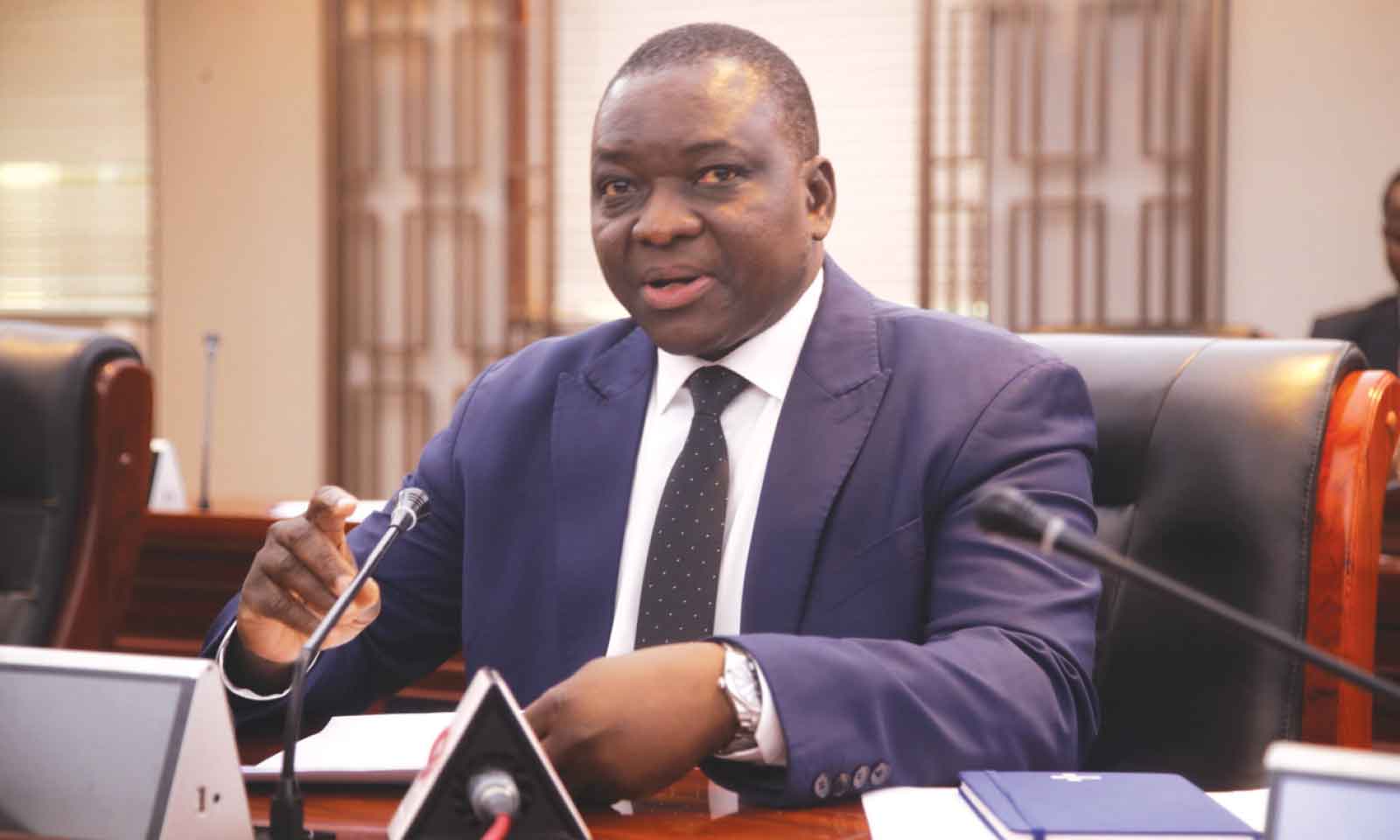
We publish here the fifth post-Cabinet media briefing presented by Information, Publicity and Broadcasting Services Minister, Dr Zhemu Soda, in Harare yesterday.
Cabinet considered and approved the 2026 Winter Production Plan, which was presented by the Minister of Lands, Agriculture, Fisheries, Water and Rural Development, Honourable Dr Anxious Jongwe Masuka.
The 2026 Winter Production Plan is a key part of the Agriculture Food Systems and Rural Transformation Strategy 2 (AFSRTS 2), and serves as the sectoral implementation framework within the broader context of the National Development Strategy 2.
The Plan aims to support national development by focusing on wheat, Irish potatoes and barley production. Building on the successes of the two previous seasons and record wheat production in 2025, the Plan promotes rural industrialisation through value addition across the entire agricultural value chain.
The Plan aligns with Agriculture Food Systems and Rural Transformation Strategy 2 pillars that include sustainable production, climate resilience, rural industrialisation, market development and infrastructure enhancement.
Accordingly, the available area for winter irrigation is estimated at 256 958 hectares, with 140 500 hectares designated for the production of wheat, Irish potatoes and barley. Specifically, wheat will be cultivated on 125 000 hectares, barley on 6 500 hectares, and Irish potatoes on 9 000 hectares.
The Wheat Plan aims to produce 662 500 tonnes, surpassing the national annual requirement of 615 000 tonnes. Furthermore, barley production is projected to rise to 45 500 tonnes, while Irish potatoes production is projected to reach 243 850 tonnes.
To ensure the successful implementation of the Plan, Government will closely monitor 21 critical enablers, including essential resources such as power, water, seed, fertiliser and fuel.
Financial support mechanisms encompassing farmer payments, financing and insurance; operational efficiency factors like mechanisation, coordination and contract farming; risk management strategies addressing migratory pests, land issues, security and veld fire management; capacity building, policy and regulatory frameworks, soil management, marketing and monitoring and evaluation will be tracked. A comprehensive Whole-of-Government and sector approach will be employed to achieve the set targets.
2.0 2026 RAPID RESULTS INITIATIVES (100-DAY CYCLE PROJECTS) COMPENDIUM OF PRIORITY PROGRAMMES AND PROJECTS
Cabinet considered and approved the Compendium for the 100-Day Cycle Projects for 2026, which was presented by the Minister of State for National Security in the President’s Office, Honourable Lovemore Matuke.
The 100-Day Cycles are scheduled to run from February 9th to December 15th, 2026, and encompass a total of 603 projects across all Ministries, Departments and Agencies (MDAs). In identifying projects, MDAs considered underserved communities, including Binga, Kanyemba, Chikombedzi, Tsholotsho, among others, for the implementation of priority projects. The proposed priority projects are aligned with the guiding principles of being citizen-centric, rapidly implementable, high-impact and low-risk. The projects are also strategically aligned with the objectives outlined in the National Development Strategy 2. Furthermore, projects under the Mutapa Investment Fund have been incorporated under the Priority Projects within the 100-Day Cycles.
Out of the total of 603 projects, 206 are scheduled for implementation during the first 100-day cycle, followed by 203 projects in the second 100-day cycle, and 174 projects in the third 100-day cycle. Of the first 100-day cycle of 2026, 152 projects are ongoing, with an additional 74 being initiated as new. In the second cycle, 134 projects are envisaged to be ongoing, while 69 will be launched as new. Similarly, in the third cycle, 116 projects will be ongoing, with 58 being taken on board as new.
The nation is informed that the projects were selected based on their potential to contribute significantly to the aspirations of Vision 2030, with a primary focus on improving the livelihoods of citizens across all communities. The projects are categorised according to the ten (10) thematic areas outlined in the National Development Strategy 2.
In alignment with Government’s commitment to deliver projects that focus on growing investments in various infrastructure sectors such as transportation, water and sanitation, the Infrastructure and Housing Development Pillar of the National Development Strategy 2 has the highest number of initiatives, totalling one hundred and fifty-nine (159) projects. Seventy-two (72) projects are included under the Science, Technology, Innovation and Human Capital Development thematic area as they are essential drivers of economic growth, productivity and competitiveness. Furthermore, seventy-one (71) projects are being implemented under the Inclusive Economic Growth and Structural Transformation thematic area.
3.0 ZIMBABWE NATIONAL INDUSTRIAL DEVELOPMENT POLICY 2: 2026–2030
Cabinet received and approved the Zimbabwe National Industrial Development Policy 2: 2026–2030, which was presented by the Minister of Finance, Economic Development and Investment Promotion as the Chairman of the Cabinet Committee on National Development Planning.
Government has developed the Zimbabwe National Industrial Development Policy 2 (ZNIDP 2) 2026–2030 which will guide Zimbabwe’s industrialisation agenda for the next five years, in tandem with the National Development Strategy 2 (NDS 2) (2026–2030). The Policy builds upon the foundations and progress achieved under the Zimbabwe National Industrial Development Policy 1 (ZNIDP 2019–2023) and the Zimbabwe Industrial Reconstruction and Growth Plan (ZIRGP 2024–2025).
The Policy aims to promote sustainable and diversified industrial growth, enhance productivity, and drive structural transformation and competitiveness by accelerating investment in Zimbabwe’s industrial sector. Consistent with the positive economic trajectory, the ZNIDP 2 seeks to achieve the following specific objectives: to increase the manufacturing sector’s growth rate from an average of 2,2 percent to over 5 percent annually by 2030; to raise the sector’s contribution to Gross Domestic Product (GDP) from US$7 billion to US$12 billion by 2030; to increase manufacturing exports from an average of US$470 million to US$1 billion by 2030; to improve capacity utilisation from an average 51 percent to 60 percent by 2030; and to increase the Volume of Manufacturing Index (VMI) from 149,4 to an average of 180 by 2030.
The ZNIDP 2 is anchored on six strategic pillars, namely: Deepening Industrialisation and Value Chain Optimisation; Leveraging Competitive Advantages in Mining and Agriculture; Spatial Development Initiative Nodes and Rural Industrialisation; Enhancing Industrial Competitiveness and Productivity through Digital Transformation and Artificial Intelligence Integration; Inclusive Industrialisation and Micro, Small and Medium Enterprises Linkages; and Strengthening Local Content Development.
The pillars entail, among others, prioritising intermediate goods production under the “manufacturing for manufacturing” concept; leveraging the country’s natural endowments to promote beneficiation; and driving industrial modernisation through retooling, automation, concessional financing and duty-free capital equipment imports.
The Policy will embed Artificial Intelligence in manufacturing and value chains, strengthen innovation ecosystems, link industry and academia, promote investment in STEM and develop digital skills.
The pillars also entail prioritising the expansion of Special Economic Zones, alongside macroeconomic coordination and the promotion of Micro, Small and Medium Enterprises integration with larger firms, and facilitating the graduation of small enterprises into larger entities.
4.0 CONSUMER PROTECTION POLICY
Cabinet considered and approved the Consumer Protection Policy, which was presented by the Minister of Finance, Economic Development and Investment Promotion as the Chairman of the Cabinet Committee on National Development Planning.
Government has developed the Consumer Protection Policy (2026–2030) aimed at safeguarding consumer rights in an increasingly complex and dynamic marketplace. The Policy serves to regulate the supply of goods and services, safeguard the rights of consumers and promote fair trading practices in the marketplace. The framework also promotes the production of quality goods and services in order to meet the needs of an empowered consumer, ultimately improving the country’s domestic and international competitiveness. The Consumer Protection Policy closes the existing legislative and institutional gaps, strengthens coordination among agencies and promotes fair, transparent and accountable practices across all sectors of the economy.
The Consumer Protection Policy is anchored on strategic pillars, namely: Institutional Architecture for Consumer Protection; Dispute Resolution and Redress Mechanism; Legal and Regulatory Framework; Product Safety and Quality of Goods and Services; Counterfeit and Illicit Trade; Consumer Education and Awareness; Regional Integration and International Cooperation; and e-Commerce and Digital Transactions.
The pillars entail, among other objectives, strengthening Consumer Protection institutions; intensification of ongoing market compliance checks; enforcement of consumer rights and welfare through clear dispute resolution guidelines; the establishment of a dedicated Anti-Counterfeiting Framework; and the rollout of comprehensive consumer education programmes. Other policy actions include the review of legal instruments governing digital transactions and the strengthening of the Consignment-Based Conformity Assessment system in the country. The Policy has a robust monitoring and evaluation framework for effective consumer participation and improved business compliance.
5.0 MEMORANDUM OF UNDERSTANDING BETWEEN THE REPUBLIC OF ZIMBABWE AND THE REPUBLIC OF EQUATORIAL GUINEA CONCERNING COOPERATION IN HIGHER AND TERTIARY EDUCATION AND TRAINING
Cabinet considered and approved the Memorandum of Understanding between the Republic of Zimbabwe and the Republic of Equatorial Guinea concerning cooperation in higher and tertiary education and training.
The Memorandum of Understanding (MoU) seeks to establish a comprehensive legal framework to facilitate continuing collaboration between the two countries in the field of higher and tertiary education and training. The MoU also aims to promote educational exchanges among institutions of higher learning.
The scope of cooperation includes the exchange of ideas related to curriculum development, organisation of study tours to enhance understanding of each other’s educational systems, and the facilitation of student enrolment from the Republic of Equatorial Guinea in accredited universities and colleges within the Republic of Zimbabwe. Furthermore, the MoU endeavours to promote mutual recognition of educational qualifications between the Parties, thereby strengthening academic and professional ties.
6.0 MEMORANDUM OF UNDERSTANDING BETWEEN THE REPUBLIC OF ZIMBABWE AND THE REPUBLIC OF TAJIKISTAN ON COOPERATION IN THE FIELDS OF TECHNOLOGY TRANSFER AND CONSTRUCTION
Cabinet received and approved the Memorandum of Understanding between the Republic of Zimbabwe and the Republic of Tajikistan on cooperation in the fields of technology transfer and construction.
The Memorandum of Understanding will promote and strengthen cooperation in the areas of technology transfer and construction, particularly in the fields of water and sanitation.
The Parties will cooperate through an exchange of experiences, knowledge and information in the following areas: water supply and sewerage infrastructure; historical and urban renewal building construction; artificial intelligence systems; and advanced disaster and risk management systems.