Online Reporter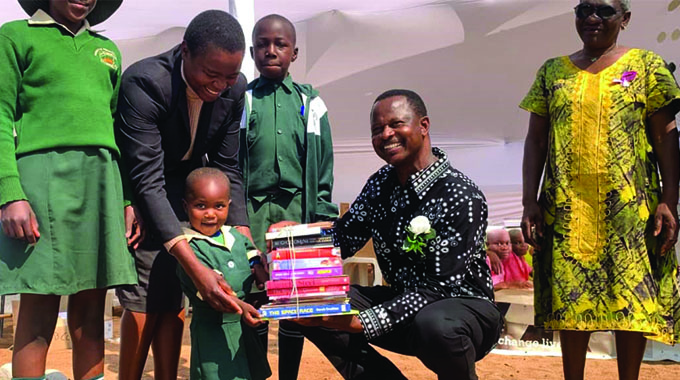
Sione Amidu, Gwanda Correspondent
GWANDA South legislator and Deputy Minister of Information, Publicity and Broadcasting Services, Dr Omphile Marupi, has called for collective stakeholder involvement in promoting literacy and ensuring access to quality, affordable education that equips learners with skills for future development.
He was speaking at the recent Gwanda International Literacy Day celebrations held at Bethel Primary School.
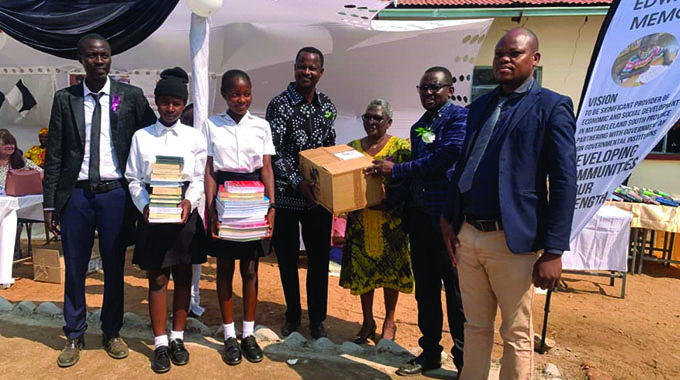
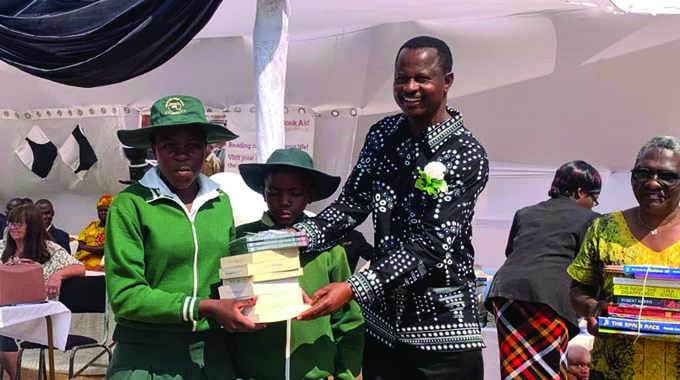
The event was organised by the Edward Ndlovu Memorial Trust and brought together learners from various schools to participate in activities that promote a culture of reading and celebrate the importance of literacy.
International Literacy Day is observed annually on September 8, following its declaration by UNESCO on October 26, 1966 during its 14th General Conference. It aims to highlight the importance of literacy to individuals, communities, and societies.
In his remarks, Dr Marupi emphasised the need for everyone to celebrate literacy, nurture it, and pass it on to the next generation.
“In this digital era, literacy — both traditional and digital — is our weapon of transformation. The theme for this year’s celebration is particularly timely. We live in an age where technology has revolutionised how we access, share, and store information.
“Literacy now takes on a new dimension. It’s no longer limited to reading books and writing essays; it now encompasses digital literacy — the ability to navigate the internet responsibly, critically evaluate information, and use digital platforms to learn, innovate, and create,” said Dr Marupi.
He highlighted that digital technologies permeate many spheres of life and significantly impact the well-being of the planet.
“In these rapidly changing digital landscapes, the importance of literacy cannot be overstated. On one hand, literacy forms the foundation for digital skills and an inclusive digital transition. It is essential for accessing and managing the exponential growth of information and knowledge,” said Dr Marupi.
On the other hand, he noted that literacy is part of the broader phenomenon of digitisation, which has redefined what it means to be literate in a world where AI can read and write — along with how literacy teaching, learning programmes, and policies are designed, managed, and monitored.
Dr Marupi also addressed the challenges faced by learners, highlighting the importance of developing stronger and more advanced literacy skills.
“In Gwanda District, particularly in rural areas, the majority of primary schools lack internet access for pedagogical purposes. The Covid-19 educational disruption reminded us that digital learning is not easily accessible for many learners, especially the marginalised and low-skilled. It also shed light on the considerable constraints faced by literacy educators, notably inadequate digital skills, in addition to issues such as limited professional development opportunities,” he said.
Edward Ndlovu Memorial Trust director, Mr Mike Moyo, said the organisation’s mission is to create life opportunities for children and youths, while uniting communities in Matabeleland South.
“Our impact is intended to open life opportunities for the children and youth of the region, increase their resilience, and reduce their vulnerability to adversity and predatory elements within society. They, along with their parents, gain skills and strategies for sustainable lives and livelihoods. The goal of this programme is to bring community members together to take collective action and generate solutions to common economic and social problems,” he said.
Mrs Jinny Dube (70), of Paye Village in Gwanda South, praised the Edward Ndlovu Memorial Trust for its support in ensuring that no one is left behind in the digital era. She also noted that digitalisation has enabled constant internet connectivity and improved communication with relatives overseas, especially during times of grief.
“The world is evolving, and things are changing. In the past, we used to send letters, which took a long time to deliver. News of a relative’s passing would reach us months after they had already been buried.
“With digitisation, one can send a WhatsApp message, which takes just seconds to deliver. We are grateful to the Edward Ndlovu Memorial Trust for equipping us with knowledge, life skills, and income-generating projects,” she said.