Vusumuzi Dube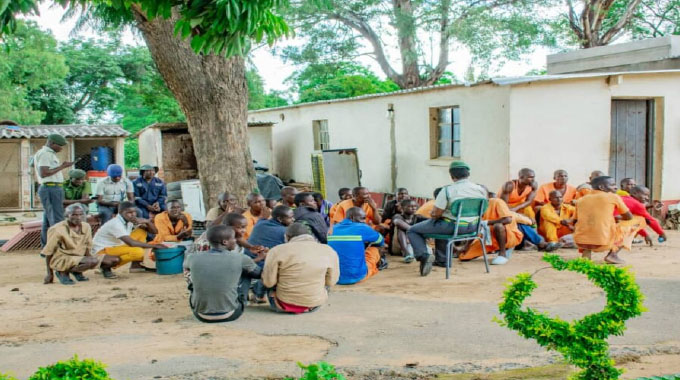
Cuthbert Mavheko, [email protected]
THOUSANDS of inmates across the country recently regained their freedom after being granted clemency under Clemency Order No. 1 of 2026, which targeted inmates considered vulnerable or successfully rehabilitated. The amnesty, announced by Justice, Legal and Parliamentary Affairs Minister Ziyambi Ziyambi, resulted in the release of 4 305 convicted inmates as part of President Mnangagwa’s continued efforts to enhance rehabilitation and reduce overcrowding in the country’s correctional facilities.
Beneficiaries of the Presidential Pardon included convicted female prisoners, juveniles under the age of 18, elderly inmates aged 60 and above, prisoners serving sentences of 48 months or less, terminally ill inmates and those living with physical or visual disabilities. Inmates in Open Prisons and those who had served at least 20 years of their sentences, as well as prisoners whose death sentences had previously been commuted, also qualified under the clemency order.
Minister Ziyambi noted that individuals convicted of serious offences such as murder, armed robbery, rape, treason, human trafficking and public violence were excluded from the amnesty. Zimbabwe Prisons and Correctional Services (ZPCS) officials confirmed that 223 women and 4 082 men met the criteria for release. According to ZPCS, 3 978 inmates were released immediately, while 327 others would be released in phases.
Addressing journalists, Minister Ziyambi said the Presidential Pardon signalled a shift towards restorative justice within Zimbabwe’s prison system.
“It is my distinct honour and duty to inform the nation that His Excellency, the President, has granted a general amnesty to specific categories of convicted inmates,” he said.
He also appealed to Zimbabweans — including families, community leaders and employers — to welcome the freed inmates with compassion.
“My fellow Zimbabweans, let us support President Mnangagwa’s reintegration efforts by welcoming our freed children, brothers, sisters, friends, relatives, neighbours back home gracefully. As we do so, we should express our heartfelt gratitude to President Emmerson Mnangagwa for the Presidential pardon, which has led to the release of thousands of prisoners across the country. With all due respect, my own humble submission is that President Mnangagwa deserves kudos for the merciful hand extended to the former inmates, who are now enjoying freedom after years in prison,” he said.
Minister Ziyambi stressed that the amnesty was not a dismissal of the seriousness of the crimes committed but an acknowledgement of the human capacity for reform. This naturally raises an important question: What steps should the former inmates take to rebuild their lives?
When I posed this question to a pastor friend of mine, a marriage and child counsellor in the United Methodist Church, his response was:
“First and foremost, as a Christian nation, we all need to thank President Emmerson Mnangagwa for his mercy, compassion and kindness, which has seen thousands of convicted inmates in the country being released from prison. As a Church pastor, my advice to the released inmates is this: You must now repent of past wrongdoings that led to your imprisonment and start living a new life.
“One way of doing this is to join a church and get baptised. When you join a church and earnestly serve God, He will call you to a new way of life to make you better husbands and fathers, better wives and mothers, and better brothers and sisters. God loves you. Just like a father wants the best for his children, God wants the best for you. He wants to see you happy and worry-free.
“Through constant prayer, you should thank God for being released from prison and present to Him your worries and fears. God can help you when you are sick. He wants to see you well, happy and full of life (1 John verse 2). God can also take care of your families and friends, give you strength when you are weak and encouragement when you are depressed. Prayer doesn’t have to be a burden or something difficult to do. God is loyal and always available. Through prayer, you can talk to Him, day or night. He is never too busy to listen to you.”
As noted earlier, the released inmates included juveniles under the age of 18. At this point, it is important to provide moral guidance to the freed juveniles: Now that you have been granted freedom, you should begin by expressing heartfelt gratitude to President Mnangagwa for initiating the Presidential Pardon that secured your release. The truth is that without this gesture, you would still be in prison today. That said, it is essential that you do not allow past hardships to destroy your future. Instead, allow the difficult experiences you endured to become the fuel that motivates you forward.
Research shows that you can successfully reform and rebuild your life if you follow certain principles. You should avoid sexual immorality and addictions to alcohol, cigarettes and drugs. You should also conduct yourself honestly with family members, friends, neighbours and others, and strive to build a reputation for trustworthiness and reliability. When faced with challenges, seek counsel and guidance.
Always remember that there are people who care about you and are willing to help you navigate any crisis. One crucial point must be emphasised: you should remain responsive to God and seek His guidance in all your decisions. Pray without ceasing, study the Bible regularly and allow it to shape your daily conduct.
Although many people doubt the existence of evil spiritual forces, the truth is that Satan and his demonic cohorts exist and exert great influence over the world. The Holy Bible teaches that Satan is the god of this world (2 Corinthians 4 verse 4) and has succeeded in deceiving humanity (Revelation 12 verse 9). Satan — “a liar” (John 8 verse 44) — manipulates the minds and attitudes of the unwary. However, we can resist Satan by keeping God’s commandments and spending sufficient time in prayer. Scripture teaches that if you submit to God and resist the devil, he will flee from you (James 4 verse 7).
In conclusion, when we embrace the Christian faith, God instructs us to turn away from the godless and faithless ways of the world and pursue righteousness. Admittedly, the path of righteousness is not easy — it is not a stroll down Easy Street — but it is the only path that leads to peace of mind, joy in this life and eternal salvation thereafter. Accepting Jesus Christ as our Lord and Saviour requires a complete transformation of our lives. Our thoughts, attitudes, behaviours and sense of purpose are reshaped. By keeping God’s commandments, we learn to live more responsibly and lovingly, replacing destructive habits with wholesome and uplifting ones. I rest my pen.
lCuthbert Mavheko is a freelance writer and theologian. He can be contacted on 0773963448 / 0775522095 or email [email protected]



 Online Reporter