


 Chronicle Editor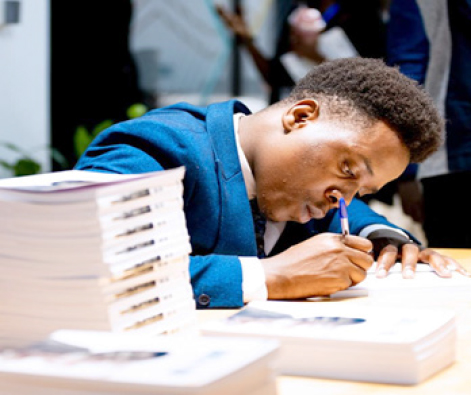
Brian Maregedze
The newly capped graduates are confronted with life outside the academic lecture rooms and they have new questions, and realities different from the “romantic” expectations during their study years.
To high school learners who recently finished their public examinations, there is a constant lurking thought on what to do next. Be it those who finished their Ordinary Levels or those who finished Advanced Levels. It remains painstaking to the majority of students on the way forward. Even those who are currently pursuing their tertiary studies, they tend also to find themselves in a similar dilemma. What career opportunities are available? Is life after formal school learning that bleak?
Here is a book written by one of Zimbabwe’s exceptional students. Charline Chikomo is academically gifted. He attained twenty (20) points at his Advanced Levels after writing four humanities subjects.
He went on to graduate with a first-class degree in Global Challenges specialising in Education and Governance at African Leadership University in Rwanda. Charline studied for this programme under the Nelson Mandela Scholarship selected among 100 young scholars. Again, he is also among the Mandela Rhodes Scholars for 2024 selected among other 51 young scholars.
His educational journey has not been an easy one. At some point, he dropped out of school due to a lack of financial resources in 2007. This, however, did not deter him from pursuing his life goals. Drawing lessons from his grandmother, Charline managed to survive the labels and the shame that come with society upon failure to attend formal schooling. Resourcefulness and resilience are key pillars that Charline received from his grandmother during those difficult moments in 2007 when he dropped out of school. Globally, there was an economic recession and Zimbabwe was not spared. Some have gone on to ridicule and label students who went to school post-2000 in Zimbabwe as crisis children. Charline lived in the shadows of a resettled farm, Ellen Farm in Masvingo.
In seven chapters, Charline sets out to address the following question;
“What is the connection between what I am learning in class and the challenges faced by my community, where I spent most of my time as a so-called dropout?”
In Chapter 1, “Education Reinvented: From Schooling to Educere and Educare,” Chikomo challenges conventional notions of education and advocates for a holistic approach that nurtures not only academic knowledge but also essential life skills.
In Chapter 2, “Bridging the Gap: Navigating the School-to-Community Transition,” the book dives into the challenges students will encounter as they transition from the structured classroom to the unpredictable real world. The divide between theory and practice is brought to focus, equipping readers with effective strategies to make this transition seamless. In Chapter 3, “The Race of Revolutions: When Education Lags Behind Social and Economic Change,” reveals how traditional education systems struggle to keep pace with rapid societal and economic transformations.
In Chapter 4, “Beyond Paper: Unveiling the True Value the Marketplace Seeks” Embracing the changing job market landscape points to where degrees and certificates alone need reconfiguration. The hidden gems of transferable skills, soft skills, and personal branding play a significant role in unlocking the true potential for professional success.
Beyond the classroom in Chapter 5, “Venturing Beyond the Classroom: R.O.A.D.M.A.P for the Real World,” the book explores experiential learning and practical experiences. Discovering how internships, volunteering, and part-time jobs can enhance your career
Chapter 6, “Opportunity Quest: Embarking on the Hunt for Opportunities,” equips the readers with the tools to navigate the job market effectively. From networking like a pro to mastering job search techniques, the readers will be well-prepared to seize the opportunities that come your way.
Chapter 7 makes the case for Career-a-thon. This chapter offers practical advice and actionable tips to navigate this transformative phase with confidence and resilience.
Career-a-thon is an important reading and an innovative contribution. The book is timely as it feeds into the traditional question of the relevance of modern education in post-colonial Africa in general and the need to address various societal challenges. Key among challenges affecting post-colonial Africa are that of youth bulge and youth unemployment.
Charline Chikomo, rather than being an ivory tower critic of post-colonial African education system, takes the bull by its horns by creatively offering steps towards addressing those challenges. Using Charline Chikomo’s personal experiences and everyday life histories of young people defying the odds in the face of adversity in different parts of Africa, Career-a-thon, therefore, enriches the reader’s lenses on how to confront the dilemmas being faced by youths daily. Adopting lifelong learning forms another layer proposed by Charline Chikomo and serves to change the post-colonial educational landscape. Career-a-thon is not only autobiographical but a transformational reading from Chikomo appealing to young people who are in search of solutions and offering solutions to their unending challenges.
Being proactive in addressing the challenges bedevilling the youths offers an avenue through which dreams can be realised. Charline Chikomo’s self-help book is unique in that it offers practical life experiences typically feeding into the proverbial “rags-to-riches” narratives found across Africa.
The humble beginnings are well articulated and more interesting is that Chikomo is still pursuing his dream of transforming lives through education.
I got my copy at a fair cost of US$15 which I think may need a slight revision to US$10 so that it appeals to the majority of high school learners. More about Charline Chikomo and steps to buy the copy are found at his website [email protected]
Recentering young people in their emancipation forms an invaluable contribution from this 2023 publication. This is a treasure!


 Online Reporter