admin
admin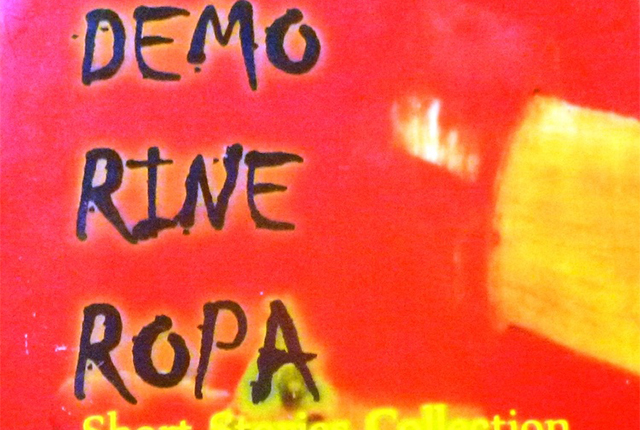
Beaven Tapureta:Bookshelf
New writer Kelvin Mangwende and his publisher Pen Featherz Media (Harare) must have made too much haste in their jobs when they put together his Shona short story collection titled “Pfumo Rine Ropa” (2016).
Let it be known that Bookshelf believes in the honest literary criticism and not lambasting works of writers but here is a case worthy examining for the sake our beloved literature.
Pen Featherz Media is an imprint of the young enterprising publisher and author Tatenda Charles Munyuki whose beautiful and exciting children’s book “The Mystery of the Waterfalls Thief” was nominated for the 2016 or 15th NAMA Outstanding Children’s Book award.
However, reading Mangwende’s slim, 57-paged anthology leaves one disappointed as it looks like the promising author/publisher gave up all his skills and simply brushed aside the needs of the Shona reader. What happened?
Normally in a situation in which a book is published half-baked as it this, the writer is left exposed negatively when actually publishing should mean, generally, to expose the writer’s distinctive talent as well as expose certain issues in form of stories, poems, etc.
First, as a Shona short story collection (muunganidzwa wenyaya pfupi), it would have been convenient to put this description in its entire Shona language on the front cover as an assertion of the richness of language and stories which must be found inside.
Five short stories make up this collection, these are: “Demo Rine Ropa”, “Mwana Wepfambi”, “Mavanga eRudo”, “Pfambi yeMukadzi” and “Kupindana kweMazuva”.
The first short story “Demo Rine Ropa” is narrated in sombre linearity. It is about a very pertinent theme which, had the author given it what it needed, would have been a thriller.
Jonasi Murambwi, who has been in Wenera (South Africa) for 20 years, arrives at a township in Mhondoro in the evening, carrying his sack in which hidden is a bloodied axe. The story happens before Independence. Jonasi discards all thoughts of finally going home after meeting a girl Runako, a sex worker, in the bar with whom he goes to her house.
What follows are incidents that see the two love-birds living together and then moving further to a home where Runako’s parents stay. This is where Jonasi is killed by Runako’s ex-boyfriend who had been stalking them. This is also the place of the story’s ‘resolution’, that is, Runako (whose real name is Muchaneta) discovers that Jonasi is her father but she is already pregnant.
The telling in the story is overloaded. The greatest yet simple guiding principle for starting writers is to ‘show and don’t tell’ and Mangwende as an author does not seem to be aware of it. From start, narrator is ‘telling’ without showing the reader the essence of the story through dialogue and other techniques. The only character who speaks is Jonasi’s wife but it is near the end of the story when, upon setting eyes on his husband whom her daughter is calling boyfriend, she exclaims, “Murume wangu Jonasi, ndizvo zvawandiigira here izvi? Nhai Mwari madarireiko?”
The interesting story underneath this story about Jonasi is regrettably played down.
Moralistically, Mangwende’s stories are rich but this richness is adulterated by lack of variety in the theme, mood, and characterisation particularly of women. For instance, most female characters are sex-workers without their situational background explored.
In “Mwana wePfambi” Tichatonga Gwaze, educated abroad, disowns his parents after they disapprove his marriage to a known sex-worker named Chenai. The two become rich but Chenai begins to ill-treat her husband in a way that copies Rudo’s ill-treatment of Tavengwa in “Mavanga eRudo”.
A car accident changes Ticha’s life and as relatives start avoiding he begins to regret how he treated his parents.
Again, the reader is told the story and not shown the story.
“Mavanga eRudo” tackles issue of betrayal in love, the punishment of the betrayer and subsequent rise of the betrayed. Tavengwa divorces first wife, marries Sharai whose friend Rudo secretly falls in love with Tavengwa. Sharai is put between two raging fires that eventually burns her out, her love pushed to the dumpsite where it rises again on its own. Meanwhile, Tavengwa falls ill and Rudo ‘dumps’ him in the house and he ends up bedridden at the hospital.
While there is a beautiful story here, the author, if truth be told, did not let it unfold as it should had he given it its own language, its own place and pace, and ultimately its own force.
The narrator is plainly telling a story of characters only and the characters hardly speak to each other (no dialogue). In this story, the place, the environment, the atmosphere and other ingredients of setting are non-existent to both characters and readers! The limitations of geography and time in a short story at times contribute to its conflict and suspense.
The other stories echo the same sad cry of tales throttled and left to die at the altar of author’s or publisher’s impatience.
The case of the anthology “Demo Rine Ropa” speaks of a shared emotion among some, not all, new authors who are publishing or self-publishing nowadays. There seem to be a stampede for seeing oneself in print as long as what one has in his/her hand is something that can be called a book, nicely printed. And the publishers to whom these new authors run usually have no time for expert editing or consultation.
Mangwende’s collection, by virtue of its shortcomings, makes one want to read more of his published works such as the plays “Chaminuka” and “Chimurenga” and the poetry collection “The Rainbird is Dead”, all published by Pen Featherz Media.
He was born in 1986 in Murewa. He did his primary education at Farai Primary School in Chitungwiza before proceeding to various schools for his secondary education. Mangwende has lived in Namibia where he taught at Sam Nujoma Pre-School. He says his traveling across Africa has influenced him to write as he got to experience different African cultures. He has also appeared in a number of anthologies.



 Online Reporter