


 Online Reporter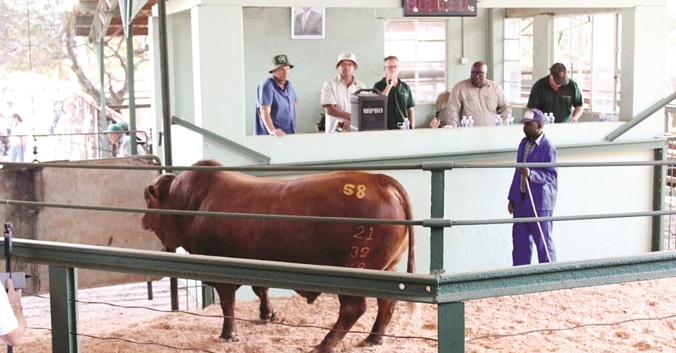
Word From The Market
Tina Nleya
TRADITIONALLY, wealth was measured by the number of cattle one owned.
Over the years, some people have ceased to see cattle as a sign of wealth, but Zimbabwe’s livestock sector continues to play a vital role in the country’s agricultural economy.
With over 65 percent of rural households relying on livestock, especially cattle, as a key source of income, nutrition and social capital, the development of structured and accessible markets is essential to the sub-sector’s transformation.
Despite strong national efforts to boost production, market access remains a persistent challenge for many smallholder cattle farmers.
The majority still rely on informal, household-level transactions where middlemen dominate and farmers have little or no bargaining power.
In such settings, cattle are often sold at uncompetitive prices and producers miss out on the full value of their livestock.
To address these challenges, the Ministry of Lands, Agriculture, Fisheries, Water and Rural Development, working with the Agricultural Marketing Authority (AMA), has been spearheading the establishment of formal cattle auction markets at ward level.
This initiative aims to build a structured livestock marketing system that empowers farmers, enhances traceability and attracts competitive buyers directly to the farmers’ doorstep.
Why ward-based cattle auctions matter
Traditionally, cattle sales have occurred through informal networks, with transactions taking place at household level.
This model exposes farmers to exploitation, as buyers typically offer low prices in the absence of competitive bidding or proper market information.
Ward-based cattle auctions offer a transformative alternative.
These structured sales:
Allow multiple buyers to participate in a transparent and competitive environment
Enable farmers to receive fair prices based on market demand
Reduce the need for long-distance travel, saving farmers time and lowering transport costs
Encourage formalisation of the livestock sector through proper documentation and veterinary checks
AMA’s role in coordinating market access
As Zimbabwe’s statutory agricultural marketing authority, AMA is taking a leading role in operationalising these auctions. AMA is working to:
Mobilise and train farmer clusters for coordinated cattle sales
Facilitate licensing and onboarding of buyers and abattoirs
Ensure veterinary, traceability and compliance requirements are met
Promote transparency and efficiency at auction events
Village business units are not just sale points; they are growing into hubs of agricultural commerce, with AMA ensuring that all transactions are regulated and fairly executed.
AMA’s presence in these localised markets is critical to maintaining price integrity and boosting farmer confidence in formal markets.
More than a sale: Unlocking the value chain
The cattle auction model supports broader goals of value chain development by:
Improving market data collection for policy and planning
Promoting livestock grading and classification systems
Encouraging farmers to improve herd quality to meet market preferences
Linking livestock producers with service providers (e.g. veterinary care, insurance and feed suppliers)
Structured markets also create a platform for financial institutions to engage farmers with livestock-based credit products and microinsurance, enhancing the overall viability of cattle farming.
Empowering rural communities
AMA is currently engaging rural communities and local authorities to establish these ward-based auction centres.
This process includes sensitising farmers on how to prepare for auctions, understanding pricing trends and meeting health and identification protocols.
The decentralisation of cattle markets is a game-changer.
It brings economic opportunity closer to farmers, many of whom are in remote areas, and helps reduce exploitation by middlemen.
Importantly, it provides a platform where farmers can sell confidently, knowing their cattle will attract fair and transparent bidding.
Supporting livestock vision
Under Zimbabwe’s National Development Strategy 1 (NDS1), livestock is identified as a key driver of inclusive rural development.
The move towards ward-based cattle auctions directly supports NDS1 goals of market access, sector formalisation and value chain enhancement.
With strong Government and AMA coordination, this initiative aligns with broader national efforts to:
Promote market-led agricultural production
Increase formal sector participation
Drive livelihood improvement for rural households
Get involved: What farmers should do
Register with AMA to participate in auctions
Ensure all cattle are tagged and compliant with veterinary requirements
Stay informed about auction dates through your local AMA or Agritex office
The establishment of cattle auctions at ward level is more than a logistical convenience; it’s a bold step towards empowering farmers, promoting transparency and building sustainable market systems in Zimbabwe’s livestock sector.
By bringing markets closer to the people, AMA is delivering on its mandate to promote market-driven agricultural development, one village at a time.
Word From The Market is a column produced by AMA to promote market-driven production.



 Online Reporter