Chronicle Editor
Nduduzo Tshuma, Political Editor
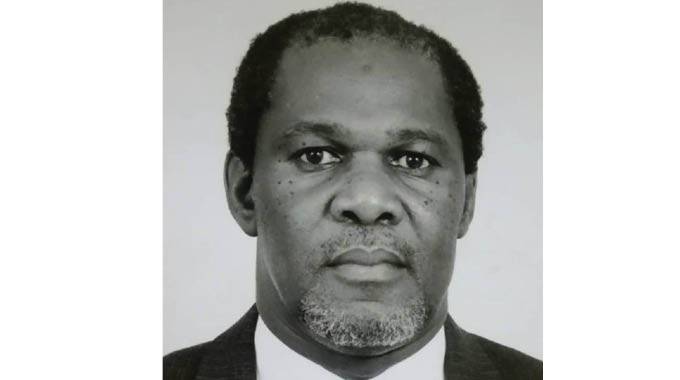
THE death of National Hero Cde Stanley Nleya who was buried at the National Heroes Acre yesterday has reignited calls for the proper documentation of the country’s liberation history and heroes of the struggle.
Cde Nleya a member of the Zipra High Command whose pseudonym was Elisha Gagisa during the liberation war, died last Tuesday from a heart ailment.
Announcing that Cde Nleya had been declared National Hero to his family last Friday, Zanu-PF secretary for administration Dr Obert Mpofu, said failure to document the biographies had delayed declaring Cde Nleya a national hero.
“As a matter of urgency, we want the Ministry of Defence and War Veterans and the department of war veterans in the party to compile a database for all freedom fighters so that we can have their biographies. We know them but we need their biographies documented. Failure to document is the reason why we are having biographies that do not reflect the true history of some of the cadres yet they would have done more for the country,” said Dr Mpofu.
Speaking at Cde Nleya’s funeral service on Tuesday, a representative of the ruling Zanu-PF party Cde Joseph Tshuma also called for the documentation of the history of veterans of the liberation struggle.
“We want to celebrate you when you are still alive and carry on your legacy even after your death because you made great sacrifices in the fight for the liberation of our country. You embarked on a job that had no salary, medical aid or any other benefits so that we could enjoy the freedom we have today,” said Cde Tshuma.
The gravity of the matter was raised by Retired Colonel Tshinga Dube, himself a decorated liberation fighter and member of the Zipra High Command, who expressed worry at the rate his colleagues were dying.

“These days I’m even afraid to look at the pictures of those who were in the High Command. Not so many people made it to the High Command but the few who were part of it are dying. We are losing our members maybe from the initial 12 members, only five of us are left,” he said.
National hero and former Zipra intelligence supremo Dr Dumiso Dabengwa who died in May last year, had also raised the need to document history in a paper written for South Africa’s The Thinker, Volume 80, titled, “The Impeccable Zapu and ANC Alliance in Retrospect: The 1967 Wankie and 1968 Sipolilo Campaigns”
Wrote Dr Dabengwa, “As the war combatants of 1962 – 79 are getting reduced in number as a result of natural wastage and memory loss, the necessity to record their story now cannot be over emphasised.”
Zimbabwe Defence Forces Commander General Phillip Valerio Sibanda, in a tribute to Cde Gagisa who was his instructor during the liberation war, also emphasised the need to document liberation history.
“It is true, we have not adequately documented our history in as far as the liberation struggle is concerned and this is an area that we need to address…We need to correct that by getting the history of the liberation struggle articulated properly,” he said.
Going down memory lane Gen Sibanda remembered Cde Nleya as a selfless freedom fighter who put nation ahead of self.
“I met the late Gagisa in 1974 when we arrived at Morogoro training camp in Tanzania. It was late February or first week of March. We had been transported from Zambia overnight and in fact spent two nights on the road and we got to Morogoro and there was this group of instructors at the training centre Gagisa was one of them, Brigadier general (Retired Tjile) Nleya, was another, the late Sigoge (Colonel Retired Eddie Sigoge Mlotshwa) was another , late national hero retired Major General Gevan Maseko was there and the camp was under the command of Sam Mfakazi,” said Gen Sibanda.
“Gagisa was responsible for physical training and also tactics. He had a small body, but was very active and when we got there, we didn’t know initially but he had been nicknamed by a previous group they had trained and his nickname was “Doko.” From time to time if you messed up, he would shout ‘hee doko!” but he was a very good instructor and a very humble person you could work with and relate to.”
“He would wake us up at 3am or 4am for physical training. We used to do our runs during that time and then around 6am there about, and he would then do the actual physical exercises. The running was to warm us up. Stanley would wake up anytime when he needed to and do what needed to be done. He was a very hard worker from being an instructor to being a member of the high command.”
Gen Sibanda said after training he was deployed elsewhere and came back as an instructor working with Cde Nleya and his group. “I got to know him a lot better, when I became one of the instructors and this persisted up to 1976 when he left Morogoro for Zambia and from that time we were not working together. He had been elevated into the ZIPRA High Command and he went on to hold many positions up to the time of our independence,” he said.
“In 1980 when we came home, we went to the assembly points and again Stanley remained humble, hardworking and patriotic.”
Gen Sibanda commended the Government and Zanu PF for declaring Cde Nleya a National Hero which he described as, “a befitting recognition of what the late hero did during his time.”
He said after the bombing of Freedom Camp, he met Cde Gagisa again as they collected bodies and limbs of deceased cadres for burial.
“That was very disturbing, it’s something that you can’t rub off your mind just like that, it will live with those who saw those scenes forever,” said Gen Sibanda.


 Online Reporter