Online Reporter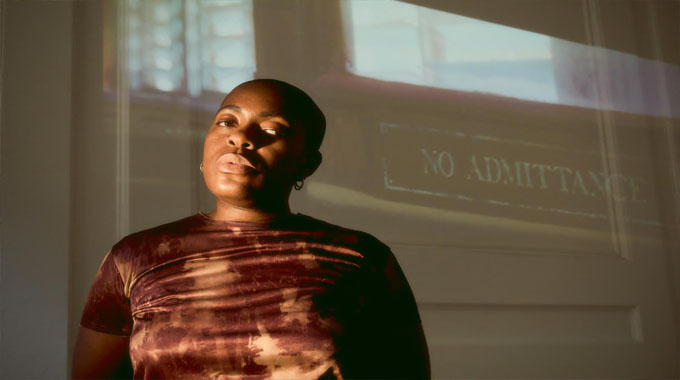
Mbulelo Mpofu, [email protected]
WHEN British-Nigerian artist, filmmaker and researcher Onyeka Igwe arrives in Bulawayo next month, she will not simply be presenting a film. She will be inviting audiences into a conversation that stretches across generations, continents and histories.
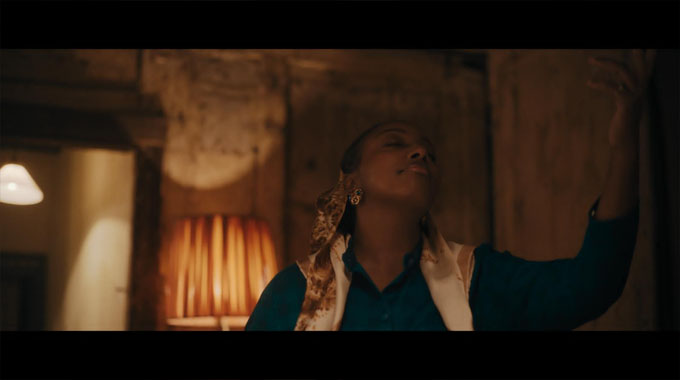
From July 3 to September 4, the National Gallery of Zimbabwe in Bulawayo will host A Radical Duet, a thought-provoking film installation by the London-based artist whose work has earned international acclaim for its exploration of colonial histories, African knowledge systems and alternative ways of understanding the world.
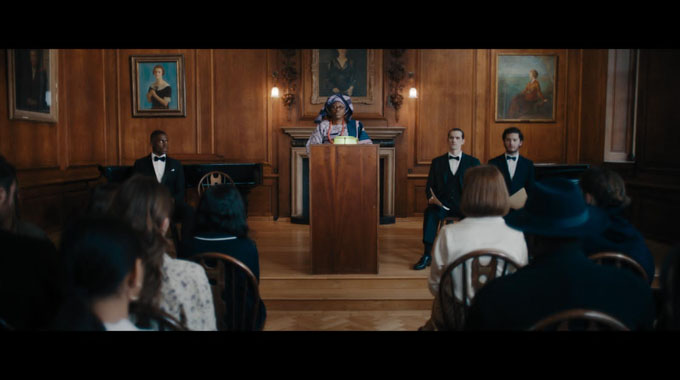
For Igwe, the project is rooted in a desire to revisit a pivotal period in African political history and imagine what it might still teach contemporary society.
“The idea was to try and use the period of 1940s independence movements that coalesced in London as a setting to think about the political possibilities for our futures,” she said in an interview.
Known for blending archival research, cinema, performance and installation, Igwe’s work often challenges dominant historical narratives by centring African perspectives and experiences that have frequently been overlooked or suppressed.
With A Radical Duet, she hopes audiences will engage with the often-unrecognised role played by women in shaping political movements and social change.
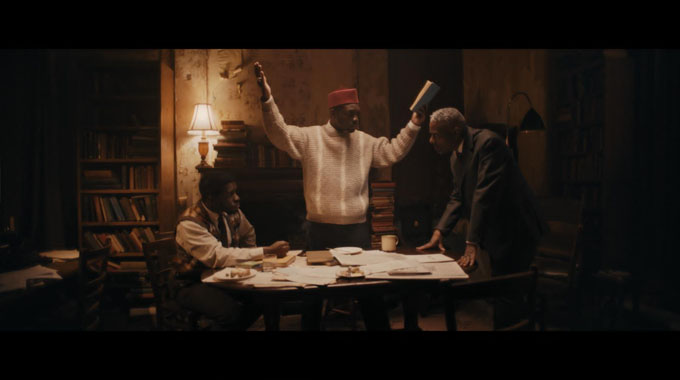
“I’m hoping viewers think about the methods that were utilised by women activists and artists – methods outside the political mainstream like theatre – as tools for articulating and enacting political desires,” she said.
The exhibition arrives at a time when conversations around decolonisation, memory and representation continue to gain momentum across the continent and beyond. Through the film, Igwe interrogates how history has been documented and whose voices have traditionally been prioritised. Her interest in the subject stems from years of academic and artistic research into colonial moving images and their lasting influence.
“I spent a long time looking at colonial films and seeing the worldviews of the colonisers enshrined in the images. With A Radical Duet, I wanted to know what Africans were thinking, how they constructed the world and the ways of knowing that they came from.
“I researched Funmilayo Ransome-Kuti and the Egba Market Women’s Revolt — political protest conducted through dance and song that I know has a long history throughout Africa,” she said.
The film’s title itself carries significant meaning. While the word “duet” often evokes harmony, Igwe sees it as a framework for exchange and learning across generations.
“I was thinking about intergenerational conversation, that this is a film about a younger woman and an older woman trying to learn from each other. I’ve had many experiences like this and think it’s important we remember that each generation always has something to learn and something to teach,” she said.
For Bulawayo audiences, the exhibition presents a rare opportunity to engage with an artist whose work has been showcased at major international platforms including the Dhaka Art Summit in Bangladesh, Open City Documentary Festival and Images Festival in Canada, as well as the Smithsonian African American Film Festival.
Yet despite her global profile, Igwe says she remains particularly eager to present her work in Zimbabwe.
“I’m always keen to show my work and talk about it outside of Europe and the US. This will be my first time in Southern Africa and I’m excited to learn what Zimbabweans think of the ideas I’m communicating, to share how their location and experiences might resonate or, more interestingly, not with mine.
“I’ve heard Bulawayo has a rich cultural scene so I’m curious about other artists’ practices,” she said.
Although she has collaborated with Zimbabwean artists and scholars before, Igwe believes meaningful engagement with a country’s creative landscape can only happen through direct experience.
“I’ve had a little experience of Southern African art and have worked with a few Zimbabwean artists and scholars, but I think the best way to encounter art is in person and through people. Coming to Bulawayo will give me the best opportunity to discover the scene in Zimbabwe,” she said.