Online Reporter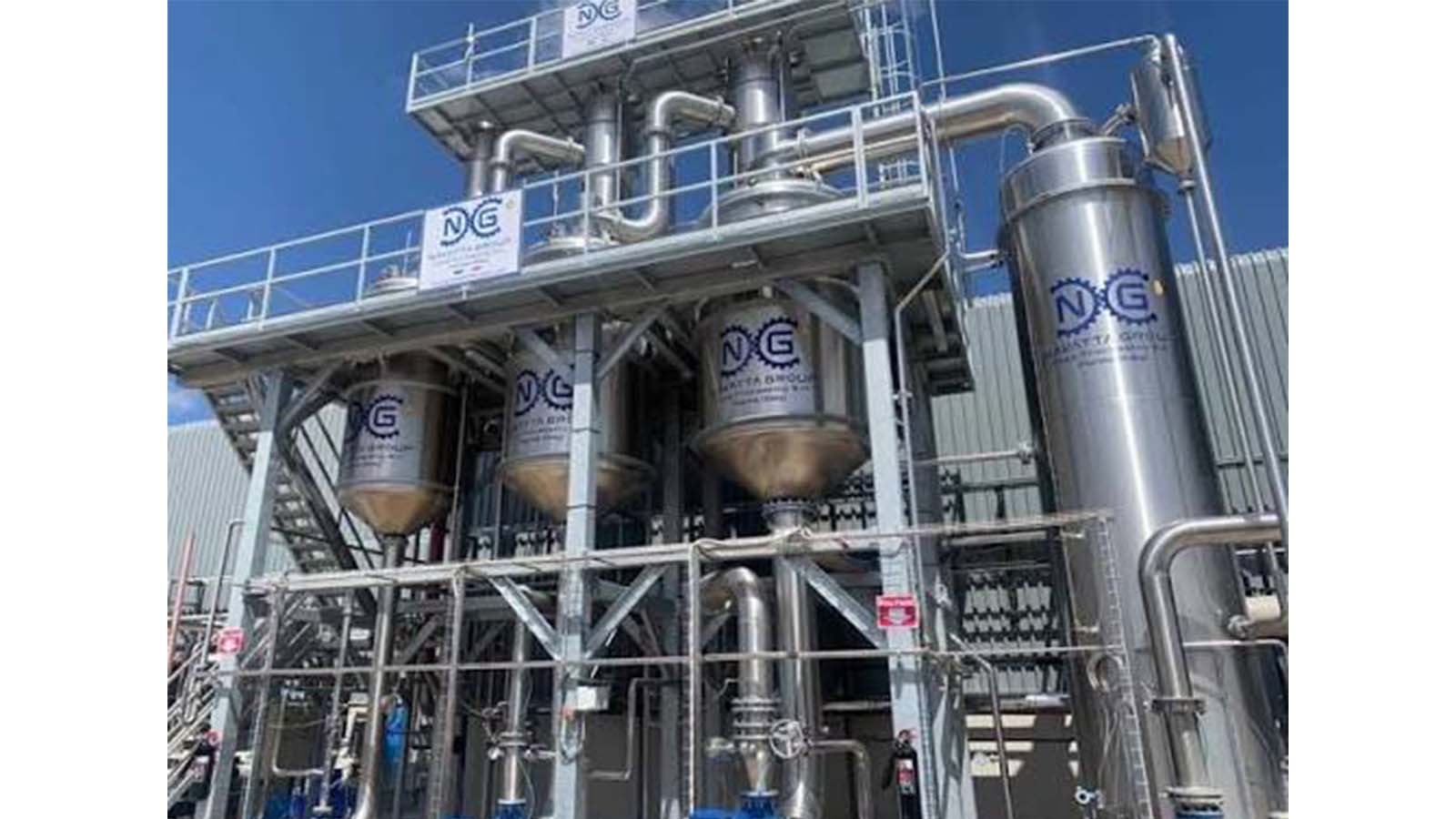
Engineer Tapuwa Justice Mashangwa
ZIMBABWE’s agro-processing industry is emerging as one of the most important pillars of the country’s agricultural transformation in 2026.
After years in which much of the country’s agricultural output was marketed in raw or semi-processed form, Zimbabwe is increasingly investing in facilities capable of converting crops and livestock products into higher-value food, beverage and industrial products.
This transformation is being driven by several factors: the need to reduce imports, create employment, increase agricultural incomes, strengthen food security and generate foreign currency through exports. The Government’s Local Content Strategy 2026–2035 provides an important policy foundation, seeking to increase domestic production, local sourcing and value addition across the economy.
The strategy targets a substantial increase in the use of locally produced inputs and greater industrial capacity utilisation.
One of the most significant developments in 2026 has been the revival of the Best Fruit Processors (BFP) plant in Norton, operated by the Agricultural and Rural Development Authority (ARDA).
The facility had been dormant for approximately four years before being refurbished and brought back into operation.
The plant represents a particularly important model because it links agro-processing directly with smallholder production.
BFP is reported to have the capacity to process at least 100,000 kilogrammes of tomatoes, guavas and mangoes per day.
Through grower networks and village business units, farmers in areas including Zaka, Bikita, Wedza, Mhondoro and Zvimba can supply the plant.
The facility produces products such as tomato paste, fruit pulp and juice drinks for domestic and regional markets.
Its revival therefore goes beyond simply reopening a factory: it creates a structured market for farmers, reduces post-harvest losses and establishes a commercial pathway through which smallholder agriculture can feed into formal industrial value chains.
Another major development is the expansion of Orangeville’s citrus-processing operations in Beitbridge, Matabeleland South.
The company has invested approximately US$25 million in its citrus operation, including an additional US$5 million investment beyond its initial US$20 million commitment.
The company’s state-of-the-art juicing plant has secured certification to supply citrus juice to Schweppes Zimbabwe.
This is an important example of how agricultural production, processing and established consumer-goods distribution networks can be integrated.
Orangeville currently employs approximately 350 people and is targeting growth to at least 1,500 employees over the next five years as its citrus production expands.
The investment is particularly significant for Matabeleland South because it demonstrates that agro-processing can become an anchor industry in regions that have traditionally been affected by limited industrialisation.
Zimbabwe is also positioning agro-processing as part of its long-term industrial infrastructure through the proposed Goromonzi Agro-Industrial Park (GAIP) in Mashonaland East.
In July 2026, Zimbabwe was actively seeking Chinese investment for the park, which is envisaged as a high-technology farming and agro-processing special economic zone.
The initiative illustrates a broader shift towards developing integrated agricultural production and processing ecosystems rather than isolated factories.
The concept is particularly important because agro-processing becomes more competitive when farms, processing plants, storage, logistics, technology and markets are located within an interconnected industrial ecosystem.
Zimbabwe’s agro-processing expansion is also moving beyond conventional maize and wheat processing. Universities and agricultural institutions are increasingly being positioned as centres for value addition and rural industrialisation.
The Great Zimbabwe University Innovation Centre for Dryland Agriculture in Chivi, for example, is developing grain-processing capacity, with reported production capacity of approximately 50 tonnes per day, equivalent to around 20,000 tonnes annually at full operation.
Initiatives around the centre are also focusing on value addition involving crops such as castor beans and traditional grains.
This is strategically important because traditional grains such as sorghum, millet and other drought-tolerant crops can provide raw materials for flour, breakfast cereals, livestock feed and other processed products while strengthening climate resilience.
The growth of agro-processing is particularly visible in horticulture. Zimbabwe has significant potential in citrus, mangoes, guavas, tomatoes, chillies, vegetables and other high-value crops.
Processing enables these products to remain commercially useful even when they do not meet fresh-market specifications.
A tomato can therefore move from being a highly perishable commodity to becoming tomato paste or puree.
Mangoes and guavas can become pulp or juice concentrates, while citrus can be converted into juice and other by-products.
The Mutoko Fruit and Vegetable Processing Hub provides an earlier example of this model and continues to demonstrate how processing can create reliable markets for smallholder farmers.
Farmers supplying the hub have benefited from markets for crops such as okra, carrots, peas and butternut, while training has also been provided in crop production, business management, post-harvest handling, grading and packaging.
The expansion of agro-processing is closely connected to Zimbabwe’s import-substitution agenda. Government and industry are increasingly recognising that producing agricultural commodities locally is only part of the economic equation.
Greater value is created when Zimbabwe processes those commodities into finished or intermediate products.
The 2026 Local Content Strategy reinforces this direction by seeking to expand domestic production and strengthen local industrial linkages. Priority areas relevant to agro-processing include oilseeds, dairy, packaging and other manufacturing value chains.
The Government is also seeking to use procurement policy to create stronger markets for locally produced goods.
For example, locally produced soybeans, sunflower and cottonseed can support oil extraction and refining; maize and traditional grains can support milling and food manufacturing; milk can be converted into yoghurt, cheese and other dairy products; and horticultural crops can supply juice, pulp, puree, dried products and concentrates.
The expansion of processing capacity creates significant opportunities for Zimbabwean farmers and agribusiness SMEs.
However, the biggest opportunity is not simply producing more agricultural commodities. Farmers increasingly need to organise production around the specifications, volumes, quality standards and delivery schedules required by processors.
This creates space for contract farming, farmer aggregation, irrigation development, mechanisation, cold-chain logistics, agricultural finance and specialised agronomic services.
For SMEs, opportunities exist in packaging, warehousing, transport, equipment maintenance, food safety, laboratory services, processing technology and distribution.
Zimbabwe’s agro-processing growth in 2026 signals a gradual transition from an agriculture sector dominated by commodity production towards a more integrated agriculture–industry–export value chain.
The revival of the Norton BFP facility, the US$25 million Orangeville citrus investment, the development of agro-industrial infrastructure such as the Goromonzi Agro-Industrial Park and the expansion of grain and crop-processing initiatives demonstrate the direction of travel.
The next challenge will be ensuring that processing plants have reliable supplies of quality raw materials, affordable finance, electricity, water, packaging and efficient logistics.
If these constraints are addressed, agro-processing could become one of Zimbabwe’s strongest mechanisms for transforming agriculture into a commercially integrated industrial sector.
Ultimately, the opportunity for Zimbabwe is to move beyond exporting or selling “what the farm produces” and instead develop value chains around “what the market demands.”
That transition has the potential to increase farmer incomes, create thousands of industrial jobs, reduce imports, expand exports and make agriculture a substantially stronger engine of Zimbabwe’s economic growth.
The writer is Eng. Tapuwa Justice Mashangwa, GCEO Emerald Investments, CEO DataFarm, CEO Emerald Agribusiness and CEO TranslateZW. He can be contacted on +263771641714 and email: [email protected] or [email protected].