

 admin
admin
Langalakhe Mabena
On 1 June 2024, Bulawayo turns 130 years old since the city was declared a town in 1894 by Dr Leander Starr Jameson, and it also had its first advisory board in the same year.
In 1943, Bulawayo attained city status. In 2019, the city of Bulawayo declared 1 June as Bulawayo Day — which celebrates the city’s history, and diverse culture through different artistic and cultural activities.
When Cecil John Rhodes and his imperialists unleashed the Pioneer Column intending to colonise Zimbabwe, Bulawayo, under King Lobengula, was an indigenous community occupied by the natives of the Ndebele nation.
When the imperialists came in, they saw a need to develop the city into a modern settlement and this led to the construction of the railway line, roads, industries, banks, churches, hotels and eventually suburbs.
As we celebrate Bulawayo Day, B-Metro managed to pick some of the first establishments which were built in the city and some of the historical buildings that distinguish and identify Bulawayo.
The first development that took place in the city came after the realisation of a need to create a transportation network of various goods, which saw the construction of a railway line. This was also part of Cecil John Rhodes’ mission to link “Cape to Cairo.”

The railway line was built from Mafikeng in South Africa to Bulawayo and it was pivotal for industrialisation as Bulawayo was the key point in the railway system which was to develop in Central and Southern Africa as far as Democratic Republic of Congo. A clearing house for the whole of Central and Southern Africa would then be established in Bulawayo. Once upon a time, Bulawayo boasted of having the longest railway platform in the world.
The construction of the first bank in Bulawayo which was the Standard Bank of South Africa (now known as Stanbic in Zimbabwe) was launched on 4 May 1894. At first, it was under a bell tent. The bank was built as Bulawayo attracted gold seekers who flocked to the city to trade. By September 1894, the Stanbic bank was fully constructed and workers moved into the premises which was a single-storey building.
The idea of Bulawayo was to create it as an economic hub, and to do that, there was a need for communicating developments and possible investment opportunities in the city. This gave birth to The Chronicle newspaper in 1894, which was a twice-weekly newspaper then.

The following year, it had its first advertisements which covered most of the professions and services in the area. By May 8, 1895, The Chronicle moved to a daily newspaper, of which it is still today.
Bulawayo housed numerous industries and it was a strategic point in promoting trade and transportation of goods from South Africa proceeding to other countries like Zambia, Malawi and the mineral rich Democratic Republic of Congo.
Traders would seek accommodation within Bulawayo and the demand led to another venture which is hospitality — to provide them with accommodation. This led to the construction of The Palace Hotel in 1897. The inaugural banquets were held at the hotel. During the 1930s, a double-storey block was added to the north, with a beer garden.
Palace Hotel is the oldest in Bulawayo and it is still functioning under its original name.
When the city took shape, many whites were attracted to Bulawayo to invest in industries, and among them was Charles Duly. In 1902, Duly established a cycle agency in Bulawayo which later-on developed to Duly’s car dealership.
Other investors W H Haddon and J W Sly would be recorded as some of the developers of the city as they founded one of the very first firms to grace the face of the city, which is still called Haddon and Sly (H’n’S).
In its early days, H’n’S provided a tea room and ladies’ rest room as a facility for the country customers who found the slow journey into Bulawayo by ox-wagon or cape cart fatiguing.
It was once a departmental store but in more recent years it has been turned into a “lettable units” with all three floors having small traders in stalls. To date, H’n’S is still functioning as a trading paradise.
The industries in the city were abuzz and frequently developing. This attracted more workforce- a majority of blacks to be precise. These workers were accommodated in Makokoba Township, the first suburb in Bulawayo (built-in 1894).
The suburb is named after the actions of Mr Fallon, the Native Commissioner, who used to walk around with a stick.
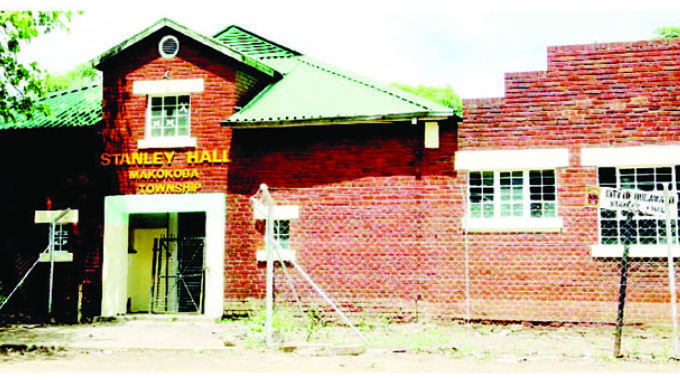
The name comes from the word “ukukhokhoba” which in the local Ndebele language means “bending and walking with a stick’.
Apart from the economic and industrial activities in the city, among the ideas that the colonialist wanted to instil in Africans was Christianity, and Bulawayo is not excluded from that.
By the mid-1890s, the Jesuits (Roman Catholic) had built a small chapel in Bulawayo, which was meant to serve as a boy’s school. The foundation stone of St Mary’s was then laid in 1903 and the church became a cathedral in 1955.
In 2014, Pope Francis granted the former cathedral of Bulawayo, Zimbabwe, the status of Minor-Basilica becoming the only church in the whole of Southern Africa to have been awarded this honour.
According to Archbishop Alex Thomas of Bulawayo, the rare award was made because of the church’s historical relevance and special architectural design.
“This building qualifies to be a basilica because of its centrality to the colonial struggles in Southern Africa as well as its age. The building we see today was built more than 120 years ago, and it is still standing.
“It also got its new status because of its historical significance as a place where many generations came to pray for guidance, leadership and strength in the various stages of the liberation struggles,” said Father Thomas.
One of the oldest churches is the African Methodist Episcopal Church located in Makokoba which was built in 1928.
The city boasts the oldest organised football team, Highlanders, formed in 1926 by the sons of Njube, Albert and Rhodes Khumalo, who were Lobengula’s grandsons. It was called Lions Football Club at formation and changed to Matabeleland Highlanders in 1936.
In 2021, the city fathers established that Bulawayo has 155 ancient buildings which over the years have been conferred with architectural and historical merit. The historical buildings were assessed and classified under four categories, with the list growing with the passage of time.
Those under class one are rated as vital for preservation while class two are deemed preservation highly desirable.
Those in class three require moderate preservation with those under class four classified under ‘‘minor interest.”
The Victorian-style buildings in their elegant grandeur with striking cupolas, looming towers, fancy turrets, rounded porches and balustrades conspicuously stand out from the rest in Bulawayo’s city centre. The buildings represent the highest standards of Victorian architecture that correspond with the long reign of Queen Victoria, who ruled Great Britain from 1837 to 1901.
Some of the preserved buildings are The City Hall (completed in 1895), Post Office Building (1895) The Exchange Building (1896), Great Northern Hotel (1912), Bulawayo High Court, Tredgold Building, National Art Gallery and Goldfields Buildings, among others.



 Online Reporter
 derick.khumalo