Online Reporter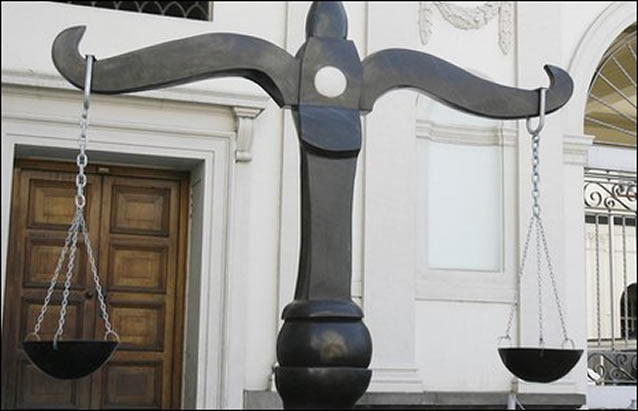
Disability Issues
Dr Christine Peta
ZIMBABWE recently commemorated the World Day of Social Justice, a day dedicated to advancing fairness, equality and dignity across societies.
Social justice is often defined as the fair and equitable distribution of opportunities, resources and rights.
It is about ensuring that every individual — regardless of gender, race, ethnicity or ability — can live with dignity and participate fully in society.
The intersection of disability and social justice is critical.
When we speak of social justice, disability justice must be at the core of the conversation.
This means dismantling systemic barriers, challenging stereotypes and creating inclusive policies that recognise diversity as a strength.
The World Day of Social Justice, observed annually on February 20, reminds us that justice is not charity.
It is not about benevolence or pity, but about rights and responsibilities.
Persons with disabilities are not passive recipients of aid; they are active citizens whose voices, talents and contributions enrich communities.
To exclude them is a loss to society as a whole. The United Nations Convention on the Rights of Persons with Disabilities (CRPD) serves as a comprehensive global framework for promoting disability rights, underscoring the principles of accessibility, equality and full participation in society.
Yet globally, implementation of the CRPD remains uneven.
The World Day of Social Justice reminds us that commitments on paper must translate into action on the ground.
We must work together to ensure that persons with disabilities are not left behind. The Sustainable Development Goals (SDGs) also highlight the importance of inclusion.
Goal 10, which calls for reducing inequalities, cannot be achieved without addressing the systemic exclusion of persons with disabilities.
Similarly, Goal 4 on quality education and Goal 8 on decent work demand inclusive strategies that recognise the unique challenges faced by this community.
This year’s theme for the World Day of Social Justice — “Social Protection and Decent Work for All” — is particularly relevant.
But social protection must not be seen as an end in itself; it should serve as a foundation for empowering individuals to participate fully in society and achieve lasting equality.
True justice requires creating pathways for persons with disabilities to participate in the workforce, contribute to the economy and shape society.
Inclusive employment policies, accessible technologies and supportive environments are key to unlocking this potential.
Across the globe, disability advocates are driving the movement for justice, challenging exclusionary systems and pushing societies towards greater equality and inclusion.
They remind us that inclusion is not optional — it is a moral and social imperative.
Organisations of persons with disabilities have consistently emphasised the principle of “nothing about us without us”, insisting that policymaking must be guided by their voices, experiences and leadership.
Their leadership ensures that solutions are grounded in lived experience rather than imposed from outside.
At its core, the pursuit of social justice is about recognising the humanity of every individual.
For persons with disabilities, this means being seen not as burdens but as agents of change.
Their resilience, creativity and contributions enrich communities and strengthen societies.
To exclude them is to undermine the very essence of justice.
As we reflect on the recently concluded World Day of Social Justice, the message is clear: Justice cannot exist without
inclusion.
Workplaces must be made accessible and social protection services must be designed with diversity in mind.
Above all, attitudes must shift — from pity to respect, from exclusion to participation, from charity to justice.
The World Day of Social Justice is a call to action, urging societies to dismantle barriers, confront inequality and build inclusive systems that honour the dignity of every person.
For persons with disabilities, the day underscores the urgency of inclusion.
Social justice is not achieved through words alone; it requires commitment, courage, collective action and recognition that the path to justice is paved with inclusion.
Only then can we truly say that we live in a just society.
Dr Christine Peta is a disability, public health, policy, international development and research expert. She can be contacted on: developafrica2020 @gmail.com