Online Reporter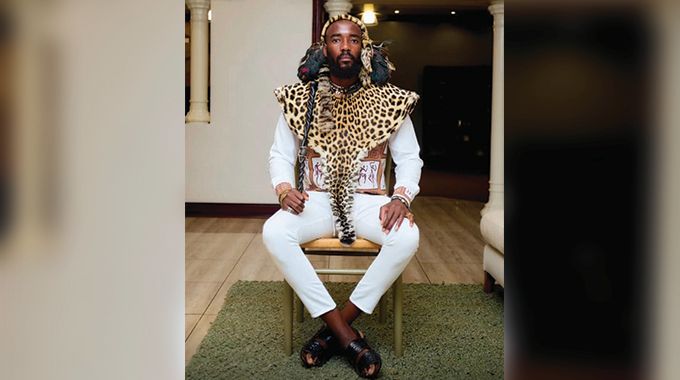
Langalakhe Mabena, [email protected]
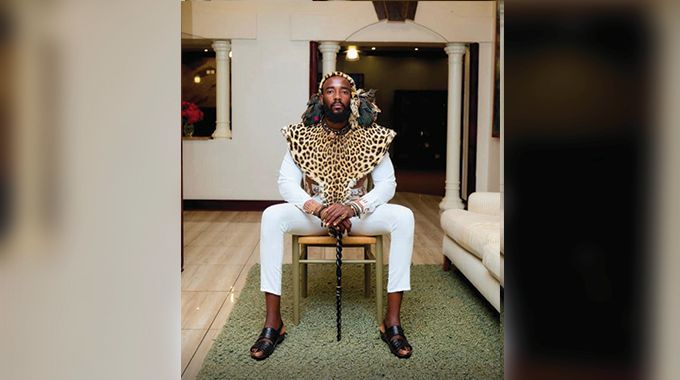
AWARD-WINNING historian and author Arnold Nkala has penned a biography on Chief Mbusi Dakamela of Nkayi District, documenting the traditional leader’s life and his efforts to drive community development within his area and beyond.
Titled Chief Dakamela: An Icon of Community Development, the biography explores how Chief Dakamela is redefining African traditional leadership by leveraging his position on spearheading development initiatives that uplift communities in his jurisdiction and contribute to national progress.
Nkala said he was inspired to write the book after recognising that Chief Mbusi Dakamela’s efforts are becoming a roadmap for how traditional leadership can help shape a nation that remains conscious of its identity and firmly connected to its cultural roots.
“Over the past years, Chief Dakamela has been a household name in community development. I decided to write his biography to help the communities review and learn from his works. My wish is to see other communities use their traditional resources as a parallel structure for development.
“The biography is also supported by the Government’s implementation of the Heritage-Based Curriculum in schools, where all learners are given an opportunity to be inspired by their heritage. I hope that in the future, the book will be considered on the syllabus, as it speaks of our story as Zimbabweans,” said Nkala.
The author, who received an accolade at the Chief Dakamela Achievers’ Awards in 2024, said it took him six months to complete the book. To compile the biography, he relied on public records and direct observation.
“I wanted the book to be organically biographic, in the sense that it should not be seen as an autobiography disguised as a biography. As a participant in community development, especially in the realm of culture and community profiling, I frequently interact with Chief Dakamela in my fieldwork.
“I cannot say I know everything about him, but the information I have gathered about him through my observations was saturated enough to write about him,” he said.
Writing a biography without the subject’s approval can carry risks, including potential defamation claims arising from unverified information, something that may also discourage readers’ interest in a book.
However, Arnold Nkala said he conducted thorough research and received endorsement from Chief Dakamela, who reviewed the manuscript after it was presented to him as a birthday gift on March 3.
“I did my best to make the book remain an impartial biography as I did my homework before I published the book. My close relationship with Chief Dakamela would possibly have created biases if I had to involve him through interviews and pre-publication reviews.
“However, his lack of involvement also means that certain perspectives may be absent in the book, because he knows himself better than anyone. Any pitfall or gap will be added after post-reviews.
Genuine research always has space for additions because research by nature is always continuous,” said Nkala.
Meanwhile, preparations for the fourth edition of Chief Dakamela’s Achievers Awards have started, with the event set to be held from 3 to 6 April, at the chief’s homestead in Nkayi.