Chronicle Editor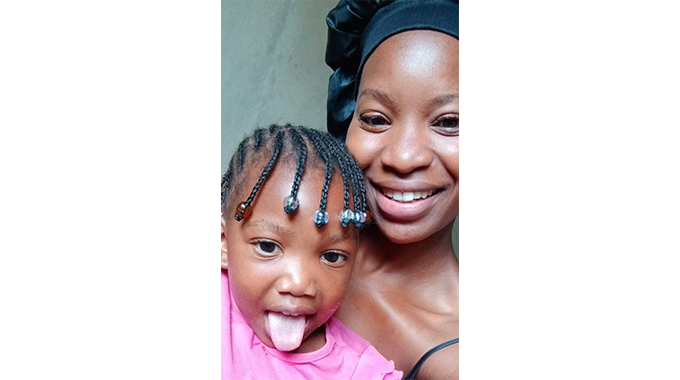
Flora Fadzai Sibanda – [email protected]
What happens to a child after their parents separate? Can a child be trafficked by their own parents?
Who gets to be the custodial parent to a child born out of wedlock?
These are some of the questions that people always ask when they are faced with a fight for child custody. They question how it should be done and whether or not the law will support the stance they have taken.
Many have boldly assumed that after a divorce or separation, it is automatic that child custody is given to the mother as women are deemed more capable of taking care of children as compared to men.
Others have argued that culturally, a child belongs to their father so even if the parents divorce or separate, the child needs to grow up with their father’s family so that they can learn about their roots and culture.
As such, the country has been experiencing a rise in cases of child trafficking and custody battles in the courts as both parties feel they should be the child’s sole custodian.
There is also a high prevalence of undocumented children with some parents failing to acquire identity documents for their children because one parent is absent from their life.
In a recent incident, a three-year-old, Milan Moyo, was illegally taken by her paternal grandmother to visit her father in South Africa without the permission of her mother who had been taking care of her since birth.
Twenty-four-year-old Charlene Moyo from Mahatshula suburb, Bulawayo was in distress as she had not seen her daughter for almost three months after her baby’s paternal grandmother took her to South Africa without her consent.
Ms Moyo said baby Milan was taken by her grandmother Ms Clara Ndlovu under the pretext that she wanted to spend a few days with her.
The matter was reported to the police.
Ms Moyo separated with her child’s father, Mr Tatenda Bhanhire nearly three years ago.
She told Chronicle that she only agreed that her child could go with her grandmother for a few days because they have always been in good books for the sake of her baby’s welfare.
She said a few days after giving Ms Ndlovu the child, she received a WhatsApp message of the child sitting in a kombi with other children and was told her daughter had gone to visit her father in South Africa.
The woman said she questioned the grandmother on why she had sent her child to South Africa without her consent and without proper documents as she had the kid’s passport. She later discovered that the grandmother had also gone to South Africa.
“When I asked Gogo Clara about her decision, she hushed me and promised the child would come after two weeks. I agreed because she sounded sincere. However, when the two weeks lapsed, I decided to contact the father of my child and asked him when they were going to bring her back. That is when he told me it was now his turn to keep the child and he deserved to have full custody over the child just like I do,” said Ms Moyo.
After various interventions through the assistance of the police and lawyers, baby Milan was eventually brought back to Zimbabwe and returned to her mother. Following the incident, many questioned who should be held accountable — the father or the grandmother considering that baby Milan’s parents were never married.
This instance mirrors that of many other parents whose children are taken away from them without their consent and are never returned.
In some cases, the custody wars run into years as families fail to reconcile and come to an agreement beneficial to the child.
Bulawayo-based lawyer, Mr Lison Ncube said in the case of a child who is born out of wedlock, it is automatic that the child lives with their mother as she is the custodian with no questions asked.
Mr Ncube said that is the only time the court gives a ruling with no conditions.
He however, said in the case of divorce, the court has to do some evaluations in order to decide who is eligible to get the child. The lawyer said because there are two parties involved, the court will grant one parent access to the child meaning they can see the child, whether on weekends or holidays.
The other party is granted custody of the child meaning they live with the child and are responsible for the day-to-day decisions affecting the minor.
Mr Ncube said the custody of the child is given based on the best interests of the child adding that the court puts the child before everyone else and makes a decision that will not affect them.
“It doesn’t matter whether one is rich or not but if they don’t have the best interests of the child at heart, they will not be granted custody. In this case, gender doesn’t work. Many have always assumed it is automatic that the child stays with the mother, which is not the case as the court will evaluate and see whether the mother is fit to stay with the child. Another issue of importance is who was able to take care of the children when the couple divorced. If the father took the children with him and had been taking good care of them, he might be granted full custody as he would have already shown he is fit to keep the children safe despite the situation he would be in,” he said.
Mr Ncube said when parents have separated and one party is not willing to help in securing identity documents for the child, the law allows them to acquire national documents for the child in the absence of the other parent as it is the child’s right to have all national documents.

He said parents should also know that they need the consent of both parties when a child is travelling outside the country because if they do not get it, it might be labelled as child trafficking, which continues to be a problem in the country.
Research shows that traffickers exploit Zimbabwean adults and children in sex trafficking and forced labour, including in cattle herding, domestic service, and mining in gold and diamond sectors.
According to the 2022 Trafficking in Persons Report, more than 71 percent of child labour occurs in the agriculture sector, including on tobacco, sugarcane, and cotton farms, as well as in forestry and fishing sectors, where children weed, spray, harvest, and pack goods.
“Some of these children are victims of forced labour, including some who work on small, unregulated farms. Due to pandemic-induced school closures and worsening economic conditions, observers reported child sex trafficking and child labour likely increased, particularly in agriculture, domestic service, informal trading, begging, and artisanal mining,” read the report.
“Children ages nine to 14 work as nannies, housemaids, and gardeners in urban areas and mining communities; some employers force children to work by withholding wages, denying them access to school, and subjecting them to gender-based violence.”



 Online Reporter