

 Online Reporter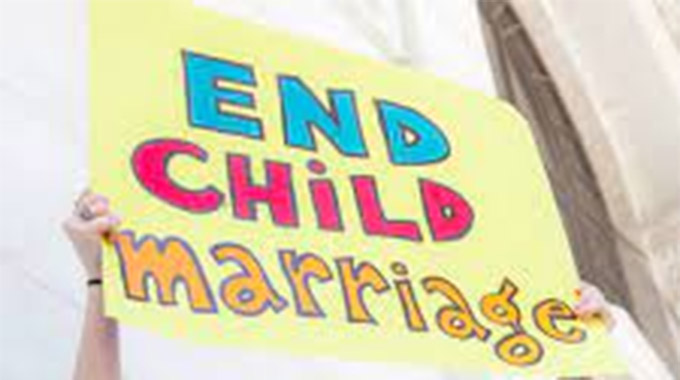
Victor Maphosa-Mashonaland East Bureau
About 20 percent of marriages in Uzumba-Maramba-Pfungwe district involve children, a worrying trend that has prompted the National Aids Council to roll out an intensive community-based programme aimed at curbing new HIV infections, teenage pregnancies and early unions.
NAC is implementing the Sista2Sista model in the district in response to rising cases of child marriages, school drop-outs and teenage pregnancies, which are fuelling new HIV infections among adolescent girls and young women.
UMP district Aids coordinator, Mr Owen Mupemhi, said the situation had become a major public health and social concern, with evidence showing a direct link between early marriages, teenage pregnancies and HIV transmission.
“According to macro indicator cluster surveys conducted nationally, UMP is among the remote rural districts facing serious challenges of child marriages and teenage pregnancies. About 10 to 20 percent of marriages taking place in this district involve children, mainly driven by socio-economic pressures and school drop-outs,” Mr Mupemhi said.
He said antenatal care statistics from health facilities in the district showed that HIV positivity among teenage pregnant girls stood between 15 and 20 percent, confirming ongoing transmission among adolescent girls and young women.
“Our antenatal care data indicates that HIV positivity among teenage pregnancies is around 15 to 20 percent. This means there is clear evidence of HIV and sexually transmitted infections among adolescent girls and young women in our district. Child marriages and teenage pregnancies are closely linked to these new infections,” he said.
In response, NAC has rolled out the Sista2Sista model in 10 wards across UMP to strengthen HIV and STI prevention, promote sexual and reproductive health education and empower young women economically.
Under the programme, trained mentors recruit groups of 25 girls and young women aged between 10 and 24 using a risk assessment tool to identify those most vulnerable.
The groups undergo structured education sessions guided by a health manual and are linked to essential services including HIV testing, treatment for those who test positive, STI screening and treatment, condom distribution and gender-based violence support services.
“The model is designed to empower adolescent girls and young women. We want to strengthen awareness on HIV and AIDS, sexual and reproductive health and ultimately halt further transmission of HIV among this group. We are already seeing positive results, with a decline in STI cases and new HIV infections in the wards where the programme is being implemented,” said Mr Mupemhi.
Sista2Sista mentor for Ward 13, Ms Shuvai Mukanganga, said the programme had transformed behaviour among club members, including improving adherence to treatment for those living with HIV.



