Online Reporter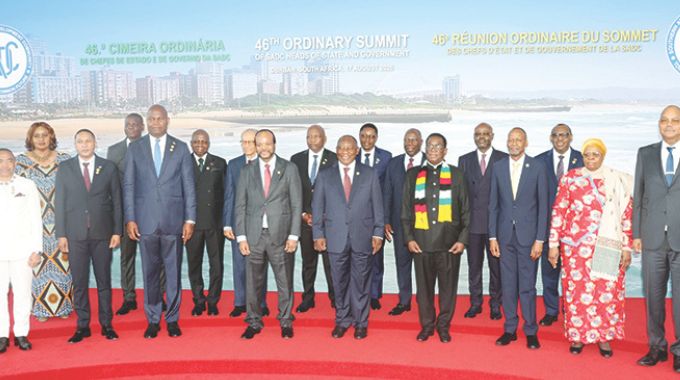
Moses Magadza
CHILD rights organisations from across Southern Africa have rallied behind the development of a SADC Model Law on Children, while calling for increased investment in Early Childhood
Development (ECD), stronger protection for children at risk of statelessness and improved regional coordination on child rights.
The resolutions emerged from the SADC Child Rights Advocacy Seminar held in Durban, South Africa, from August 13 to 14 under the theme: “Investing in children, accelerating development: A
SADC Protocol on Children for Industrialisation, Agricultural Transformation and a Just Energy Transition.”
The seminar produced a Policy Brief and Outcomes Statement calling for children to be placed at the centre of SADC’s industrialisation, agricultural transformation and just energy transition agenda.
Participants also resolved to lobby for and support a SADC Model Law on Children, with particular attention to limited investment in ECD, children at risk of statelessness, weak cross-border coordination and gaps in child rights governance.
An important outcome of the meeting was the establishment of a Child Rights Technical Working Group, led by the Child Rights Network for Southern Africa (CRNSA) and ZINECDA, with support
from SADC Parliamentary Forum Secretary-General Ms Boemo Sekgoma.
CRNSA acting executive director Mr Kgomotso Montsho said the working group would help drive advocacy towards a “SADC Fit for Children”.
Opening the seminar, Ms Sekgoma said investment in children should be regarded as an essential component of Southern Africa’s economic transformation.
“SADC has made a bold and strategic choice. We have placed industrialisation, agricultural transformation and a just energy transition at the centre of our regional growth and resilience agenda,” she said.
She cautioned, however, that investment in physical infrastructure and technology alone would not deliver the region’s development aspirations.
“Machines, markets and megawatts alone will not deliver that future. People will. And the foundation of that people-centred future is our children,” Ms Sekgoma said.
With an estimated 170 million to 190 million children in Southern Africa, representing nearly half of the region’s population, the seminar heard that investment in children would significantly influence the quality of the future workforce, leadership and innovation capacity.
Ms Sekgoma said investment should begin in early childhood, particularly from conception to eight years, when critical foundations for cognitive, social and emotional development are established.
“It is industrial policy. It is agricultural policy. It is climate policy.
“A child who is well-nourished and well-educated today is the engineer, the agronomist, and the renewable energy technician of tomorrow,” she said.
The seminar also examined emerging challenges, including statelessness, migration, trafficking, climate displacement, online harms and digital exclusion.
Ms Sekgoma said these issues were directly linked to the region’s economic ambitions.
“These are not just social issues. They are economic and governance issues,” she said.
She added: “We cannot industrialise without healthy minds. We cannot transform agriculture without addressing child nutrition. We cannot have a just energy transition without safeguarding the rights of future generations.”
Participants also considered the need for a regional instrument on children to harmonise standards, strengthen accountability and improve cross-border cooperation.
Ms Sekgoma said the proposed instrument could provide a framework for aligning child protection and investment with SADC’s wider development objectives.
“The proposal for a SADC Protocol on Children or rather a Model Law comes at the right time,” she said.
She also stressed the importance of giving children a voice in decisions affecting them.
“We cannot talk about ‘investing in children’ without talking with children. Children are not just beneficiaries of policy. They are rights-holders, experts in their own lives, and partners in solutions.”
She said the SADC Parliamentary Forum would support opportunities for children to participate in parliamentary and regional processes.
“Their voices must be in our committees, in our oversight missions, and in regional processes like this one,” she said.
The Durban meeting ended with an endorsed Policy Brief and Outcomes Statement, support for pursuing a SADC Model Law on Children and the establishment of the Child Rights Technical Working Group.
Ms Sekgoma said the recommendations should feed into national plans and SADC processes ahead of the 2026 SADC Heads of State and Government Summit.
“Investing in children is not an expense. It is the smartest investment in SADC’s industrialisation, agricultural transformation and just energy transition.
“When we invest in a child today, we are investing in stability, prosperity, and dignity for the entire region,” she said.