Online Reporter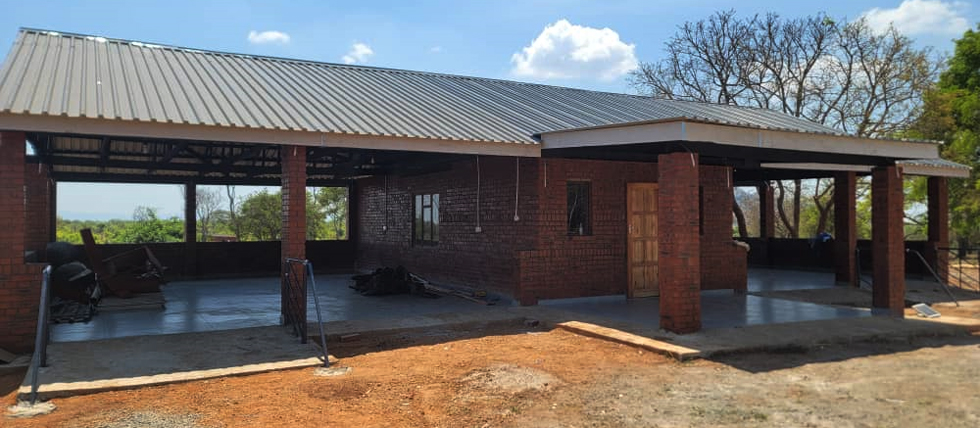
Ray Bande
Senior Reporter
WHAT is good for the goose must surely be good for the gander, as the saying goes.
For centuries, third world countries, particularly African nations, have watched as their identity, history, and culture were being bastardised by foreigners.
On the other side of the Equator, their identity, history, and culture remain intact.
Europe is home to countless historical monuments, including iconic structures like the Eiffel Tower (France), the Colosseum (Italy), and Neuschwanstein Castle (Germany).
Other significant landmarks include the Acropolis of Athens (Greece), Stonehenge (England), Sagrada Família (Spain), and the Tower of London. Many of these sites are also designated UNESCO World Heritage sites, such as the historic centres of Rome, Athens, and Prague.
European countries value their history through a combination of respecting its foundational role in national identity, celebrating cultural heritage in traditions, and actively confronting difficult pasts, such as colonialism and wars.
This engagement with history shapes a sense of deep connection to the past and is visible in everything from political, religious, and seasonal festivals.
It fosters national identity and culture.
Many Europeans feel a deep connection to their country’s past, seeing it as foundational to their modern identity and culture.
A rich history of conquest, religion, art, and industry is celebrated through numerous customs, traditions, and festivals passed down through generations.
The past has had a lasting impact on culture, language, and how Europeans interact with the world, with events like the Renaissance and the “Age of Discovery” leaving a lasting legacy.
Other countries like Spain and Portugal, have a different approach, focusing more on recent history, such as their civil wars. The legacy of major conflicts like the world wars continue to be a significant part of national history and identity in many European countries.
Accordingly, Vice President Cde Kembo Mohadi, during his recent tour of liberation war sites in Tanzania, Zambia, Angola, and Mozambique, where he was assessing liberation war shrines in order to take corrective action where necessary, for the departed freedom fighters to rest in peace, noted the need to revamp liberation war sites.
During the 16-year protracted liberation struggle, the Rhodesian regime launched air and ground strikes against the country’s liberation forces, resulting in guerrilla training and refugee camps being ruthlessly bombed, and many of those killed in these attacks were buried in these countries.
Mozambique alone has about 17 shrines of deceased cadres of the war of liberation.
However, at Chimoio, Nyadzonia, Tembwe, Nyangao (Beira), Tongogara Memorial Site and Changara, mass graves have been constructed, while at shrines that include Madulu, Mapai, Barrage, Chibavava, Navonde, Espungabeira and Save, the remains of those who were either killed or died of illnesses during the war are still lying in unmarked graves.
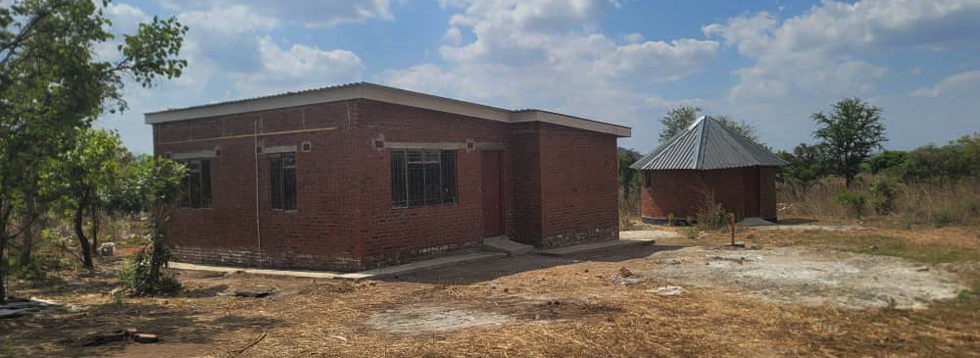
Most of these shrines are lying in a state of neglect, without basics such as ablution facilities, sources of water, poor road network leading to the sites, a roll of honour, as well as a falling security fence or barbed wire.
It is against this background that, in an interview on the sidelines of the tour of Chimoio Shrine, Vice President Mohadi said: “The question from some of us who lived through this war is, are we doing enough? The answer in many circumstances is that we are not. We surely need to do more.
“To that end, we will soon be ensuring that all the basic amenities are put in place at these shrines so that they can be turned into tourism products. Many people will be ready to visit all the shrines, only if proper facilities are in place, and the shrines are adequately marketed to young Zimbabweans to appreciate their history.”
The heartless massacre of predominantly young Zimbabweans that took place in training and refugee camps in neighbouring countries during the liberation war left several shrines where remains of the deceased were largely interred in masses.
VP Mohadi emphasised the need to have the brutal atrocities committed by the colonial regime consistently preached to the younger generation to inculcate a deep sense of patriotism.
“When you look at these mass graves, it is difficult to imagine that people were killed in numbers like this. It is painful. It all goes to show how brutal the colonial regime was.
“You, young people, especially all those below the age of 50, really need to learn about this and take it seriously. Lack of that understanding and knowledge has left some of you calling for a return to the colonial era so that you can start the liberation war again. It is sad, to say the least. The story of the liberation war must be told now and again to all Zimbabweans. It must be talked about in all social spaces regularly so that our young ones can understand what we mean when we say this country’s liberation war was nourished by human blood.
This is what we mean.
“If this had happened in Europe, it would be an everyday song. Look at how the Holocaust, the German attack on Jews, is still talked about like it happened yesterday. This is how we should make our own war for independence a crucial story. Let us not be brainwashed into thinking that this is not important,” said Vice President Mohadi.
Cursory internet research reveals that, for example, the Eiffel Tower’s political significance lies in its origins as a symbol of France’s industrial and revolutionary past, its use as a platform for national and international solidarity, and its role as a modern emblem of French identity and influence.
The tower is a central feature of national celebrations, such as being lit in the colours of the French flag (red, white, and blue) for Bastille Day.
Notably, it has been used to honour victims of national tragedies by being lit in the colours of the French tricolor or in the colours of affected countries. It also serves as a symbol of international solidarity and peace, with France using the tower to show support for other nations.
It has been lit in the colours of various national flags to honour state visits or mark significant international events, such as displaying Israeli and Palestinian flags for International Peace Day.
In modern political symbolism, it has been used as a diplomatic tool. The tower’s use for displaying foreign flags or being lit in solidarity is a diplomatic tool that communicates a message of peace and alliance on the international stage.
Be that as it may, the political and historical significance cannot be ignored. Further internet research showed that the political history of the Acropolis of Athens is one of transformation, from a fortified royal citadel to the spiritual and cultural heart of the Athenian democracy, and later serving as a military and administrative centre under various foreign rulers.
Key political moments include its transition from a monarchy to a democracy in the sixth and fifth centuries BCE, the Golden Age under Pericles to rebuild it after Persian destruction, and its conversion into a fortress and later a mosque under the Ottoman Empire.
Its modern political significance is tied to Greece’s liberation and its recognition as a national symbol and UNESCO World Heritage Site.
The Acropolis was a fortified citadel, the seat of the king. With the shift from monarchy to democracy in the sixth and fifth centuries BCE, its function changed from a royal residence to a spiritual centre dedicated to the goddess Athena.
Following the Persian destruction in 480 BCE, Pericles, a prominent Athenian statesman, initiated a massive building programme to create the Parthenon, Propylaea, Erechtheion, and Temple of Athena Nike, making the Acropolis the symbol of Athens’ power and cultural achievement.
The site was neglected, but continued to be important, with the Parthenon eventually converted into a Christian church during the Byzantine period.
The Latinate period saw it used as the city’s main administrative centre. After the Ottoman conquest in the 15th century, the Acropolis was transformed into a military fortress. The Parthenon was used as a mosque and a garrison for the Turkish army.
In 1687, the Parthenon was heavily damaged by a Venetian bombardment, which used the building to store gunpowder, resulting in a massive explosion.
However, the Acropolis became a symbol of national pride for the new Greek state after its liberation from Ottoman rule in 1834.
Restoration efforts began in the late 19th century, which continue to this day. The Acropolis was designated a UNESCO World Heritage site in 1987, recognising its immense historical and cultural significance and the ongoing efforts to preserve it.
Thus, if Europe sees the importance of their political and social history for generations that came well after the historical events occurred, why not Africa?