Online Reporter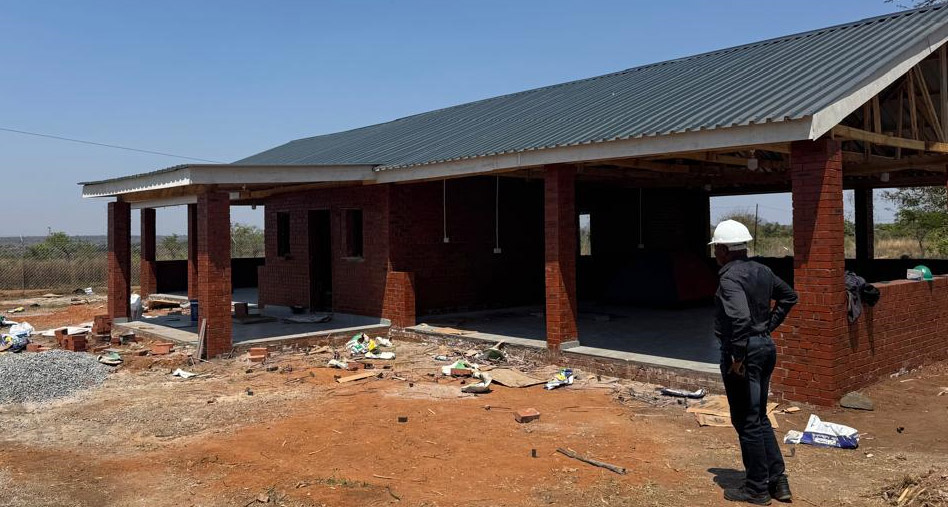
Ray Bande
Senior Reporter
THE transformation of the Chimoio Liberation War Shrine in Mozambique into a world-class political tourism product is almost complete, with a few finishing touches expected to be completed by the end of this week.
The shrine, the largest war monument among many in the Frontline States, is located in Manica Province near Chimoio City in Mozambique, where the remains of an estimated 1 200 freedom fighters lie in mass graves.
The renovation works at Chimoio, funded by proceeds from the Lotteries and Gaming Board, form part of the Government’s broader liberation war sites refurbishment programme across the Frontline States.
Responding to an enquiry about the status of the ongoing renovations at the shrine earlier this week, Lotteries and Gaming Board interim secretary, Dr Misheck Pachipano Chingozha, representing chief executive officer, Mr Godfrey Mutobaya, said the rehabilitation works are more than 95 percent complete, and expected to be done by the end of this week.
“We are almost done, and by the end of this week, we should be through, all things being equal. The visitors’ shed has outstanding works on its site ramp and apron. The outstanding works on the ablution facility are just wrapping up on fittings. The second borehole was sunk to a depth of 53 metres, and what remains outstanding is the tank, stand, and solar installation, which should be completed by tomorrow (Wednesday).
“Regarding the caretakers’ accommodation, the outstanding works for the second houses include tiling, which will be done tomorrow (Wednesday), as well as ceiling and electrical works,” he said.
In a separate interview, Wise Sower Construction Company managing director, Mr Tatenda Mutandwa said: “We had to introduce 24-hour working shifts to ensure that we meet our deadlines, and we are happy with the progress that we have made.”
Recently, Vice President Kembo Mohadi toured liberation war shrines in Angola, Zambia, Tanzania, and Mozambique to gain an appreciation of what is needed to revamp the sites, not only to accord the departed heroes and heroines the respect they deserve, but also to make the sites world-class political tourism products.
The construction works carried out at Chimoio, include the sinking of boreholes and the erection of an 820-metre perimeter fence, construction of ablution facilities, shed that accommodates over 200 delegates with a separate VIP section, and two solar-powered three-bedroomed houses for the caretakers. The boreholes have already enabled locals to benefit from potable water from boreholes sunk on site.
The rehabilitation works at the Chimoio Liberation War Shrine reflect the Government’s thrust and approach in refurbishing the environs of all the other sacred shrines in the Frontline States where sons and daughters of Zimbabwe lie in mass graves after succumbing to brutal colonial regime attacks during the Second Chimurenga.
Given that the site receives an average of 2 000 visitors in one week for academic and political purposes, renovations at the shrine were long overdue. Vice President Mohadi’s tour culminated in the ongoing rehabilitation works.
Zimbabwe’s liberation war, to a significant extent was assisted and sustained by neighbouring countries, a coalition of neighbouring nations named the Frontline States where the brutal colonial regime launched intermittent ruthless aerial and ground force attacks, often killing freedom fighters in masses, thus leaving liberation war heritage sites that exist in those countries until this day.
The Frontline States were a coalition of African countries, formed in the 1970s, that bordered or were in proximity to South Africa and Rhodesia (now Zimbabwe) and actively supported the end of apartheid and minority white rule in the region.
Members included Angola, Botswana, Lesotho, Malawi, Mozambique, Swaziland, Tanzania, and Zambia and Zimbabwe.
These nations provided political, military, and logistical support to liberation movements, offered asylum to exiles, and exerted diplomatic pressure on the white-minority governments.
To date, the Government, through the National Museums and Monuments of Zimbabwe (NMMZ), has made strides in researching, documenting, presenting and conserving Zimbabwe Liberation War Heritage (ZLWH) sites in these countries.