Online Reporter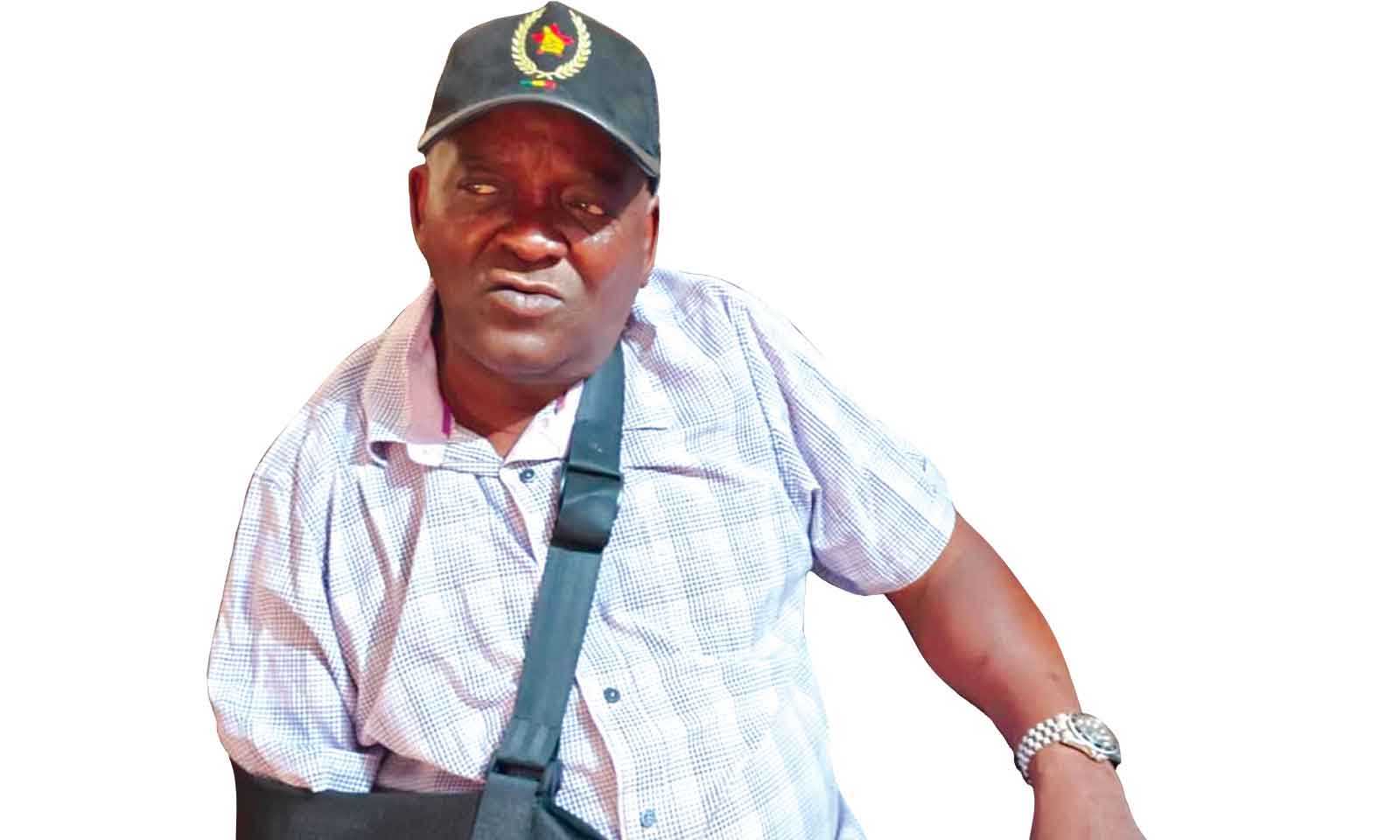
He was a bright student at primary school in Chivhu and at Mzingwane High School in Matabeleland South. But with a promising future in academia before him, he chose the uncertain path of being a freedom fighter, trading textbooks for the trenches of the liberation struggle. As a decorated fighter, his sharp mind and profound sacrifice helped secure the nation’s freedom alongside thousands of other gallant sons and daughters of Zimbabwe. After independence, he served diligently as a diplomat and senior intelligence officer. This week, we begin chronicling the life of war veteran, Cde Kossam Mutsinze. In this first instalment, he recounts the origins of his political activism.
Q: Cde, thank you for inviting us to your home to speak about your life as a freedom fighter. Please start by giving us a brief background.
A: My name is Kossam Zvihwati Mutsinze. I was born in Chivhu in 1953. Officially, my birth certificate says 1956. It was common in those days of the Federation of Rhodesia and Nyasaland for our birth dates to be altered. One interesting thing is that I was not born in a hospital. I was actually born in a kitchen hut.
Q: How did that happen?
A: Our area was far from the nearest hospital, so when my mother went into labour, she had no choice. At that time she was a single mother. My father had lied to her that he was unmarried. When she was pregnant with me and went to see him, she discovered he had a wife. In fact, when she attempted to elope with him, she was beaten up by my father’s wife. She had to return to her father’s homestead in Chivhu. So, I was raised there by my single mother at my grandparents’ home.
I went to Manyere Primary School for my Sub A, Sub B and up to Standard 3. In those days, once you went to Standard 4, you had to change schools. I transferred to Chisangano School, also in Chivhu, for Standards 4, 5 and 6. I was a bright student. After Standard 6, I had a choice of three renowned schools for bright students: Goromonzi, Fletcher and Tekwane high schools.
I was supposed to attend Goromonzi High School, but because I lived far away, I was unable to arrive on time. When I got there, the Form 1 places had been taken. It was the same story at Fletcher and Tekwane— all full. A Dr Darwin from Goromonzi was impressed by my results. He said, “Let me help you get a good school. Don’t go back until we find one for you.” I stayed, and it was through his assistance that I was accepted at Mzingwane High School. My grandfather was so happy that he sold his cow to pay my fees.
Q: Which year was this?
A: This was in 1968, because I finished my Form 4 in 1972. It was also the first time I boarded a train, travelling to Bulawayo and then on to Mzingwane.
Q: How did you fit into the new environment at Mzingwane, coming from Chivhu, which was relatively far?
A: Fitting in was not too difficult. It was easy to make friends because we shared similar challenges. One major issue was that we were restricted from speaking Shona or Ndebele; we were forced to speak English. If a teacher or prefect heard you, you were punished. The colonial education system aimed to undermine our local norms and values. What it did, ironically, was make us politically conscious. I can say my political consciousness began at Mzingwane.
Q: What were some of the acts you took part in as students to show this political consciousness?
A: There were a number of incidents. On one occasion, we switched off the lights for the entire school. This was an act of defiance against some of the rules. Afterwards, the headmaster demanded to know the ringleaders. I was one of them. The authorities wanted to expel me, but since it was my first offence, they decided to give me a final warning.
At that time, we listened intently to news about liberating the country. The radio was flooded with information about comrades like Joshua Nkomo, Robert Mugabe, Rex Nhongo, General Tongogara and others. We were not allowed to listen to these programmes, but as inquisitive youngsters, we always found a way. As we grew older, we learned more about the need to free our country from colonial rule.
Our discussions at school turned more serious and focused. We began talking regularly about politics and, increasingly, about leaving to join the liberation struggle. By my Form Four year at Mzingwane, the authorities had taken notice. They discovered I was becoming deeply politicised and openly speaking of becoming a combatant. My activism was growing, fuelled in part by the example of other students who had already left school to join the cause. Their courage inspired many of us.
This came to a head in 1972 when I was suspended for my political activities. The school felt I had become too vocal and was influencing other pupils to speak out against colonialism. Our principal, Mr Glogg, sent me home to fetch my parents. However, he offered me a final chance: he would halt the expulsion if I promised to stop discussing politics. He made it clear that the only reason for this leniency was my status as a Form Four student who needed to sit for exams. I agreed, managed to write my examinations and passed with flying colours.
I intended to continue my studies, but I immediately faced a new obstacle. The school withheld the critical recommendation letter required for A-Level admission. With that path abruptly closed, my decision was made. There was only one clear way forward, which was to forsake advancement of my studies to join the struggle.
Next week, Cde Mutsinze will recount how he crossed the border to start his journey as a freedom fighter.