Online Reporter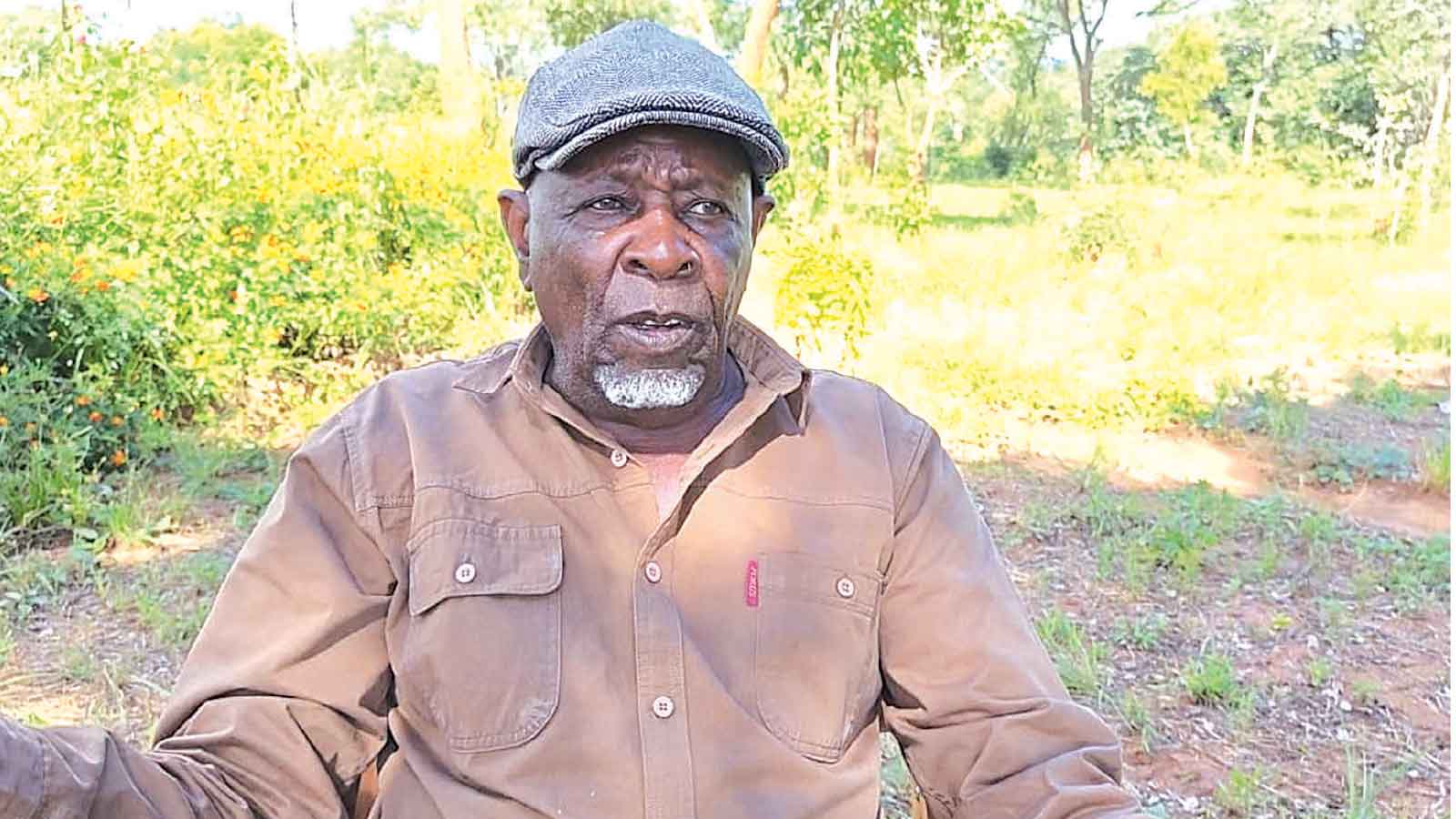
Last week, CDE DAVID MUSHANGWE, who used the name Cde Lobo during the liberation struggle, chronicled how he survived a massacre of black protesters in Highfield by Rhodesian security forces in the mid-1970s. He referred to this period as a time when colonial injustices were at their worst. This week, he recounts to KUDA BWITITI details of the dramatic and perilous journey that took him from Mbare to liberation camps in Mozambique.
**********************
Q: What happened after you escaped the massacre of protesters in Highfield?
A: In the wake of that protest and successive strikes that followed — each one a show of defiance against Rhodesian rule — I found myself on the colonial police wanted list.
I was just one among many youths marked for surveillance and arrest; so began a tense, drawn-out game of hide-and-seek with the Rhodesian police.
They came to my home in Mbare several times, banging on doors and questioning neighbours, but they never found me. I moved like smoke.
Sometimes I sought refuge at relatives’ places in Mabvuku.
Other times, I slipped away to attend clandestine meetings held at Enos Nkala’s house in Highfield, Harare. In Highfield, the air was thick with whispered strategy and the scent of revolution, so there used to be a heavy police presence.
Realising that I was not safe anywhere, I started thinking of moving out of the country to join the war.
It was during this time that my resolve hardened into an unshakeable conviction.
I had to join the liberation struggle.
By 1974, many were already crossing through Botswana, from where they would travel to Zambia, where our leaders operated.
Sometime in late 1974, a new path opened.
The Mozambique route became viable as Frelimo edged closer to seizing freedom from the Portuguese. As fellow liberation movements, they extended a hand of solidarity, allowing us to enter Mozambique and use some of their bases for transit and preparation.
I thus decided that I would cross into Mozambique with my friends.
Mozambique was an inspiration to many youths of my age.
They had pushed the Portuguese colonial government into submission.
So, we told ourselves, if they could do it in Mozambique, we could also do it.
This is why, from around 1975, the number of youths who joined the struggle increased.
Q: Can you describe in detail how you crossed into Mozambique.
A: It was nothing short of dramatic. We crossed via the Machazi area in Chipinge.
I was part of a group of six cadres.
The comrades I crossed with were Stanley Manyau, Alexio Bhaudhi, George Hundu, Cde Marova and a sixth comrade whose name now escapes me.
However, his face, etched with the same determination as ours, remains vivid in my memory.
Stanley, Alexio and I had come from Mabvuku, where I had relocated to avoid capture.
The others hailed from different areas. In those days, the modus operandi was to move in small groups of five or six — ideal numbers for secrecy and speed.
Some cadres were ferried by train, but our case was different; we were transported by car.
Q: You said crossing into Mozambique was dramatic. Please give us more details on this.
A: Indeed, it was theatrical by necessity. We disguised ourselves as church worshippers.
We donned distinctive white church gowns, carried Bibles under our arms and schooled our faces into religious serenity.
Our driver, a man named Taffy, had prepared everything for us. At every roadblock — and there were many — when the Rhodesian police asked our destination, we would answer in calm, reverent tones:
“We are going to a church conference.” The gowns, the Bibles and the humble voices — these were our weapons of disguise.
Q: Can you describe the journey to Chipinge
A: It was a long, nerve-shredding journey. We passed through Marondera, Rusape, then Mutare and onward to Chipinge.
From Chipinge, the driver took us to a specific spot and told us, “This is where you cross.”
The journey took almost a full day. From there, the povo — the ordinary people who supported us with quiet courage — guided us along secret routes towards the Machazi Base.
Along the way, we encountered Frelimo soldiers, who were remarkably helpful, offering directions, food and reassurance.
After reaching Machazi, we stayed for some time, catching our breath and waiting for what came next.
But the saddest chapter of my crossing came later, when we received the tragic news about Taffy, our driver.
He was hanged by the colonial regime.
Q: What was he hanged for?
A: He was hanged for transporting comrades like us. Not long after he successfully delivered our group, someone snitched on him.
He was arrested along with the comrades he was transporting at that time.
The colonial court sentenced him to death.
The comrades with him were also arrested and served long years in Rhodesia’s prisons, where they remained until independence in 1980.
Taffy’s name may not appear in many history books, his story is not etched in marble nor recited in classrooms, but I carry it with me, always.
He was a driver, a conspirator, a martyr.
He was a man of modest means but immense courage, who asked for nothing in return except the quiet satisfaction of having helped free his people.
The cruelty of the Rhodesian system remains a scar because they hanged him for the simple, sacred act of transporting young dreamers to freedom.
He did not die a military general or a politician, but he died a humble hero.
And that is precisely why I will never, ever forget him.
Next week, Cde Lobo speaks about his time in Mozambique, where he and other recruits endured unimaginable hardships whilst waiting to undergo training as combatants.