Online Reporter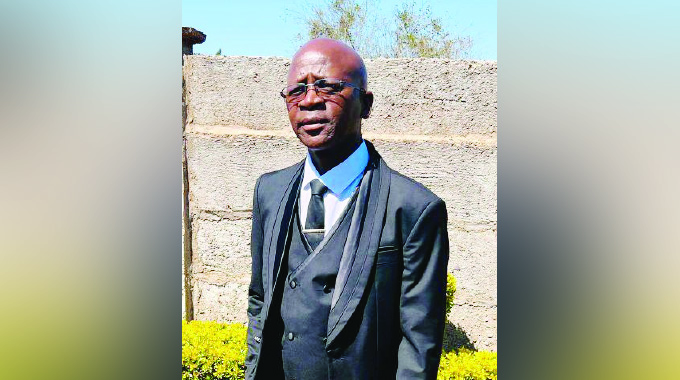
This week, CDE CHARLES MAKHUYA, who used the Chimurenga name Njabulo Moyo, continues his account by narrating to our Society Editor PRINCE MUSHAWEVATO his journey from Zambia to Angola. He also details the assistance they got from the Cubans.
**************************
Q: Last week, you told us how you successfully hid in a truck transporting recruits to Angola after being barred from going due to your young age. You can pick up the story from there.
A: I was unsettled for most of the journey. To be honest, I got goosebumps every time the truck stopped because I was afraid I would be discovered and sent back to the transit camp in Zambia. However, after we had covered a significant distance, I started to feel more comfortable, as it seemed impossible for them to take me back at that point.
Q: What was happening along the way?
A: During the trip, I could feel the world had changed. The Cubans had set up logistics teams along the way.
As we travelled from Zambia to Angola, we would stop at certain intervals to get food that the Cubans had prepared.
They had a heavy presence throughout the journey just to ensure our travel was smooth until we reached our final destination. We would stop, line up, get our food, eat, get back into the trucks and then continue.
By the way, we did not have plates. We used those Cuban hats (caps) as plates.
They would dish up rice and soup in the hats. After eating, you would just turn the hat inside out and wear it again.
Whatever happened, I did not want to be taken back to the transit camps in Zambia.
My sights were now set on getting training, coming back home and fighting.
Fortunately, most of the guys I was with liked me, so I never had any problems with them.
We travelled well until we reached Angola.
Q: How was the situation like in Angola?
A: The first positive development that brought a smile to my face, and probably many others, was that we received plates at the training camp in Angola.
However, there were several other nasty things that were sure to make those who were not strong-willed reconsider their decision to join the struggle.
For instance, at the camps, we had huge, thick sacks that were used to carry second-hand clothes and shoes.
After offloading, we would immediately load food into them.
You can imagine how dirty used shoes are. We were split into smaller groups and took turns to collect food from the kitchen. When it was your turn, you would go, load sadza or whatever food was available and bring it back to your colleagues.
After we finished eating, we would put our clothes or shoes back into the sacks without cleaning them.
But, despite all this, the morale in the camp was very high. This gave me hope that we would liberate the country in a short space of time.
While in Angola, we met many Cubans and Russians, which surprised me a lot.
I was humbled by the respect and support they gave us.
In fact, at some point, I began to assume that they had joined the Zimbabwe African People’s union (ZAPU) and would eventually become Zimbabwe People’s Revolutionary Army (ZIPRA) fighters.
I later learnt, however, that they were instructors sent to train us.
Nonetheless, I was excited that they were assisting us, considering the harsh treatment we were getting at home from the whites.
When the second group finally arrived, we had already been toughened by the extensive and rigorous training we were undergoing. We were taught how to use advanced weapons, the basic rules of engagement in the battlefield and how to stay physically fit.
Q: Can you tell us about the training and new assignments?
A: After completing our training, we had learnt a lot from the Russians and Cubans.
On our side, the guys who wanted to introduce new training methods were George and his colleague Ronald Choga.
However, the Cubans kept telling them they had their own syllabus they wanted us to follow and complete.
They clearly stated that we would get our usual training back in Zambia, not in Angola.
During training, I was selected to specialise in artillery and anti-tanks.
We were trained on the Gun 75 (an anti-aircraft and field piece), while others specialised in mortars, engineering and communications.
The infantry units were from Company One up to Company Eight. There was also a special group that trained on the 14,5 anti-air gun.
After we were done, Brigadier-General Abel Mazinyane (Retired) came for our passing-out parade in July 1978.
He was accompanied by other senior commanders.
Before everyone was addressed, our names were called and we were told we would not be travelling back to Zambia with the rest of the team since we had been seconded to join the training team.
Some became drivers, others instructors, while others, including myself, entered the medical field.
The camp was very big and required several medics for each smaller group in the encampment.
The group I trained with left by plane from Angola to Zambia.
Then the third group arrived.
Q: You can carry on?
A: We took them through the drills and after their training, the Cubans stationed in Zambia returned and announced they were introducing new weapons. They introduced the 57 and 76 to replace the 75 weapon.
They also added new things to the mortar company and did the same in communications.
They also added new tactics for the infantry.
Afterwards, they took some of the guys to Luanda to train on the Strela, which was also being done by Cubans.
Another group was selected again, commanded by Ben Matshiwaza as a Russian interpreter and Sijabuliso Dabengwa.
They opened a camp for armoured cars and tanks.
So, there were now two camps in Angola: one for armoured cars and tanks and the other for infantry and light artillery.
After training, a group of plus or minus 3 000 had travelled to Zambia while another similar group of recruits had come to Boma.
This is when disaster struck us in Angola — one of the worst attacks that we ever witnessed in the entire liberation struggle of our country.
Next week, Cde Charles Makhuya will give a first-hand and touching account of how Rhodesian Selous Scouts, with the help of apartheidSouth Africa, massacred hundreds of Zimbabwean freedom fighters in Angolan training camps.