Online Reporter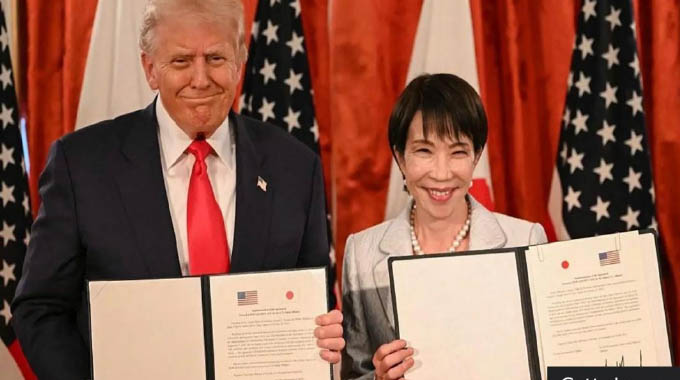
Suranjana Tewari, Correspondent
UNITED STATES President Donald Trump signed a series of agreements during his visit to Asia aimed at securing the supply of rare earths — a critical sector long dominated by China. The deals, struck with Japan, Malaysia, Thailand, Vietnam, and Cambodia, vary in scope and substance, and it remains too early to gauge their tangible impact. However, each agreement reflects a concerted effort to diversify access to minerals essential for advanced manufacturing, including electric vehicles and smartphones.
These agreements, designed to bind partners into trading with the United States, are a clear attempt to reduce reliance on China ahead of a key meeting with its leader, Xi Jinping. While they may eventually challenge Beijing’s dominance in the rare earths market, experts caution that the process will be costly and time-consuming.
“Building new mines, refining facilities, and processing plants in regions such as Australia, the United States, and Europe comes with significantly higher capital costs, stricter environmental regulations, and more expensive labour and energy inputs compared to China,” wrote Patrick Schroder, senior research fellow at the Environment and Society Centre at Chatham House, in an editorial.
It is not yet clear whether the US$550 billion investment previously agreed between the United States and Japan will be included in the rare earths deal. US Commerce Secretary Howard Lutnick is expected to clarify those details during his upcoming meetings with Japanese companies.
Nonetheless, this marks a turning point in the ongoing US-China rivalry. Beijing at present controls the processing of nearly all the world’s rare earths, giving Xi considerable leverage in the trade war with Washington. Recent Chinese export controls have disrupted supply chains, as the two nations continue negotiations on a range of issues, from tariffs to the sale of TikTok’s US operations.
These controls have reignited concerns across manufacturing hubs in the United States, Europe, and Asia, highlighting the vulnerability of global supply chains to the volatile US-China relationship.
Even before Trump’s trip to Asia, he secured an US$8.5 billion deal with Australia, pledging industrial co-operation and joint investment to build rare earths processing capacity outside China. Speaking during Australian Prime Minister Anthony Albanese’s visit to the White House, Trump declared, “In about a year from now we’ll have so much critical minerals and rare earths that you won’t know what to do with them,” adding, “they’ll be worth $2” — suggesting prices would collapse as supply surged.
While both the timeline and price prediction are unlikely, Australia remains a key partner in the US pursuit of critical minerals. “
The country is a periodic table that lights up like a Christmas tree, boasting one of the broadest and richest concentrations of mineral resources on Earth,” wrote Gracelin Baskaran and Kessarin Horvath of the Centre for Strategic and International Studies in a recent essay.
Several companies are already constructing refineries, including Iluka Resources, which told the BBC earlier this year that such projects would be financially unfeasible without Government support.
The critical minerals deal with Japan includes commitments to boost supply and production of rare earths, co-ordinated investment, stockpiling and the establishment of a Rapid Response Group to manage supply disruptions.
Agreements with smaller Southeast Asian economies are less detailed. Malaysia, Thailand, Vietnam and Cambodia have all pledged to increase US access to rare earths and implement export rules favouring American buyers over Chinese firms. These deals also include assurances that shipments to the US will not be blocked and that local processing and investment by non-Chinese companies will be encouraged.
However, the agreements with Malaysia and Thailand are non-binding memoranda of understanding (MOUs). Their durability amid political changes in these countries remains uncertain.
Another major concern is regulation — particularly regarding environmental impact. Rare earths processing is notoriously polluting, involving extraction, leaching, thermal cracking, and refining, all of which produce radioactive by-products. The environmental consequences in China have been well documented, discouraging other nations from embracing the industry.
The world’s largest supplier of rare earths outside China is Australian firm Lynas Rare Earths, which relies on Malaysia for part of its refining operations but has faced numerous regulatory challenges there over the years.
By securing investment deals with regional heavyweights such as Japan and Australia, which could give the US greater control over rare earths supply, Trump enters Thursday’s high-stakes talks with Xi on solid footing. Yet China still controls around 70 percent of global rare earths processing. Catching up will require vast capital, robust environmental regulations, and specialised technical expertise. Constructing a single processing plant can take years from design to full operation. Although Australia has long been committed to increasing rare earths production, its facilities are still not fully operational.
China remains an active and influential player in the region. Trade with the world’s second-largest economy is vital for all the countries involved, including Japan. Washington cannot afford to underestimate Beijing’s sway, particularly in Southeast Asia.
Diversifying and transforming rare earths supply chains is essential. While commitments to co-operate and invest mark a promising start, the path ahead is long and fraught with complexity.
– BBC