admin
admin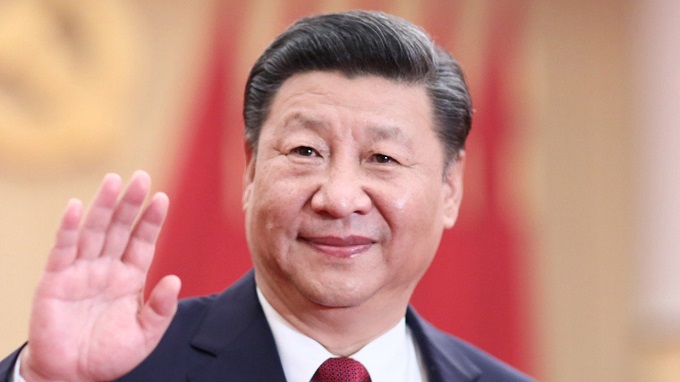
THE emergence of China as a global economic giant and Africa’s largest trading partner is nothing short of amazing.
In a world fixated by Western “civilisation” that has in part not worked in some developing countries, there is a lot that countries like Zimbabwe can derive, in particular if there is a will to have the ‘Zimbabwe Dream’.
The idea of a dream, if China’s is to be read well, is not just talk. It requires concrete and well-articulated policies, culture and acceptance from citizens. A closer look at the Chinese Dream gives a workable example which puts Africa at an ideal position to partner more closely with China.
The so-called ‘Third World’ could rest dump the tag and explore new avenues of reaching the Promised Land to prosperity and universal happiness for all as expressed by China’s distinguished leader, President Xi Jinping’s writings in his books Governance of China and its sequel.
President Xi broadly explains what the dream entails.
The Chinese Dream concept is aimed at building a moderately prosperous society and realise national rejuvenation. President Xi made clear of the ambition when he attended an exhibition themed “road towards renewal” at the end of 2012. Since then it has become a buzzword both at home and abroad.
The Asian nation can share the lessons and help give hope of a new dream as Zimbabwe makes its way towards a middle-class economy by 2030.
Undoubtedly, when the economy of China hit its lowest in history, it took a principled stance by the Chinese Communist Party (CCP) to usher in the Chinese Dream.
What did it entail, that Zimbabwe ought to learn from?
Simply, the Chinese administration unveiled “The Great Chinese Dream,” which affirms its “commitment to connecting its development with that of Africa, aligning the interests of the Chinese people with those of the African people, and combining China’s development opportunities with those of Africa.
That explains China’s heavy involvement in the development of Africa and it comes as no surprise to why Zimbabwe continues to look East for inspiration.
The Chinese Dream integrates national and personal aspirations, with the twin goals of reclaiming national pride and achieving personal well-being.
It requires sustained economic growth, expanded equality and an infusion of cultural values to balance materialism.
According to President Xi, achieving the great rejuvenation of the Chinese nation was the greatest dream for the nation in modern times.
“In my opinion, achieving the rejuvenation of the Chinese nation has been the greatest dream of the Chinese people since the advent of the modern times.
“The dream embodies the long-cherished hope of several generations of the Chinese people, gives expression to the overall interests of the Chinese nation and the Chinese people, and represents the shared aspiration of all the sons and daughters of the Chinese nation,” said President Xi as he delivered a speech at an exhibition themed “The road to rejuvenation”.
The hard work that makes the Chinese Dream come true, is aptly summed up in the popular Chinese saying which goes: “Empty talk harms the country, while hard work makes it flourish”.
The saying can be a message to African countries that without a shared and clear national vision, no country can liberate itself from the shackles of poverty and backwardness.
And this can be explained by the amazing unity of purpose shared by the over 1, 4 billion Chinese population.
There is no doubt that in this globalised economy Zimbabwe in particular, and Africa in general should locate themselves in the Chinese Dream for them to build a moderately prosperous society.
Already with a gross domestic product (GDP) of over US$15 trillion, the Asian giant’s transformation from a poor developing nation into an economic giant today, is no doubt an inspiring textbook case that can be used by developing nations like Zimbabwe.
The use of the Chinese Dream by African countries particularly as a model to develop itself was also aptly emphasised by President Xi.
He said the Chinese Dream, which is a dream for peace, development, cooperation and mutual benefit will not only benefit the Chinese people, but also people of all countries in the world.
It is important to note that the establishment of the Forum on China Africa Cooperation (FOCAC) in 2000 also signified the starting point of a new era of China’s engagement with Africa.
The Beijing Action Plan that emerged from FOCAC Summit provided the roadmap for 21st century relations, including political and economic cooperation, as well as cooperation in international affairs, and social development.
From that, China launched unprecedented and unparalleled economic cooperation with Africa.
The Chinese Dream is an example of how a nation that truly believes in itself and has the right mindset can overcome any challenge and achieve greatness.
Considering that China is an upcoming modern superpower which respects and supports the other countries it cooperates with including those in Africa, it is high time that the Zimbabwean government can use the successful Chinese story as a model that development would not be an overnight event but a long process involving sacrifice and hard work.
It should pay particular attention to how China emerged from being a poor country to become an economic superpower that it is today.
What Africa needs to do right now is to dream big, like the Chinese, to plan their economic agenda meticulously, like the Chinese did, and to work diligently and consistently, like the Chinese always do.
There is no doubt that the Chinese Dream as a visionary milestone that energised President Xi’s transformation of China across a broad spectrum of complex economic, social and governance issues can also economically and socially transform developing countries like Zimbabwe.
Political scientist Mr Richard Mahomva said a lot can be learnt from China especially, the current construction of power in China is a template that can be used by the Zimbabwean government to structure and nurture alternative thought to state-building.
“China’s approach to political construction is mind opening and reflective. Mind opening in the sense that it exposed how our open-arms to engage and re-engage are giving us access to many options of rebuilding our country.
“This governance model under President Xi Jinping of China offers a refreshing perspective to world politics. Through this approach China is dedicating its energy to integrating the world’s marginalised countries to contribute to a new world order. Therefore, China’s humble reach-out to Africa must be applauded as it testifies the need to re-order the world system,” said Mr Mahomva.
Contrary to the tenets of the American Dream which encourages unsustainable development, growing poverty and inequality, and imperialist wars, Mr Mahomva said China’s current economic progress cannot be traced to any form of imperial conquest and invasion.
President Xi’s compendium Governance of China also contains several interesting suggestions and lessons what Africa and Zimbabwe should learn from China’s experiences and adapt some of them to their realities.
According to President Xi, a leadership with a vision is a perquisite for development, which has to be initiated and sustained internally by the nationals of that country.
“To meet our development goals, we must enrich ourselves not only materially but culturally and ethnically as well.
“To achieve our goals and create a bright future we must rely closely on the people, always act in their interests, and work in an industrious, honest and creative way. We often say, ‘Empty talk harms the country, while hard work makes it flourish.’ This means we first get down to work,” said President Xi during his address at a recent discussion session with national model workers.
After making a comparison of the Chinese Dream and the American Dream, political analyst Methuseli Moyo recommended Zimbabwe to adopt the former saying it has been more successful at promoting common prosperity and sustainable development, than the latter which encourages unsustainable development, growing poverty, inequality and imperialist wars.
“China is seen as productive, cheaper and unconditional transfer investment, technology and skill to Africa, at a time the Americans and the West are bullying Africa to ‘reform’ or no investment and aid.
“Zimbabwe can be inspired by China in the sense that it is possible to develop and industrialise using local skills and resources,” said Mr Moyo.
Another lesson that Zimbabwe can learn from China is that a nation must train its youth so that they can play a critical role in boosting economic development.
This calls for the Zimbabwean government to strengthen its current efforts in supporting youth programmes in order to promote the creation of employment by the youths themselves.
Former Zimbabwean Ambassador to China Christopher Mutsvangwa said the Chinese Dream renders fertile ground for Zimbabwe to carve itself into the ethos of the new opportunities being offered by a resurgent China.
“The Chinese Dream is embodied in the emergence of China as a fast rising economic power. Through harnessing modern technology and improving on management techniques, China has given the world a number two global economy.
“Hence, Harare and Beijing must explore all avenues to deepen economic and business links and convert their knowledge base to new digital format,” said Ambassador Mutsvangwa.
From the foregoing it is clear that China-Africa partnership offers African countries an opportunity to draw a leaf from China’s experience in the competitiveness of its industry and exports.
There is also a huge potential for Zimbabwe to use the current partnership arrangements to boost its agricultural and mining sectors that remain the largest employers of its people.


 Online Reporter