Online Reporter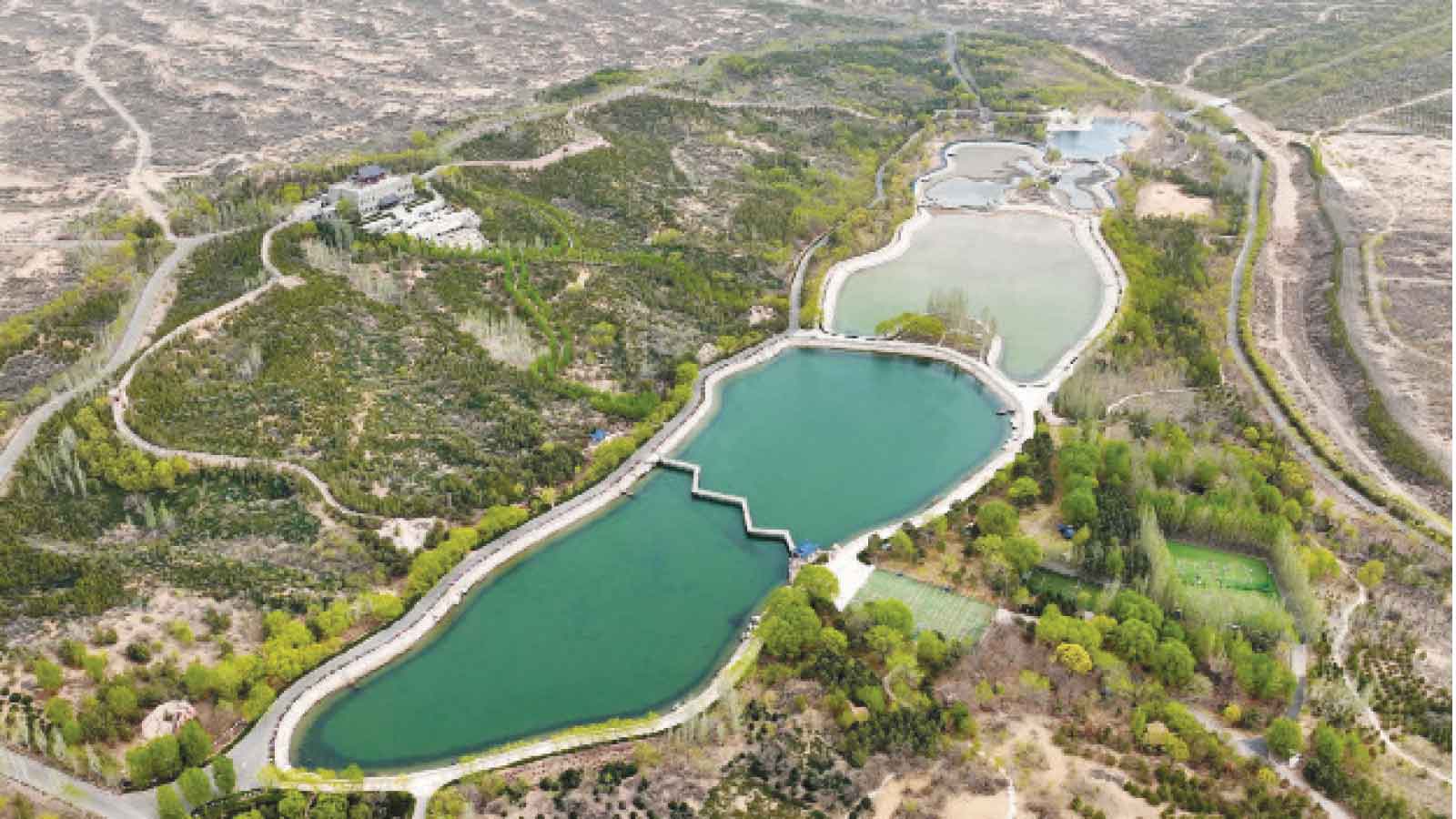
Conrad Mupesa recently in Yinchuan, Ningxia, China
ONCE an unforgiving sea of shifting sand, where little could survive, the Baigetan National Nature Reserve in China’s Ningxia Hui Autonomous Region has been transformed into a thriving ecological and agricultural landscape, offering powerful lessons for Zimbabwe as it seeks to boost agricultural productivity and climate resilience.
The remarkable turnaround demonstrates how scientific planning, sustained investment and community participation can convert degraded land into productive ecosystems — a model that resonates with Zimbabwe, where agriculture remains the backbone of the economy, but production has faced challenges arising from climate change, land degradation, inadequate irrigation infrastructure, limited mechanisation and constrained access to affordable finance.
Located on the south-western edge of the Mu Us Sandy Land, Baigetan lies in one of China’s driest regions, receiving barely 170 millimetres of rainfall annually.
For decades, fierce winds carried tonnes of sand into the Yellow River, threatening farmland, villages and urban settlements.
Today, the once-barren landscape tells a different story.
The flourishing green landscape of Baigetan demonstrates that even the harshest environments can be transformed into productive assets through vision, science, persistence and collective action.
Dense vegetation blankets the area, wildlife has returned in abundance and local communities now earn sustainable incomes from forestry, fruit production, livestock and eco-tourism.
The transformation did not happen overnight, as it took more than seven decades of commitment by three generations of conservationists who restored over 45 000 hectares of degraded land while bringing nearly 67 000 hectares of drifting sand under control.
Forest and grass cover have increased to 41 percent, pushing the desert back by more than 20km from the Yellow River.
Rather than relying on expensive technology, the restoration programme combined scientific research with simple, locally available solutions.
Drought-resistant grasses
Workers used straw to build chequerboard barriers that trapped moving sand before planting drought-resistant grasses, shrubs and trees suited to different soil types and rainfall conditions.
Drip irrigation was introduced in suitable areas to support economic forests, crop production and livestock integration.
Reserve guide Ms Ma Jing said the success lay in tailoring restoration methods to local environmental conditions.
“We adapt our measures to local conditions and water availability. Every rainfall becomes a planting opportunity,” she said.
She explained that the reserve pioneered a “1+4” precision desert restoration model, combining straw chequerboards with four specialised planting techniques that have raised seedling survival rates to more than 75 percent despite annual rainfall of only about 170 millimetres.
The approach has restored biodiversity, with scientists recording 311 plant species and 129 animal species, including the nationally protected leopard cat, whose return is regarded as evidence of a healthy ecosystem.
The visit to Baigetan formed part of a China Broadcasting International Economic and Technical Cooperation programme for 34 journalists and media professionals from several countries in the Global South.
For Zimbabwe, Baigetan’s success reinforces the importance of climate-smart agriculture, irrigation development, scientific research and active community participation.
The country has already made notable progress through initiatives such as Pfumvudza/Intwasa, dam construction, irrigation rehabilitation and mechanisation programmes.
Zimbabwe is accelerating its drive towards food security, rural industrialisation and Vision 2030.
Speaking recently at Kadoma Research Centre, Agritex chief director Ms Madeline Magwenzi said even areas traditionally regarded as unsuitable for grain production could become major contributors to cotton output.
“We are targeting three million farmers to grow cotton under the Pfumvudza programme across the country, and this will help revive cotton production,” she said.
The Kadoma Research Centre is developing cotton varieties capable of withstanding Zimbabwe’s harsh climatic conditions.
Zimbabwe has also achieved successive wheat harvests that have met national demand, demonstrating that targeted Government support and strategic investment can reverse production declines.
However, agricultural experts believe there is still significant potential to reclaim degraded land, strengthen soil conservation, expand irrigation and increase production of maize, cotton, horticultural crops and livestock.
Commercial farmer Mr Tichaona Mapfoche of Zvimba said Zimbabwe possessed some of the world’s most fertile soils, but farmers must embrace modern conservation practices to sustain productivity.
“We have good land, but we need to farm differently if we are to preserve our soils while achieving better yields,” he said.
Leading tobacco farmer Ms Zandile Maseko said land should be viewed as a long-term investment requiring continuous care.
Much of her farm consists of sandy soils well suited for tobacco and traditional grains. She urged farmers to invest in improving their land instead of relying solely on Government assistance.
Zimbabwe receives between 400 millimetres and more than 1 000 millimetres of rainfall across most farming regions, considerably more than Baigetan’s 170 millimetres annually.
This suggests that greater investment in irrigation, water harvesting, conservation agriculture and soil rehabilitation could unlock substantial agricultural potential in many underutilised areas.
Community ownership
China’s experience also highlights the value of community ownership.
Instead of depending entirely on the government, Baigetan introduced a competitive contracting system that encouraged families to take responsibility for restoration projects, creating incentives for environmental stewardship while improving productivity and household incomes.
The result has been stronger ecological security, improved livelihoods and sustainable economic growth.
For Zimbabwe, where agriculture supports millions of rural households and remains a major source of export earnings through tobacco, horticulture, cotton and sugar production, the Baigetan experience carries an important message.
Land ownership alone does not guarantee productivity.
Long-term investment in irrigation, scientific research, environmental restoration, agricultural extension services, mechanisation and farmer empowerment is what ultimately transforms land into wealth.