Online Reporter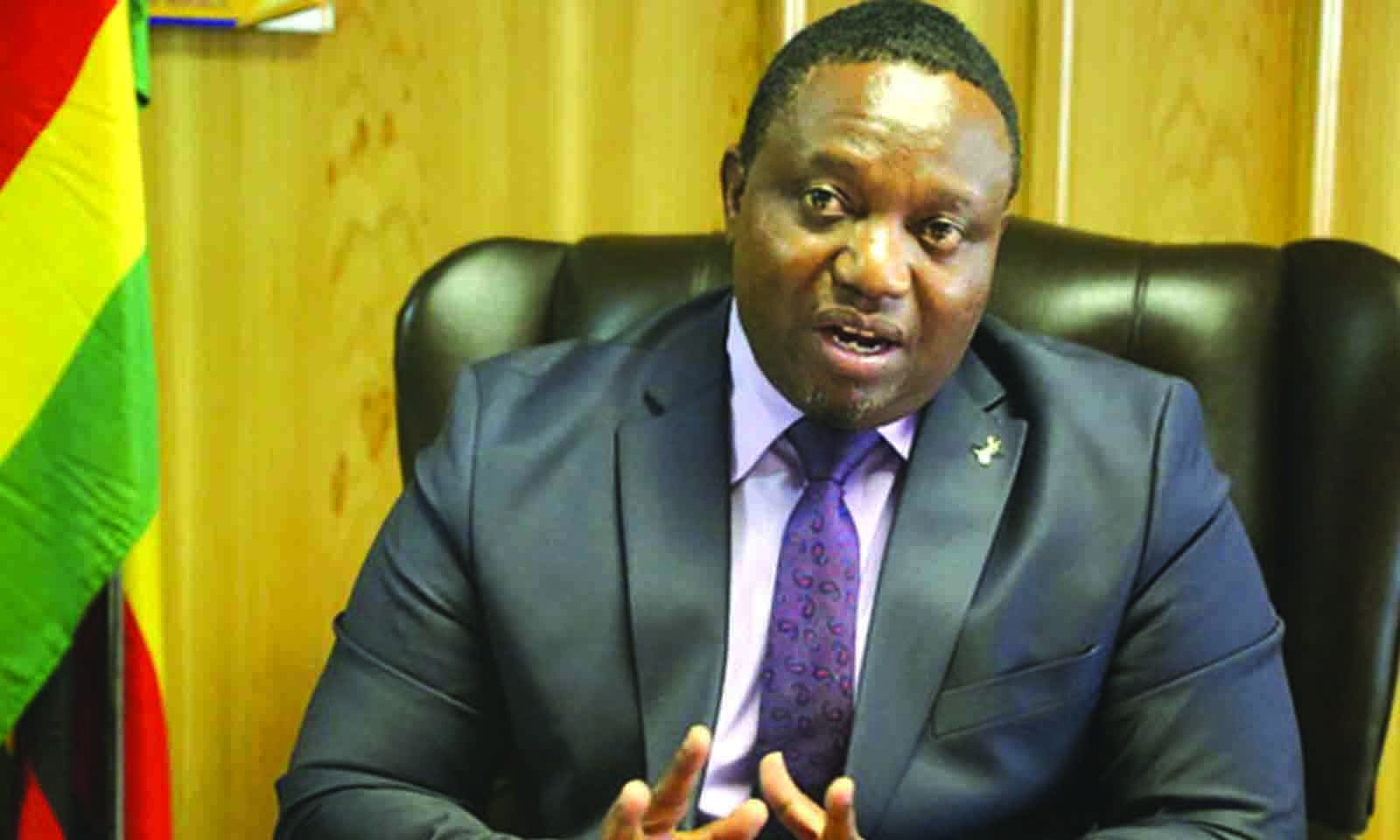
Isdore Guvamombe
Reflections
The silence as one arrives at Chiware in Odzi near Rusape, is eerie and profound.
Only chirping birds that intermittently somersault, albeit, effortlessly from one tree branch to another or from one grass tuft to another, give a sign of life.
Distant cranking cattle bells give another sign of human existence, the resettled farmers. Otherwise, it is quiet. Loud silence! The silence there speaks a lot.
The dearth of other sounds sends a chill down the spine. Here, before you even know it, the dead speak to you from mineshafts they were dumped in by Rhodesians. You feel it.
Your hair rises. An aura of strangeness caresses your mind and soul.
A secondary forest of stunted indigenous bush shrubbery and overgrown tinder dry grass hides an array of disused mineshafts. The dusky red soils speak the language of unparalleled fertility and mineral richness.
Not only do the environs provoke an adrenaline rush to the visitor, but it does tingle the brain and the inner self.
It communicates a message understood by the body without the spoken word. Here, the bowels of mother earth are pregnant with products of callous murders that epitomise Rhodesia. A pregnancy from the rape of human rights!
Rape of black life. Murder of black freedom fighters and ordinary people who supported them. Murder of freedom fighters, our liberators.
In the shafts are horror stories, for long overshadowed by other national events, yet so important and critical to the independence of Zimbabwe.
In the dotted mineshafts lie interred, the remains of thousands of freedom fighters and civilians, butchered, poisoned, asphyxiated or killed by Rhodesians during the liberation struggle. The killings were mainly brutal and unorthodox.
Then there was the purchase of a macro-burn, an incinerator to burn executed prisoners to ashes, within hours, as some of the remains which are burnt beyond recognition might have been victims of that crude tactic.
“We will never know how many of our people were disposed of in this manner. What is, however, beyond debate is that the macro-burn was in constant use, hence the estimation that hundreds of our people whose burial locations have not been identified were disposed of in this manner,” says Home Affairs and Cultural Heritage Minister Kazembe Kazembe.
Here lie the uncounted and unaccounted for, fallen heroes of our liberation struggle and civilians, caught in the intricate dragnet of Rhodesian secret services.
More than 300 bodies were exhumed from one of the mineshafts at Say Mine, where they were buried dead or alive, before the shafts were sealed off and hidden from the eyes of many.
More bones still lie in the shafts.
Undertakers met skeletons on sitting positions, some with shrivelled skin supporting their bony frames. They met skeletons of mothers buried with babies strapped on their backs. Here they came across bodies mummified in the airless tunnel. They met blown off torsos. They came across the remains of people whose hands and legs were tied together with barbed wire.
The remains of people whose skulls bore gunshot holes.
They came across a scullery of bones and skulls, clothes, dark fatigue jeans, and Chinese tenderfoot Super-pro, and many others. Women’s earrings!
“What we came across during exhumations confirm brutal killings and executions and dumping of freedom fighters and ordinary people who supported them. It was systematic,” says chief exhumer of the remains, Mr Richard Chinyani. These are gory sites.
The exhumation of the bodies has seen corpses in various postures. Wearing different clothes and shoes. Cry our beloved freedom fighters, whose blood watered the birth of Zimbabwe we so live in today.
The remains of 129 people were recently exhumed from a shaft at Ardwell Mine in Chiware area of Rusape and were reburied this week at Mutumba Six Shrine near Mutare.
This brought to 397 the number people reburied at the shrine since it was opened in 2014.
There was a wave of emotions, a wave of spiritual incarnations, hysteria, shifting tapestry of drumbeats, revolutionary song and dance as one by one the remains were reburied with full military honours.
At least three families suddenly found the remains of their loved ones who went missing during the struggle in mid 1970s. Their spirits demanded to have their remains taken to their homes. And, this was more than 42 years after they disappeared.
One sad and striking feature about these remains that were reburied recently is that after being exhumed, they were stashed in a tent for more than seven months because of bureaucratic bungling caused by lack of a clear liberation war mass graves and human remains management policy.
It is the resilience and steadfastness of the Fallen Heroes Trust led by its chairman, Dr Arthur Makanda, that resulted in the reburial.
This has been the norm ever since exhumations started. The lack of clear cut policy has resulted in a lot of delays.
However, going forward, there is need for a synchronised approach between the trust and arms of Government to speed up the reburial of the fallen heroes and bring the much needed closure and finality to many cases.
There is need to make them rest. They need a final decent burial place. They died for this country. They wanted to live in the Zimbabwe we are living in now. They loved their country and shed their blood in the line of duty.
Their sacrifice was ultimate. They lost their lives for us and for the good of all of us. They hoped to live in a free Zimbabwe, and yet they still lie in unmarked places.
Of course, the good news is that, Minister Kazembe says Government was working with stakeholders to come up with a clear cut policy.
He said the Government was also working at harnessing advances made in genomic sciences so that DNA analysis could be used in identification of victims.
From the look of things, we still have many comrades who still lie not properly buried and more and more exhumations face us.
“While it is very important to exhume, they should, where possible, be accompanied by identification of victims. Identification of victims helps the relatives who since the end of the war have questions as to what happened to their loved ones who did not return home when the war ended,” says Minister Kazembe.
The future of the country lies in bringing closure and finality to the whereabouts of many comrades who died in the liberation struggle. These are our heroes who died for us. These are our heroes whose families need to know where they are interred.
Chiware was surely one of the horrors of Rhodesia.