admin
admin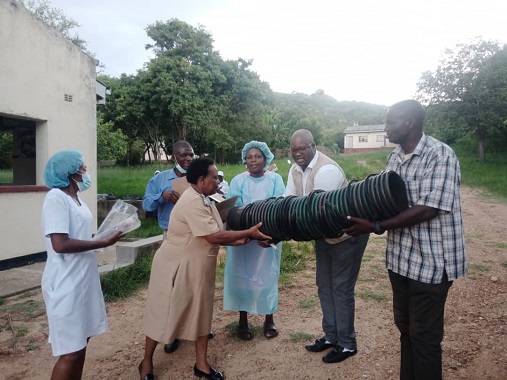
Phyllis Kachere Deputy News Editor (Convergence)
Now with a population of approximately 80 000 according to the 2022 Census report, double the estimated 35 000 recorded in 2015, the Hopley Farm informal settlement in Harare South remains saddled with both water and sanitation challenges.
Like most informal settlements, Hopley has been hit by cholera. As of February 3, Harare South had recorded 850 cases with 14 people having succumbed to the diarrhoeal disease.
In an interview, a resident of the area for the past seven years, Ms Dadirai Kativhu said potable water has been a challenge since the settlement started.
“We fetch water for household use from a shallow well which is located almost adjacent to a blair toilet. Sometimes we fetch water from a nearby stream where we also do our laundry. When the borehole is functional, we also fetch drinking water from it.
“Before the cholera outbreak, we never used to boil the water. Now, my family boils all drinking water,” said Ms Kativhu.
The perennial water challenges have forced the population to rely on contaminated water sources which are made worse by poor sanitation.
It is against this background that Government, through its auxiliary, the Zimbabwe Red Cross Society (ZRCS) with financial support from the European Union and the Finnish Red Cross implemented a cholera preparedness project in 10 hotspot wards Harare Southern and Western districts.
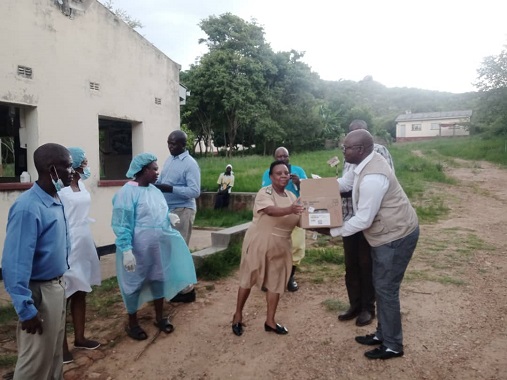
The project has a focus on three key components: prevention, containment and upscaling. The aim is to prevent the spread of cholera among at risk communities in urban Zimbabwe by breaking transmission through Risk Communication and Community Engagement (RCCE), improve community-level and institutional response capacities to contain outbreaks and limit impact on affected communities, and increase scale up capacities to rapidly and flexibly respond to larger outbreaks in the country.
In addition, three ORPs were deployed in Manicaland, Masvingo and Mazowe. The deployments are being supported by teams of volunteers who are continuously providing Risk Communication and Community engagement (RCCE) through door-to-door visits to break transmission in communities.
To date, 1 426 patients have been served at the three ORPs in Harare while 309 have been referred to nearest health facilities for further attention.
The ORPs serve as the primary points of care and the first lines of defence for community-level cholera case through the administration of oral rehydration.
This has resulted in the setting up of oral rehydration points in Harare’s informal settlements of Hopley (Nhando area), Churu Farm and Budiriro 5 Extension.
ZRCS volunteer Mr Arnold Chitsotso at Nhando Oral Rehydration Point in Hopley said they attend to an average of 40 people per day some of whom they refer to the local clinic.
“We are managing most of the cholera cases here with only the severe ones being referred to the clinic. Were it not for this oral rehydration point, the clinic would have been overwhelmed. Remember cholera is not the only ailment afflicting our community,” said Mr Chitsotso.
ZRCS secretary general Mr Elias Hwenga said:
“Research has shown that 80 percent of suspected cholera cases (mild to moderate) can be easily managed at the community ORP and may not need to visit a local health facility. This has the effect of not only decongesting health facilities and reduces transport burden on patients, but can save lives by providing quick treatment.
“A number of people from poor communities succumb to cholera death due to delayed treatment as travel long distances to health centres. Besides providing oral rehydration therapy, the ORPs serve as information and reporting centres where patients get critical information about breaking cholera transmission and treatment and provide critical reports to health facilities about levels of infection and community readiness for response. ZRCS is looking forward to deploy more ORPs in Harare and beyond as we plan to scale up our response in the country,” said Mr Hwenga.
Finnish Red Cross Country Director Ms Michaela Sodergard said they will scale up support for the setting up of the oral rehydration points.
“Oral rehydration points are proving to be a vital first line of defence as they serve cholera victims within their communities. We intend to scale up support to on the cholera fight,” said Ms Sodergard.
By February 5, the Ministry of Health and Child Care recorded 22 6 32 suspected cholera cases with 2395 confirmed cases. During the same period, 21 940 recoveries were recorded with 71 confirmed deaths and 428 suspected deaths.
City of Harare’s acting head of Environmental Health Services Mr John Manyara said the recurring cholera outbreaks in Harare South were due to poor water and sanitation challenges.
“The area lacks proper water reticulation and sewer systems. We applaud the intervention by the Zimbabwe Red Cross Society and funding partners. The intervention has significantly reduced community mortality from cholera,” said Mr Manyara.



 Online Reporter