Online Reporter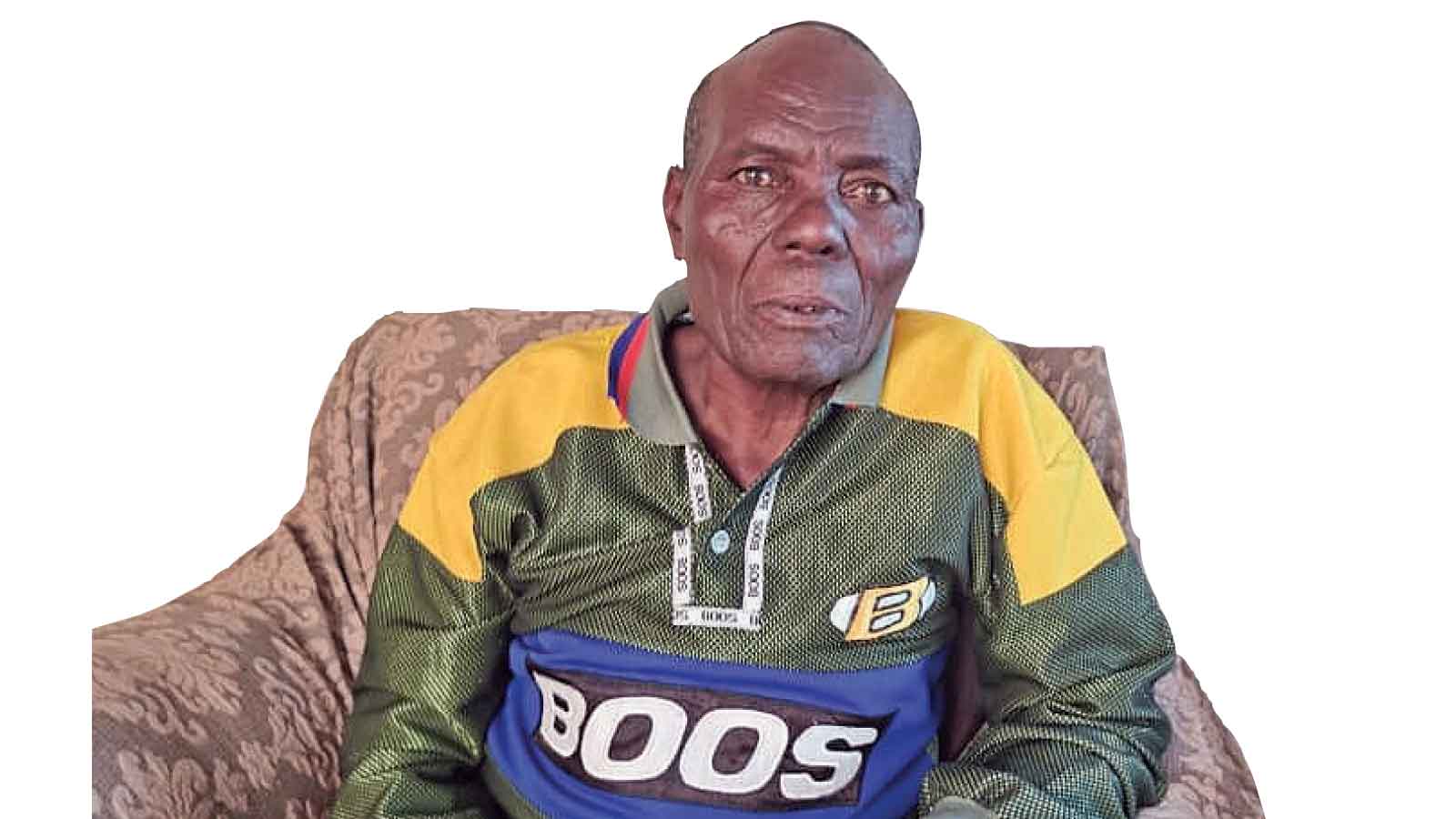
He was a feared liberation fighter, whose very mention sent cold shivers down the spines of Rhodesia’s soldiers. Operating on the front lines, he commanded men and women, fought numerous battles and left an indelible mark on the liberation war in the Chiduku Detachment in Manicaland and in the terrains of Mhondoro. This week, we begin the story of Lieutenant-Colonel (Retired) HARRISON DZUNGWA, known in the annals of the liberation war as Cde Cover Takurira. He opens up to Zimpapers Political Hub’s KUDA BWITITI about his humble beginnings and the fiery path that led him to take up the gun.
Q: Comrade, take us back to your early life.
A: I am Harrison Dzungwa, born on May 14, 1949. However, my national identity card reads 1951 — a common discrepancy of those colonial times. I was born in Zimunya, in the area called 30 Mile, in Manicaland province. I am the second-born in a family of eight. My late parents were Martin Dzungwa and Metty Matikuwe.
Q: Where did you get your early education?
A: I attended Muriro Primary School in Zimunya for my early education. Later, my father found work in Mutare, so I moved to Sakubva to continue with school. But tragedy struck in 1964 when my father died. Under the brutal colonial laws, I could not remain in school. We were evicted from our municipality home. I returned to Zimunya, then came back to Sakubva to stay with my maternal uncle in an area called KumaBlock.
Those were tiny apartments meant for single people, yet, as many as 25 of us would cram into one room. That was the squalor the Rhodesian system forced upon us. Worst of all, I could no longer attend formal school; the colonial laws made it nearly impossible to enrol without parents. I studied by correspondence, reaching only Form Two. After 1970, I worked for a white man, Victor Matty, learning carpentry. Later, I joined a larger white-owned firm, Blue Lamb, in Mutare, where I worked until 1975.
Q: What were the conditions like at Blue Lamb?
A: In skill, I grew. But in dignity, we were crushed. We were treated as second-class citizens. Racism was a daily whip. Our white supervisors called us filthy names. They were so drunk on colonial arrogance that they could not imagine black majority rule ever seeing the light of day.
By the mid-1970s, the political winds were changing. We listened secretly to Radio Mozambique, which broadcast the call to arms — the need to fight colonial rule. Young men and women were already crossing into Botswana, Zambia and Mozambique.
The whites banned Radio Mozambique. They called our freedom fighters “terrorists”.
I remember one day, our manager — a man named Smith, connected to the Rhodesian Security Forces — watched a Rhodesian army plane fly overhead. He gathered us and sneered: “You see that plane? That is the military might of Rhodesia. I swear, terrorists will never rule this country. They can only win if they bring troops from Russia.”
Q: How did those words strike you?
A: They struck me like a hammer. The arrogance boiled my blood. That moment hardened my resolve to join the liberation struggle. Living in Mutare, near the Mozambique border, we knew the routes. And when Frelimo defeated Portuguese colonial rule, our spirits soared.
If Mozambique could do it, so could we. I could not stay behind while other youths crossed into Mozambique to take up arms.
Every day I thought about crossing into Mozambique to join the struggle. The decision had already been made. What I was waiting for was just the time and day. It was not a question of if, but when.
Q: So how did you finally cross into Mozambique?
A: One day at work, I was struck by a severe stomach ailment. A colleague suggested I visit a healer in Chipinge. But when I arrived, the healer’s home had been razed to the ground.
A battle had raged there between liberation fighters and Rhodesian forces. That is when I made my decision: Since I was already in Chipinge, I would head to the Espungabera border crossing and join the struggle. My stomach would have to wait.
Q: What happened at the border?
A: I teamed up with other young men and we marched to Espungabera. There, we were met by Frelimo soldiers — we called them makamaradha.
Before any of us could cross into Mozambique, we had to be vetted. They questioned me closely about the company I worked for.
Somehow, my answers did not satisfy them.
They suspected I might be a spy for the white man, since I was his employee. And so, instead of being welcomed as a recruit, I was arrested and thrown into detention.
Next week, Lieutenant-Colonel (Retd) Dzungwa tells the gripping tale of his time in detention and his eventual release to join other comrades in the liberation war.