Online Reporter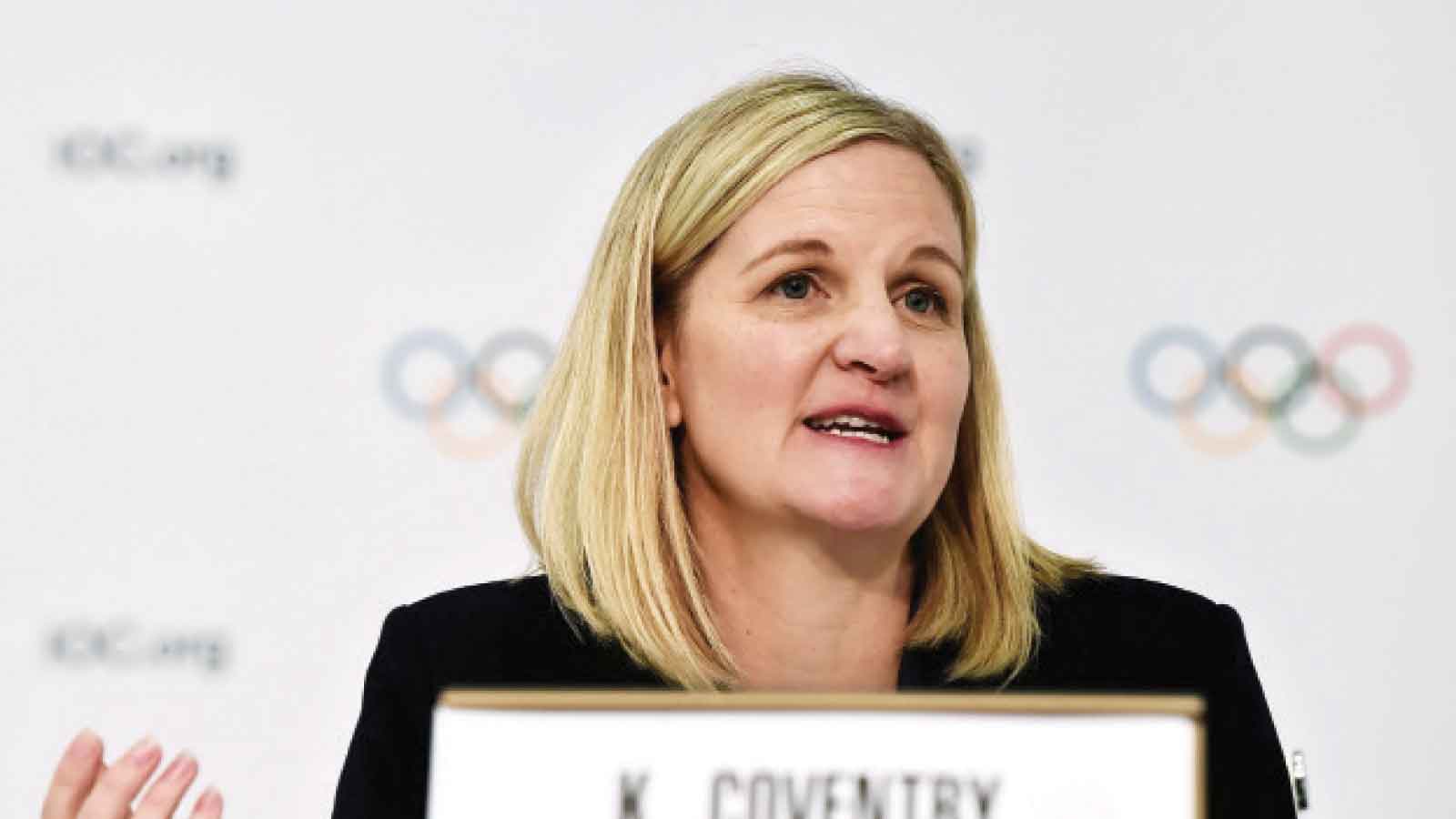
THE International Olympic Committee (IOC) president, Kirsty Coventry, again defended her stance against paying athletes for competing or winning medals at the Olympic Games, despite mounting criticism from Olympians and athlete advocacy groups who believe competitors should receive a greater share of revenues.
Speaking in Lausanne, Switzerland, following the International Olympic Committee Executive Board meeting on Thursday, Coventry acknowledged the controversy surrounding her stance, but insisted that priority should be to find ways to support all athletes, rather than introduce cash prizes at the Games.
“If we were not aware of it, we’d be hiding our heads under a pillow,” Coventry said.
“But it’s nothing new that I don’t agree with prize money at the Olympic Games. There’s prize money at continental games, at international federation games, at World Cups.
“But at the Olympic Games, I feel that we have a broader responsibility to try and find ways to directly support every Olympic athlete that comes to the Games, and I have been asking the teams here internally: How do we do that? How do we increase Olympic solidarity scholarships? How do we find other innovative ways?
“We’ve been doing a lot of work since the day I took office. I think we have a number of really cool, exciting commitments that you’re all going to get to see. But for me the principle will be: ‘How do we try to help every Olympic athlete?’”
Coventry, who became the first woman and the first African to hold the presidency of the IOC when she succeeded Thomas Bach last year, has never made a secret of her opposition to cash prize money at the Olympic Games.
During a visit to New Zealand in late May, she reiterated that stance and told Sport Nation, “I don’t think it’s right to pay athletes.”
Instead, she argues that IOC resources are better invested in athlete development programmes, scholarships and support systems designed to help competitors reach and remain at the highest level of sport.
She pointed to her own experience as evidence of the value of such support.
“We need to find more ways to engage directly with athletes and support them on their journey to the Games and throughout their Olympic careers,” she said this week.
“I received an Olympic Solidarity grant. Without that funding, I’m not sure I would have been as successful.”
The debate over athlete compensation has gathered momentum since Paris 2024, when World Athletics became the first International Federation to award prize money at the Olympic Games
Under a policy introduced by World Athletics President Sebastian Coe, individual Olympic champions in athletics received US$50 000, ending a long-standing Olympic convention.
The move was welcomed by many athletes, although it also exposed divisions within the Olympic Movement, with some federations questioning whether such a model could be extended across the entire Olympic programme.
While many Olympians receive financial support from governments, national Olympic committees, sponsors or professional contracts, the IOC itself does not provide direct payments for participation or medal-winning performances.
Coventry has nevertheless acknowledged growing calls for athletes to benefit more directly from Olympic revenues.
According to figures she referenced, less than 0.5% of IOC revenues are distributed directly to athletes through programmes such as Olympic Solidarity.
The IOC, however, maintain that around 90 percent of their revenues are redistributed throughout the Olympic ecosystem, including to athletes, international federations, NOCs and organising committees.
The reaction from athletes was swift: Olympic 50 metres freestyle champion Cameron McEvoy suggested Coventry’s comments came at a particularly sensitive time, given the emergence of the Enhanced Games, a privately funded competition promising substantial financial rewards to participants.
Among those challenging the IOC president’s stance was former world and European champion Filippo Magnini.
“But let us remember that athletes sacrifice their lives to pursue a dream, and once they retire, 90 percent do not have a future,” Magnini wrote.
“Without athletes, you wouldn’t even be here.”
Australian Olympic medallist Leisel Jones expressed similar concerns during her Triple M radio programme.
“Because now the bills are so expensive, I would say the Olympic Games are not worth pursuing if you’re not going to pay (athletes),” she said.
As criticism mounted, the IOC responded on June 1 via their Athlete365 platform, where Coventry once again emphasised the need to expand support programmes through talent identification initiatives, scholarships, funding for training and career transition plans.
Meanwhile, the athletes’ advocacy organisation Global Athlete has proposed a different solution.
The group has called for a participation fee of US$25 000 for each Olympic athlete, arguing that the IOC has sufficient financial resources to fund such a programme.
According to Global Athlete’s calculations, providing that amount to approximately 10 500 athletes at a Summer Olympic Games would cost around US$262,5m.
The organisation argues that figure is entirely manageable given the IOC’s reserves, investment income and broadcasting revenues.
Global Athlete has also renewed its call for the full liberalisation of Rule 40 of the Olympic Charter, which governs athletes’ commercial and sponsorship opportunities during the Games period.
The organisation believes competitors should be free to maximise the value of their name, image and likeness without additional restrictions.
The debate extends far beyond prize money itself.
At its core lies a broader question about how the revenues generated by the Olympic Movement should be distributed and what role athletes should play in that discussion.
With Los Angeles 2028 drawing closer, pressure from athlete groups shows little sign of easing, ensuring the issue remains firmly on the agenda during Coventry’s presidency. — insidethegames.biz.