admin
admin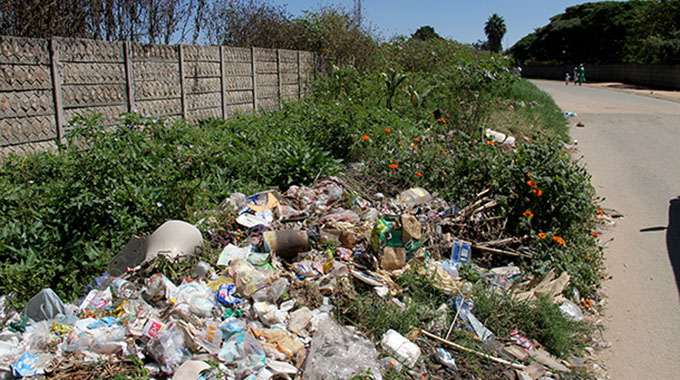
Background to the waste management challenge
Waste management is one of the most pressing emerging issues confronting urban local authorities throughout Zimbabwe today.
It is estimated that, over 1.5 million tonnes of solid wastes are generated per year in Zimbabwe’s urban areas, with the City of Harare accounting for a greater percentage. Ninety percent of this waste is not collected due to lack of financial and material resources (UNEP 2009a).
Rapid urbanisation over the last 20 years has contributed to the challenge, where 40 percent of the population now lives in urban areas compared to only 18 per cent in 1969, 22 per cent in 1982 and 32 per cent in 1992 (Central statistical Office & Macro international Inc, 2007).
Zimbabwe’s current waste management concentrates on collection and disposal with very little attention being paid to controlling generation.
If waste could be diverted for material and resource recovery, then a substantial reduction in final volumes of waste could be achieved and the recovered material and resources could be utilized to generate revenue.
The reduction of generation rates, reuse and recycle principle involves everyone’s participation and forms the premise for the Integrated Solid Waste Management System. This is a waste prevention, recycling, composting and disposal programme which considers how to manage solid waste in ways that most effectively protect human health and the environment.
It has been shown that with appropriate segregation and recycling significant quantities of waste can be diverted from landfills and converted into resource.
Currently solid waste is either collected in a mixed state or crudely dumped in environmentally sensitive places like road sides, marshy lands, low lying areas, public and open spaces.
Environmental Rights
Every person has a right to:
A clean environment that is not harmful to health;
Access to environmental information;
Protect the environment for the benefit of present and future generations and to
Participate in the implementation of programs and measures that prevent pollution and environmental degradation.
What role can the church play in waste management?
Like everyone else Christians have a responsibility to take care of the environment. Biblically God entrusted man with the role of being environmental stewards.
“In the beginning, God created the heavens and the earth” (Genesis 1:1).
Then God said, ‘Let us make man in our image, in our likeness, and let them rule over the fish of the sea and the birds of the air, over the livestock, over all the earth, and over all the creatures that move along the ground.” Genesis 1:26
The Lord God took man and put him in the Garden of Eden to keep it. Genesis 2:15
In taking care of the environment man does not only please God but also plays his/her part in promoting sound environmental management. Formation of church/Community Based Organisations (CBOs)
Churches are encouraged to form Community Based Organisations/ Health clubs that can venture into waste recycling projects which can generate income and address poverty.
Waste collection
The church can collect various types of waste for supplying recycling companies.
Currently a tonne of PET bottles fetches $100, glass fetches $15 per tonne, paper fetches between $15 -$30, cans $30. Exporting these fetches more money. Bin it, don’t drop it and keep Zimbabwe clean.
. . . To be continued next week
Please talk to us we are always ready to listen. Email: [email protected] or 04 305543 / Toll free 08080028, sms/whatsapp 0779 777 094, Like our Facebook Page- Environmental Management Agency or follow us on Twitter @EMAeep.


 Online Reporter