Chronicle Editor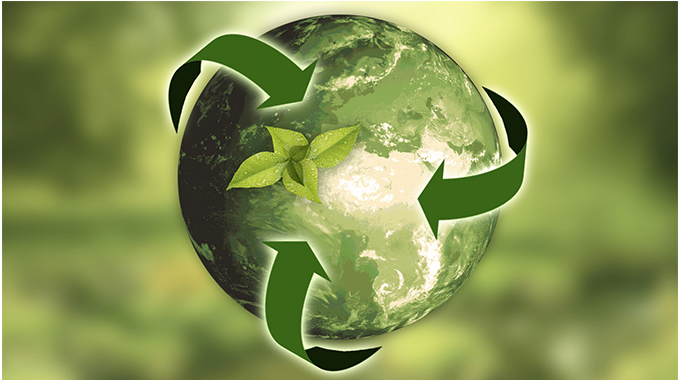
Qinisani Ndlovu, Correspondent
PROPONENTS of development in Africa and abroad are with no doubt following the Circular Economy (CE) phenomena with keen interest. The simple reason is that this is the best opportunity for Africa to break the shackles of marginalisation, and finally spur development in her favour. But shall we begin by unpacking what the circular economy entails.
I bet you are reading this article from a mobile phone, maybe a computer/laptop, iPad or from the good old-fashioned newspaper. The bottom line is, there was material that was extracted from the surface or under the surface of the earth in order for this article to be at your disposal.
Similarly, materials were extracted in order for you to consume this news. This describes the less favoured Linear Economy, or simply the Take, Make, Use and Dispose economic system. Before we explore the predecessor (Circular Economy), let’s touch on some sobering facts to cure the Sunday hangover. The global materials footprint (extracted raw materials) in 1990 stood at 43 billion metric tons.
This figure increased to 54 billion metric tons in 2000, the trend continued upwards and was recorded at 92 billion metric tonnes in 2017. In 2022, the figure stood at 100 billion metric tons and is estimated to reach 190 billion metric tons by 2026. If ever we needed an answer to whether the linear economy is good or bad then these figures speak volumes.
Circular economy was first discussed around 2003, spearheaded by proponents such as the Ellen MacArthur Foundation. This is an economic system premised on the sustainability at all levels of the product life cycle. Therefore, it is sustainably take, sustainably make, sustainably use, reuse, repair, refurbish, recycle refuse, reduce, restore, rethink, repurpose before sustainably disposing.
Here is an economic system that touches on the three pillars of sustainability, Environment, Social and Governance, the very pillars that Africa is slowly holding on to while she looks to stand upright from a kneeling position.
The circular economy imagines a system that reduces the demand for new products, subsequently lowering the demand to extract raw materials, by keeping products in circulation for as long as possible. At the centre of CE lies sustainability, which encompasses the Environment, Social and Governance.

The power of the consumer has never been this important; consumers in Asia now incorporate green budgets in their spending, meaning they dedicate a certain percentage to support and buy sustainably sourced products. Some have gone to the extent of 100% living sustainably, you mention living off grid, green energy, home grown food, (to personally monitoring fertiliser and pesticide use) on their produce, Electric cars, walking, cycling and taking part in recycling.
Consumers are now able to question the source of the product, how it was made and how much carbon emissions it created. How does this benefit the African consumer, you might be asking? Corporates are allowed a certain number of emissions, provided they pay their taxes, and yes, the taxes are incorporated into the final product price, which is pushed on to the consumer.
African consumers with little disposable income are already financially excluded on the basis of income, and the price pushes the product out of their reach. But a sustainably sourced product will cost less and is therefore affordable. CE as a system aims at eliminating waste and cutting down on the unnecessary, which has led to corporates rethinking their business models. Remember rethinking is a tenet of CE, therefore this presents new opportunities in the supply chain, and as businesses embrace CE opportunities are bound to crop up.
If Circular Economy is around 20 to 25 years old, then Zimbabwe fully understands CE as it embraced these practices in the 1980s through to the 1990s. I remember growing up in Bulawayo, there would be people who collected bottles, particularly in the mornings, and would shout ‘’Amambhodlela’’ (bottles) as they went about their business. These individuals collected deposit bottles a concept known here in Europe as take back management. Cars are part of many boys’ lives, I was no exception, the wire cars we used to drive around growing up, were or are made from old wires and replaced the expensive toy cars from shops, now termed repurposing.
We would sit under a tree and make these toys from scratch after scrounging around for old wires. You would get the expert “car maker kids’’ who made these huge 4×4 trucks from old wire, and they would tell you they had never seen or owned a plastic or remote-controlled toy car, this concept is now termed reuse.
Then we had the plastic hand made paper balls, made from milk packets, old clothing and elastic, which delayed the disposal of plastic waste to landfills. The champions league highlights that followed from making a bouncing plastic ball from waste, makes me nostalgic. My question to you is where we not stewards of CE before it was given a name?
Africa is perfectly poised to harness the opportunities arising from CE because of the lived experiences of her children. The French just began repairing their old tennis shoes, how many pairs have you repaired up to this minute? I lost count of mine! In part two we continue with the benefits of CE to Africa.
ν Qinisani Ndlovu is a recycling entrepreneur and solid waste management practitioner based in France. He writes in his own capacity and can be contacted vie email [email protected]



 Online Reporter