admin
admin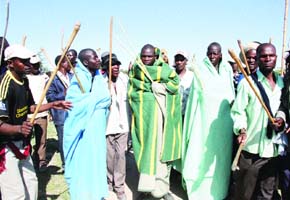
MC, which entails the removal of the foreskin of the male sexual organ for health purposes, is being undertaken by the Ministry of Health and Child Welfare in partnership with Population Services
International (PSI). Zimbabwe set a goal of circumcising about 1,2 million men by 2015.
However this practice is, to some extent, flawed because it appears to be catering mostly for urban men. Large numbers of rural men and boys have been sidelined and from my observations, they seem to lack full knowledge about male circumcision hence this has hindered many from undergoing the procedure. I think it will be impossible for the targeted goal of year 2015 to be accomplished if the status quo is not addressed.
In 2006, a trial by UNAIDS in partnership with the World Health Organisation (WHO), to assess the impact of male circumcision in reducing the spread of HIV in Kisumu, Kenya, and Rakai, Uganda, revealed that male circumcision decreased the risk of acquiring infections, HIV and cancer of the penis by 53 percent and 51 percent respectively.
Specialists say the winter season is the most appropriate time for MC hence officials responsible for male circumcision can be seen moving around most urban centres and growth points, getting young boys and men for circumcision. The effort of PSI and the Ministry of Health and Child Welfare has to be commended as it seeks to create an HIV-free Zimbabwe, but my main concern is on the ignorance bedevilling most rural men on the importance and purpose of circumcision. In rural communities awareness of the importance and purpose of male circumcision is significantly low hence I urge the respective authorities to redirect their efforts in conscientising rural boys and men about this practice.
Milton Sibanda, a teacher at a school in Esibomvu area in Mawabeni, said that in the area, they first came across agents of male circumcision this year.
“We were gathered for male circumcision purposes this year since the launch of the campaign a few years ago. The majority of young boys and men are turning up for the knife but there is still a significant number of them who decline to be circumcised because of the fear that this may injure their penises and end up being paralysed,” said Sibanda.
Circumcision centres for communities of Esigodini, Mawabeni and Esibomvu are in the army barracks of Mbalabala but because of poor awareness, villagers say there is a need for thorough education for rural boys and men about the purposes and importance of MC.
This information must also include teaching them how the process is carried out safely without any side-effects or dangers.
“The circumcision clinics have to be near the targeted localities. Besides talking about the distance, the underlying issue that has to be first addressed is the ignorance on the importance and purpose of this process among rural men and boys.
“Therefore these people need to be first educated and well-informed about the benefits of undergoing the process so as to stimulate interest,” added Sibanda.
The head of Tshalimbe village, Mr Timothy Dube, corroborated these sentiments saying that there is a great need to first educate people about the procedures of male circumcision and its importance in curtailing the spread of HIV especially at growth points which are often hives of sexually activity at night.
“As village heads we have encouraged our sons to go for male circumcision because it is important in preventing the spread of HIV and other sexually transmitted diseases such as gonorrhoea and syphilis.
“Despite our efforts there are some youths who are sceptical about this process because of the fear that they may have side-effects after getting circumcised such as failing to ejaculate or being unproductive, among other things,” Mr Dube said.
Therefore considering the foregoing, I think this year the responsible authorities in the health sector have to channel more efforts in educating rural males about MC in general before jumping to the process. Ignorance about the process in rural communities has acted as a buffer to the high turnout of most men and boys. This is because people are grabbed by the fear of the unknown especially on the ramifications of undergoing the knife.
Urban centres have to a satisfactory extent been informed and well conscientised about male circumcision and its importance. Therefore it is my view that the media has to also play its normative role of educating and informing rural folks about this practice in conjunction with efforts of the respective authorities and other opinion leaders. Are people in remote areas such as Kamativi, Lusulu, Kariangwe in Binga fully aware of this practice?
How about those in Tokwana and Izimnyama in Plumtree, let alone other remote areas of Nkayi, Tsholotsho, Gokwe and Kezi? The media has to work hand-in-glove with the Ministry of Health and Child Welfare in raising awareness on the importance of male circumcision in these remote areas.
The responsible authorities must also formulate a strong communication strategy that will enable people of different backgrounds to adopt this programme. The use of indigenous languages can be one of the powerful means of communicating that will enable everyone to understand the whole concept of MC.
Men who opt for MC should first be armed with the necessary information on both the benefits and risks of the procedure because it is unethical to sideline the latter. There are quite a number of advantages of going through the knife. Experts in the medical fraternity purport that the Human Papilloma Virus (HPV) that causes cancer in the penis and cervix by residing in the foreskin can be avoided if all men are circumcised. In a nutshell, MC reduces the spread of STIs, chief one being HIV.
Possible negative consequences include too much bleeding and probably damage to the penis.
However, this can be avoided by employing professional and well-trained individuals to carry out this procedure.
Rural people, including urban dwellers, have to be well-informed so as to demystify the myth held by most people that he who is circumcised cannot easily acquire the infection or not at all. In some rural communities MC is believed to weaken the manhood hence reducing sexual pleasure. The use of indigenous languages will greatly demystify the myths behind the MC theory.
Some of these beliefs that are held by many have encouraged more men to be more promiscuous than ever by addressing sex to whoever they meet in the corridors and streets. It must be emphasised that circumcision is merely a means to an end and not an end in itself. Behaviour change is still the key component in preventing the spread of HIV, not circumcision!
National MC coordinator in the Ministry of Health and Child Welfare, Mr Sinokuthemba Xaba, said nearly 65 000 people have been circumcised in both urban and rural communities.
“Nearly 65 000 people have been circumcised to date from across settings. The bulk has been from Harare and Bulawayo. However, some come from rural areas and take the opportunity to be circumcised when they get to towns,” said Mr Xaba.
He argued that there are no significant differences between the urban dwellers and those in rural areas in terms of access to MC services.


 Online Reporter