admin
admin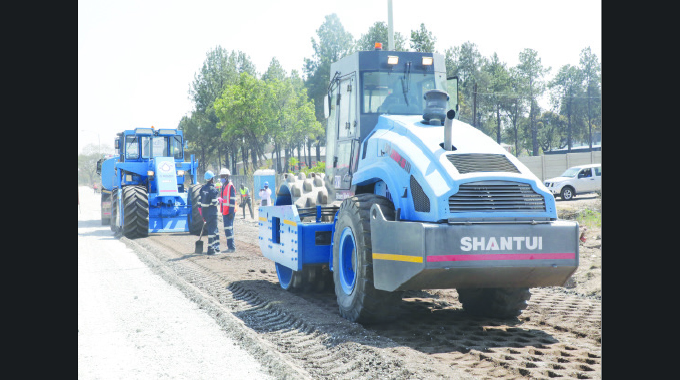
Blessings Chidhakwa-Municipal Reporter
Excellence is simply in the DNA of the Second Republic, and denying this obvious fact doesn’t change the truth.
Within its three years in office since the 2018 harmonised elections, the Second Republic is walking the talk in terms of modern infrastructure development.
Roads rehabilitation is such one area the administration of President Mnangagwa has nailed it across the country. It only takes an unreasonable person to deny that.
In his own words during his 2018 inauguration, the Head of State and Government President Mnangagwa said: “We will modernise major roads, airports, railways and border posts.”
With two years more to complete his first term of office, the country’s major highway Harare-Beitbridge Road, Robert Gabriel International Airport and Beitbridge border post are being spruced up to world standards.
Urban roads are among those being given a major facelift under the Emergency Road Rehabilitation Programme (ERRP).
The capital city, Harare, which has been under the leadership of the opposition for the past two decades had many major roads that fell into serious disrepair, but are now being fixed under the ERRP.
While municipalities such as Harare City Council are supposed to be maintaining their own road networks, last year Harare managed to rehabilitate just 1,1km against its own target of 120km.
It also did very little on maintenance, so roads continued to deteriorate with potholes and wash aways becoming common.
A dream does not become a reality through magic, it takes sweat, determination, and hard work.
President Mnangagwa’s administration is doing well to make sure all the country’s citizens benefit regardless of political affiliation.
Major road works are ongoing in Harare, but already there are many stretches where work has now been completed.
The once potholed busy Ardbernnie Road in the industrial sites linking Seke Road to Mbare is among the roads that have been fully repaired and then resurfaced with road markings completed.
A traffic intersection linking the road with Seke Road was also spruced up as the Government moves with pace on infrastructural development in line with attaining Vision 2030.
The commencement of reconstruction of Seke Road under the ERRP last week, with Bitumen World deploying its equipment such as caterpillars, compactors and heavy lorries, is another clear commitment of how the Government is walking the talk on urban road rehabilitation.
Equipment taken to the site includes cabins and construction signs.
The reconstruction work started from the point just after Coke Corner, heading to Chitungwiza and is expected to be complete within 90 days.
Bitumen World is one of the biggest construction companies in Zimbabwe and was awarded the tender to reconstruct the busy road that links central Harare with Chitungwiza and other places in Mashonaland East Province.
Seke Road has been in bad shape for a long time, particularly the stretch from Coke Corner to Maruta Shopping Centre in Hatfield, then at Mvurachena.
On other roads, Pangula Road (Chikurubi Prison Access), 3,2km have been completed and surfaced, while there is also progress along Robert Mugabe Road, including road resurfacing and shoulder widening, road markings, construction of bus stops and repainting of street lights.
Repairs have gone further than just filling potholes and covering these with new tar.
The repair teams deployed by the Government did the job properly, cutting out the pothole, refilling and compacting with the correct layers that support the road, and then resurfacing, either the rectangular repair or the whole stretch of highway if the bitumen and stone surface was crumbling.
These sorts of repairs usually last a lot longer than those where some clay is rammed into a hole and the top covered, without the underlying weakness also fixed.
Mazowe Street pothole patching and drainage clearance is also complete, with shoulder widening ongoing.
Tree pruning and grass cutting around Parirenyatwa Hospital is also underway with road shoulder widening around UZ Medical School also ongoing.
Among other roads, Cranborne Avenue is also in progress along with the main road that connects the five Budiriro suburbs.
In Highfield, the pothole patching and drainage clearing works on Main Street road from Willowvale Road to High Glen have been completed while resealing, road markings and repairing of street lights will be commenced soon.
In an interview, Permanent Secretary in the Ministry of Information, Publicity and Broadcasting Services Mr Nick Mangwana said the Second Republic was very much focused on infrastructural development, particularly because infrastructure is an enabler of economic progress.
“So, once you put the enablers in place it means we are creating jobs, and we have created jobs for the future,” he said. “When you go to the countryside, dams are being built, irrigation systems being put in place, roads being constructed.
“So much is happening in terms of infrastructure in towns, roads are being constructed and bridges.
The cement companies are saying their demand is over 45 percent. People outside the country are getting lost because when they were here two years ago things have changed.
“There is so much infrastructure coming up, for instance that the road was impassable, but now accessible. That is how beautiful we are working.”
The Government has so far spent over $1 billion dollars on road rehabilitation, gravelling and drainage structuring to help spur economic growth and development through infrastructural development.
Over 2 000km or roads have been re-gravelled, while 6 627,9km have been graded with 701 drainage structures constructed or repaired and 184 wash-ways reclaimed.
Across the country, 4 491,5km of drains have been opened, while 6 141,2 km of verges have been cleared with progress continuing to be made on the patching of potholes with a cumulative of 4 794,8km having been attended to.
Road construction falls under the National Development Strategy 1’s infrastructure cluster, and roads are regarded as key economic enablers in line with the attainment of Vision 2030 and of an empowered upper middle income society.


 Online Reporter