admin
admin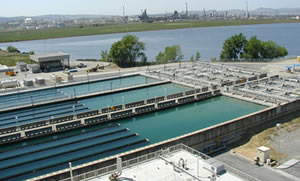
of a US$144 million fa-cility extended by the China Export and Import Bank.
The system would allow residents to pay for water in ad-vance and determine how much they spend on water every month.
The initial phase would cater for 1 000 consumers, mostly apartments in the Avenues.
Every household will eventually be fitted with new me-ters to replace the old ones, most of which are 20-years-old.
This is against a lifespan of five years.
Should the pilot scheme be successful, all residents would then have the option of getting onto this model or being fitted with new post-paid meters.
Harare town clerk Dr Tendai Mahachi last week said part of the US$144 million would be used to boost production at Morton Jaffray and Prince Edward water treatment and Firle and Crowborough sewage plants.
At present, Morton Jaffray averages 500 megalitres a day.
Dr Mahachi said with the installation of new pumps, an additional 114 megalitres would be produced, allowing the plant to work at full capacity.
The Oddis Plant adjacent to the waterworks would be commissioned and provide an additional 40 megalitres of water. This is enough to feed all of Harare’s southern suburbs daily.
“All suburbs will be able to get water at the same time,” he said.
Harare currently produces an average of 600 megalitres a day against demand of 1 200 megalitres.
A number of suburbs suffer as a result and can go for up to a month without water.
Neighbouring towns are affected as well, raising fears of disease outbreaks.
There will also be plugging of leaks on pipes connected to Morton and installation of water meters.
The city is failing to account for 200 megalitres of water daily, which is probably being used by residents not connected or registered with the council.
Harare, Chitungwiza, Norton, Ruwa and Epworth would all benefit from the US$144 million loan from the China Eximbank.
Part of the money would go towards the digitalisation of water distribution with all reservoirs being linked to Morton Jaffray by satellite.
The system would allow engineers to immediately gauge pressure and establish which reservoirs have enough water or are in need of additional supplies.
The water and sanitation project would be implemented in three phases with the first stage targeted at Morton Jaffray, which will get US$25 million.
A revamp of the sewer treatment plants will result in improved quality of sewer disposal and lead to reduction in water treatment costs.
Dr Mahachi said phase two of the project would cost US$51 million and includes Crowborough Sewage Works and Prince Edward Water Works.
Upgrading of the Prince Edward Plant will increase output by 50 percent to 100 megalitres per day and ensure uninterrupted supplies to Chitungwiza, Mabvuku, Tafara, Ruwa, Manresa, Hatfield and Cranborne among other areas.
Sewer treatment at Crowborough will rise from the installed capacity of 52 megalitres to 100 megalitres a day.
The plant has been down for five years.
“The net effect will be that we will pump treated sewer into our river systems and reduce the aluminum treatment by 50 percent,” he said.
Harare, which uses US$2 million monthly on water treatment chemicals, consumes 60 percent of national aluminum imports.
Firle Sewer Plant, which presently treats 34 megalitres of sewer, will be boosted to 200 megalitres.
Dr Mahachi said Firle would generate its own electricity once biogas digesters are resuscitated using the Chinese funding.
Harare will purchase 15 refuse trucks.
The loan, which attracts three percent interest per annum, would be repaid over nine years.
In the first four years, the city will service the interest and then thereafter repay the principal.



 Online Reporter