

 Online Reporter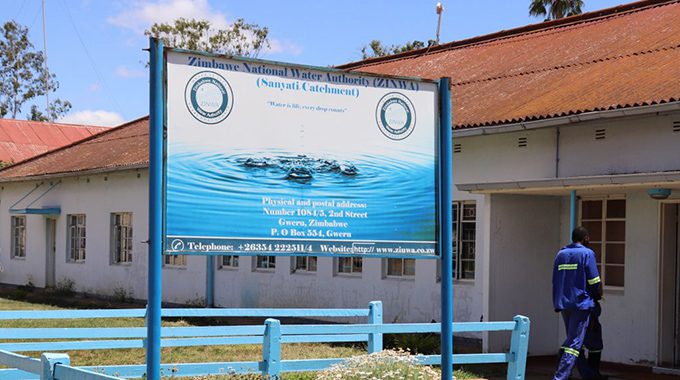
Business Writer
Across rural Zimbabwe, critical water shortages have long forced families to travel long distances every day just to collect this basic commodity for their households.
Today, a nationwide initiative is fundamentally changing this reality by converting clean water access into a direct driver of commercial enterprise, sustainable livelihoods and rural economic empowerment.
Untapped Africa, working in partnership with the Zimbabwe National Water Authority (ZINWA), has become a key partner driving the Presidential Borehole Scheme across all provinces.
The programme has progressed rapidly and significantly over the first four months since its rollout, starting modestly with 10 borehole sites.
As operations expanded, Untapped Africa built up its technical capacity to deliver as many as 170 drilled borehole sites and approximately 100 complete installations every month across various districts.
To date, Untapped Africa has successfully established nearly 1 000 borehole sites throughout Zimbabwe.
The massive rollout has provided reliable, clean water access to thousands of residents, drastically improving public health and daily living conditions in rural settlements.
A key element of the project focuses on transforming high-yield water points into vibrant Village Business Units (VBUs).
To date, Untapped Africa has established nearly 700 of these productive sites.
Launched in 2021 by President Mnangagwa at Jinjika Village in Mangwe District, Matabeleland South, the VBUs are rural development enterprises designed to stimulate economic activity, foster food security, and empower local communities.
Each standard VBU consists of a solar-powered borehole system equipped with eight solar panels generating a minimum of 550 watts each, high-pressure pumps and two 10 000-litre water storage tanks mounted on six-metr steel stands to achieve the required water pressure.
The enterprise setup also includes a one-hectare plot protected by 400 metres of security fencing and 10 000 to 12 000 metres of drip irrigation lines.
The business model is designed to shift communities away from subsistence farming towards market-oriented production.
The programme is spearheaded by the Ministry of Lands and Rural Development under the broader Rural Development 8.0 initiative, which aims to benefit 1,8 million households nationwide.
The units enable households to produce crops for both domestic consumption and commercial markets — providing steady livelihoods, improving community nutrition, and enhancing national food security.
Produce is sold to ready open markets, with proceeds shared among community members, who function as both shareholders and operational workers.
Schools across the country are also benefitting by using the infrastructure to operate commercial farming projects.
Mr Gabriel Sher, managing director of Untapped Africa, explained that the company’s core mission is built directly into its identity.
He noted that their primary focus is to identify and unlock unrealised potential within rural communities, turning untapped groundwater resources into long-term economic progress for everyday citizens.
“From the very name of our company, we are focused on tapping unrealised potential,” said Mr Sher. “We are now converting that potential into measurable progress for the country.”
Mr Sher added that the initiative is bringing fundamental change to rural populations.
“Their day-to-day is not what it was before,” he said. “It’s a life-changing initiative.”
Local leaders and beneficiaries emphasise that the economic impact extends far beyond basic water collection.
Mrs Prisca Museka, the wife of Chief Svosve of Marondera, said that the VBU initiative goes a long way in transforming communities beyond supplying potable water by delivering the resources required for cash-generating projects.
“I urge all those who have benefitted to utilise the infrastructure so that they improve their lives, generate cash, and be able to send their children to school,” Mrs Museka said.
She noted that at their local plot, they are producing fresh vegetables and green mealies, while looking to expand production into potatoes, butternut, and fine beans.
“Our current biggest effort is managing the market, and we have been able to push some good volumes,” she added.
She also pointed out that getting clean drinking water used to be a major obstacle, with residents regularly walking long distances to fetch water, a chore that consumed vital productive hours that could otherwise be spent on income-generating work.
The comprehensive water initiative directly aligns with several United Nations Sustainable Development Goals (SDGs).
By delivering safe drinking water directly to rural communities, the programme advances SDG 6 (Clean Water and Sanitation) and helps prevent waterborne diseases linked to unprotected rivers and open wells.
It also supports SDG 1 (No Poverty) and SDG 2 (Zero Hunger) by providing reliable irrigation for commercial produce gardens, strengthening local food supplies while generating dependable income for rural families.
Additionally, the project fulfils SDG 5 (Gender Equality) by installing water points directly inside villages, freeing women and young girls from the daily burden of long water collection treks.
“Relieving women and young girls of the daily burden of walking long distances to fetch water allows them to dedicate enough time to education, other productive activities, and family,” development economist Mr Enoch Musara said.
“By doing away with long daily treks for water, the initiative reclaims thousands of lost hours across rural households.”
These milestones build on ongoing national efforts to close Zimbabwe’s rural water gap.
According to a 2024 UNICEF report, 64 percent of the national population has access to basic drinking water, while 36 percent utilises basic sanitation services.
UNICEF continues to support the Government of Zimbabwe in expanding climate-resilient and sustainable WASH services to vulnerable populations.
Through interventions such as borehole rehabilitation, water point chlorination, and the construction of piped water schemes and community kiosks, development and emergency efforts reached an additional 574 060 people and 156 schools with basic water services in 2024 alone.
By marrying State-backed programmes with private sector implementation and development support, Zimbabwe continues to convert basic water access into lasting community resilience, commercial enterprise, and long-term economic growth.


