Online Reporter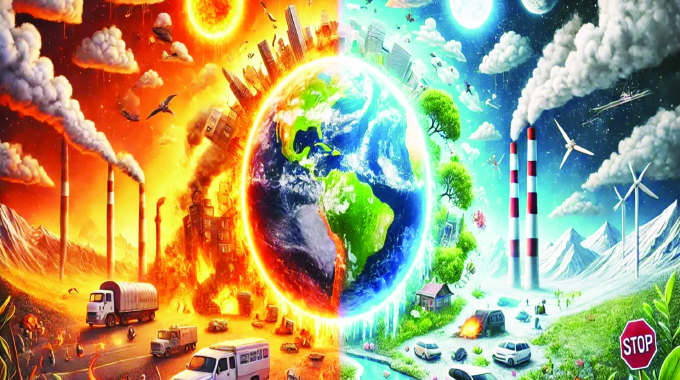
Disability Issues
Dr Christine Peta
AS the world grapples with rising seas, heatwaves and devastating floods, persons with disabilities remain largely marginalised in debates on climate change.
Numbering more than one billion people globally, they are among the most vulnerable to climate change, yet their voices are rarely heard in policymaking or disaster response planning.
Climate change is reshaping our world, and persons with disabilities face disproportionate risks — from inaccessible disaster responses to deepened inequalities in health and livelihoods. Extreme weather events exacerbate divides: Power outages during storms can disable life-saving medical equipment; and droughts and floods devastate agriculture, disproportionately affecting farmers with disabilities who often rely on subsistence farming.
School closures after disasters frequently leave learners with disabilities least likely to return, widening the education gap.
Experts argue that inclusive climate action must involve accessible early warning systems in multiple formats and evacuation shelters designed to meet mobility, sensory and cognitive needs.
Without deliberate inclusion, climate policies risk perpetuating exclusion.
As climate change accelerates, the world must recognise that protecting ecosystems, rehabilitating communities and ensuring accessibility are all part of the same struggle for dignity and survival.
Persons with disabilities are not passive victims of climate change but agents of resilience.
Their lived experiences of adaptation — navigating inaccessible environments daily — offer valuable lessons for climate solutions.
Recognising the intersection of disability and climate change is not only a moral imperative but also a practical necessity for building resilient societies.
Inclusive climate action, rooted in accessibility, participation and justice, can transform vulnerability into strength. By centring disability in climate discourse, we move closer to a future where sustainability truly means justice for all. To fully realise inclusive climate action, it is essential to situate the experiences of persons with disabilities within the broader framework of Sustainable Development Goals (SDGs).
The SDGs emphasise leaving no one behind, yet climate change threatens to reverse hard-won gains unless disability inclusion is prioritised. For instance, SDG 3 on health cannot be achieved if medical systems fail to account for the reliance of persons with disabilities on electricity-dependent equipment during disasters.
SDG 4 on education remains elusive if learners with disabilities are excluded from recovery plans after school closures.
Likewise, SDG 8 on decent work and economic growth is undermined when climate shocks devastate subsistence farming, where persons with disabilities are disproportionately represented.
SDG 10 on reducing inequalities and SDG 11 on sustainable cities highlight the urgent need for accessible infrastructure, resilient housing and inclusive urban planning that anticipates climate risks.
Most critically, SDG 13 on climate action calls for adaptation and mitigation strategies that embed disability rights, ensuring resilience is not a privilege but a shared reality.
Linking disability and climate change within the SDGs reframes persons with disabilities not as passive recipients of aid but as active contributors to sustainable solutions.
Their lived expertise in navigating barriers offers innovative insights into designing systems that are flexible, adaptive and just.
By integrating disability perspectives into climate discourse, policymakers can strengthen resilience across communities, ensuring that adaptation strategies are both equitable and effective.
This approach transforms climate action from a narrow environmental agenda into a holistic struggle for dignity, justice and survival.
Ultimately, centring disability within the SDGs and climate frameworks is not only about protecting vulnerable populations; it is about harnessing resilience, fostering innovation and building societies that thrive in the face of global challenges.
Inclusive climate action becomes a pathway to achieving sustainability that truly embodies justice for all. Disability inclusion must be strengthened in every aspect of climate policy and practice. The time for inclusive climate action is now because sustainability without justice is no sustainability at all.
Dr Christine Peta is a disability, public health, policy, international development and research expert. She can be contacted on: [email protected]