admin
admin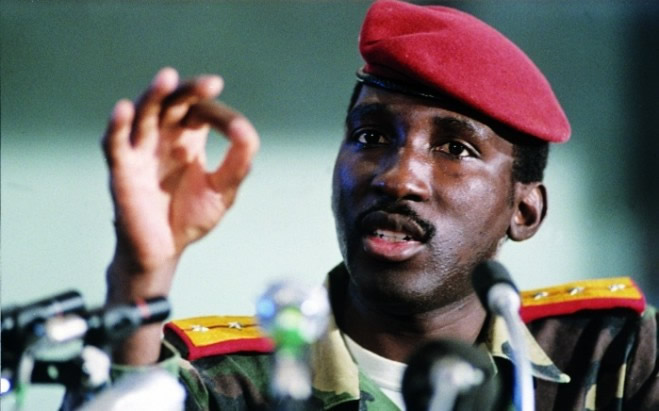
Cliff Chiduku, Correspondent
Tomorrow, October 15 marks 37 years after the assassination of Burkina Faso president Thomas Sankara.
Sankara was killed by a hit squad in the capital, Ouagadougou, after four years in power.
The slain revolutionary leader of Burkina Faso (the Land of the Upright) once said: “It took the madmen of yesterday for us to be able to act with extreme clarity today. I want to be one of those madmen. We must dare to invent the future.”
While his wise words, spoken almost four decades ago, are rooted in the political struggles of the 80s, they offer timeless insights into the urgent need for boldness and innovation — insights that are relevant today as humanity grapples with the existential threat of climate change.
Climate change is not a distant threat. Certainly! It is a present-day reality, manifesting through devastating wildfires, heatwaves, rising sea levels, prolonged droughts and increasingly severe storms.
Recently, the Environmental Management Authority (EMA) reported that two people died while more than 750 000 hectares of land have been destroyed by veld fires since the start of the fire restriction period on July 1.
Over 68 million people in Southern Africa are reportedly suffering the effects of a drought which wiped out crops across the region. The drought, the worst in recent years, has been fuelled by El Niño, which shifted rainfall patterns during the season.
Elsewhere, days after battling with Hurricane Helene, US’ Florida State is bracing for another catastrophic hurricane, Milton, a category 5 storm. Governor Ron DeSantis described it as a “monster” hurricane.
These extreme weather events and many others are not just natural phenomena; they are the result of human action or lack of it. Humanity’s reliance on fossil fuels, unsustainable agricultural practices and industrial systems threatens the Earth as an infinite resource.
In the face of such a crisis, some analysts are arguing for caution. They are advocating for incremental steps and moderate reform. However, history tells us that in moments of great peril, it is often the “madmen” who dare to challenge the status quo that bring about social change.
In such moments, like Sankara cautioned, we must embrace the spirit of those madmen, daring to invent the future through innovative, transformative leadership.
For decades, the world has known about the dangers of climate change. Yet, despite global agreements, pledges and policies, carbon emissions continue to rise, and the climate crisis worsens.
The failure of incrementalism — the belief that small, gradual steps will lead us out of this crisis — has been evident.
The consequences are there for everyone to see.
The policies of the past have often focused on short-term fixes, neglecting the systemic changes required to address the root causes of climate change.
This approach mirrors the thinking of yesterday’s leaders, who, while well-intentioned, lacked the courage to change our relationship with the environment.
In Mwari Wenyasha, musician Alick Macheso sang about a people who were warned of an impending war by a “madman” and decided to despise him. The consequences were dire, Macheso counselled.
The world needs madmen — more than ever. They provide leadership. They provide wise counsel. They provide red flags. They disrupt our systems.
Sankara’s statement that “it took the madmen of yesterday for us to act with clarity today” reminds us that transformative progress often comes from those willing to challenge established norms.
In the context of climate change, humanity needs to abandon outdated ideas and embrace radical new thinking. We cannot rely on the same economic models, energy systems and political frameworks that created this crisis to solve it.
Instead, we must seek innovative solutions that not only address the symptoms of climate change, but also transform the systems that perpetuate it.
At the heart of Sankara’s message is a call for innovation — an appeal to “dare to invent the future”.
This call to action is precisely what the climate movement desperately needs today. The challenge of climate change is multifaceted, encompassing environmental, economic, social and political dimensions.
Addressing it requires more than just technological fixes; it demands holistic innovation that reimagines how we live, work and interact with the planet.
One area where innovation is urgently needed is in the energy sector. Fossil fuels are the primary driver of climate change, yet the global economy remains deeply dependent on them.
Transitioning to renewable energy sources such as solar, wind and geothermal is essential, but it is only part of the solution. Required are innovations in energy storage, grid management and energy efficiency to ensure that these renewable sources can meet the demands of a growing world population.
The development of Carbon Capture and Storage (CCS) technologies is another area where innovation could play a crucial role.
While reducing emissions is essential, it is likely that we will also need to remove existing carbon from the atmosphere to avoid the worst of climate change. However, CCS technologies are still in their infancy and face challenges.
It will take bold investment and creative thinking to make these technologies viable on a large scale.
Agriculture, too, must be reimagined.
Industrial farming practices contribute significantly to greenhouse gas emissions, deforestation and biodiversity loss. Innovators are already exploring alternatives such as regenerative agriculture, which seeks to restore soil health, sequester carbon and reduce the need for chemical inputs. These practices represent a radical departure from the conventional wisdom of industrial agriculture, but they offer a promising path toward a more sustainable food system.
Rolling out industrial hemp plantations is the best foot forward.
Hemp has significant potential to aid in fighting climate change due to its environmental benefits and versatility.
Hemp is an extremely fast-growing crop that absorbs carbon dioxide from the atmosphere.
A single hectare of hemp can absorb up to 15 tonnes of carbon per year, which is much more than many other crops.
In addition to technological innovation, there is need for social and political innovation.
This means rethinking our economic models, which are often based on endless growth and consumption. Instead, humanity needs to explore concepts such as circular economy, where resources are reused and waste is minimised.
It also means challenging the political structures that prioritise short-term economic gains over long-term environmental sustainability.
For example, many governments continue to subsidise fossil fuels, even as they pledge to reduce emissions. Ending these subsidies and redirecting that funding towards renewable energy and climate adaptation efforts would be a powerful step forward.
While innovation is essential, it will not happen in a vacuum. It requires leaders who are willing to take risks, challenge established norms and inspire others to act.
Too often, leaders are constrained by the demands of special interests or the short-term thinking of electoral cycles. What we need are climate champions who are not afraid to be labelled “madmen” — those who, in Sankara’s words, dare to invent the future.
This leadership must come not only from politicians but also from scientists, entrepreneurs, activists and ordinary citizens. Each of us has a role to play in pushing for the innovations needed to tackle climate change.
Whether it is through supporting green technologies, advocating for stronger environmental policies, climate financing, or adopting more sustainable lifestyles, we can all contribute to the invention of a future that is not only liveable, but also just and sustainable.
Sankara’s words are a reminder that the future is not something that happens to us; it is something we create. Climate change is the defining challenge of our time, so it demands a level of innovation and boldness that the world has not seen.
It is easy to fall into despair or to cling to half-measures, but as Sankara taught us, the real progress comes from those willing to think differently, to challenge the old ways and to dare to imagine new possibilities.
If we are to overcome the climate crisis, we must embrace this spirit of invention and dare to create a future that is sustainable, equitable and resilient. The time for bold innovation is now. Food for thought!
Cliff Chiduku is a communications, public policy and governance expert with interests in climate and environmental issues. He writes in his personal capacity. Feedback: [email protected] or Call/App +263775716517.


 Online Reporter