

 admin
admin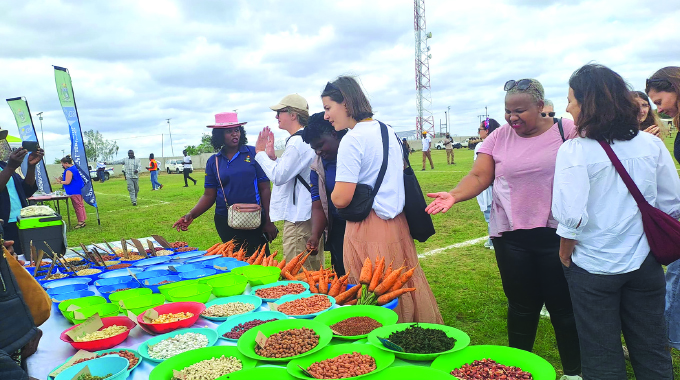
Fungai Lupande
Mashonaland Central Bureau
Pregnant women in the Southern Africa region face a 12 percent increased risk of having preterm deliveries, underweight babies, or stillbirths due to exposure to extreme temperatures caused by climate change.
Heat waves have become more frequent and intense, and communities are struggling to adapt to these changing conditions.
The Centre for Sexual Health and HIV/AIDS Research Zimbabwe (CeSHHAR) recently conducted a study on the effects of climate change on health in the Mt Darwin District.
Dr Fortunate Machingura, chairperson of the first International Climate and Health Africa Conference, led a delegation of 70 people from various countries to Mt Darwin after the conference, that was held in Harare.
Dr Machingura noted that heat stress has severe consequences for vulnerable women of low social and economic status.
CeSHHAR is collaborating with Mt Darwin Hospital, Dotito, and Chitse primary health care facilities on this initiative.
As the principal investigator and director of climate, environment, and health at CeSHHAR, Dr Machingura explained that they are working on two projects in Mt Darwin.
One focused on heat adaptation for pregnant mothers and infants, and the other on heat indicators for global health, funded by Horizon Europe.
The goal of the second project is to create indicators that can help health facilities track the impacts of climate change on health.
“This research helps us identify which indicators to prioritise. We aim to conduct formative studies to determine effective heat adaptation interventions in rural communities,” she said.
They are partnering with local chiefs, pregnant women, and community health care workers to develop these interventions.
Dr Machingura, who also teaches at the Liverpool School of Tropical Medicine in the United Kingdom, emphasised the importance of community ownership and collaboration in designing heat adaptation measures.
The research data indicates a pressing need for awareness and education among pregnant and post-partum women regarding the impacts of heat on unborn babies and infants.
“One aspect we are focusing on is an early heat warning system based on temperature thresholds.
“Many women in rural communities do not have smartphones or face challenges accessing internet services and electricity,” she said.
“While smartphone-based applications may not be practical, we should equip community health care workers with smartphones so they can relay this essential information.”
Dr Machingura also highlighted the need for an early warning system for healthcare workers affected by heat stress.
Often, these workers operate in crowded, poorly ventilated environments and require energy-efficient air conditioning.
“We are collaborating with the Public Works Department to enhance infrastructure development and create a more conducive environment for health care workers,” she added.
For pregnant women, it is advised to stay hydrated by drinking plenty of water and to exclusively breastfeed nursing infants.
They should avoid working during the hottest parts of the day and instead schedule activities for the morning or evening.
Access to potable water remains a challenge in rural areas, prompting calls for local authorities and stakeholders to drill more boreholes.
Communities have also been encouraged to plant more trees.
Forestry Commission provincial manager Mr Lucious Mujuru urged households to plant at least ten fruit trees each, stating that trees create a microclimate beneficial for pregnant mothers.
“The variety of trees we plant provides essential nutrition for pregnant women. In our province, we have planted 2,5 million trees, with a target of reaching 6,5 million trees,” he said.
“We have the seedlings ready in nurseries and are awaiting the rains to continue planting. This is a seasonal effort, and we are confident we will exceed our target.”
One of the conference delegates from Uganda, identified only as Paul, noted that the situation in Mt. Darwin reflects challenges faced in his own country.
“We have not experienced good rainfall for the past five years. Uganda is predominantly composed of cattle keepers, and we have seen significant livestock losses since 2019,” he explained.
“In 2020, locusts devastated our crops, and we later faced flash floods. By 2022, we encountered famine and extreme temperatures.”
From his tour of Zimbabwe, Paul was particularly impressed by the model farms and the Pfumvudza/Intwasa concept.
He also noted the variety of small grain seeds showcased at the Mt Darwin event, stating, “This is definitely a topic worth discussing when I return home.”
Dr George Mapiye, the District Medical Officer (DMO) for Mt Darwin, said they are seeing many pregnant women experiencing dehydration due to extreme temperatures.
“Most pregnant mothers are arriving with early labour and some are facing stillbirths. We encourage them to walk during the cooler morning hours and drink plenty of water. However, our consultation rooms are poorly ventilated, and heat stress is also affecting our healthcare workers,” he noted.
Dr Mapiye said the hospital is in the process of installing air conditioning to address these issues.
Junior Parliamentarian for Mt. Darwin, Macelyn Chikumbirike, emphasised that reforestation and the conservation of trees are essential in combating these challenges.



 Online Reporter