Chronicle Editor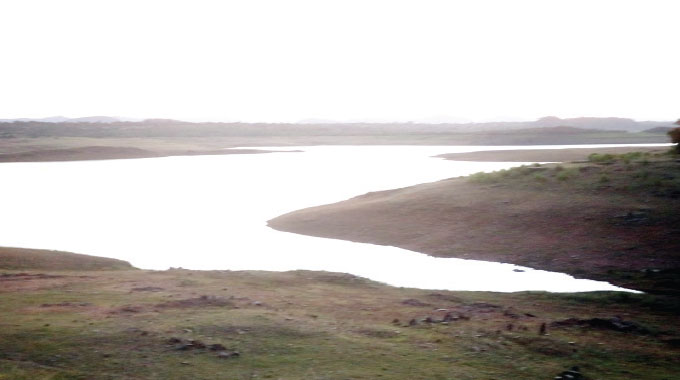
Pathisa Nyathi
A moderately grey-coloured dove emerges from the deep blue sky, a cloudless sky. Majestically and splendidly, it lowers and spreads its wings and feathers in order to trap air and prepare to land.
The bird is au fait with the principles of aerodynamics and is equipped with several years of flying experience. I am not sure if today the dove is bringing good tidings or it is a bearer of ominous and portentous news. Unfolding flight events point in a wrong and fateful direction.
Before it lands on a concrete floor less than a metre below, some gusty and breezy Harmattan-like wind blows it away.
Failed landing. A few seconds later when the horrible wind has calmed down, the peaceable dove, our totemic bird, tries again to land.
Its talons are outstretched, a promising sign for a successful landing this time.
Other birds, which normally make musical calls, are nowhere to be heard.
They probably sensed there is something out of the usual today. All that I hear is the whining sound of an overworked refrigerator. A lone spotter plane is heard traversing the sky and soon disappears into the zone of the inaudible.
The dove aborts this second attempt at landing. The landing pad is too hot to allow it to land lest its feet are over roasted by the searing surface.
On the concrete floor, there are pieces of isitshwala that I usually provide it and its kind with. In the past, it has come, landed and consumed a morsel or two and disappeared beyond sight after executing a touching and moving a thank you airborne stunt.
Today, the first day of March 2022, things are different.
There is ominous silence all around. It is the silence of a cemetery. Ra the Sun in the firmament is emitting scorching heat from his burning surface.
All this she does in total silence. The sky adds and augments the theme of deafening silence. Even the usually defiant street vendors have abandoned their trademark routine on-the-road marketing stunts: “Ezivuzayo! Umthanyelo lapha! Idelele lentanga lolude ke?”
Today is another day, different from days we have known before. It is silence usually associated with a night when witches prowl in total silence, which now and then may be broken by their eerie familiars the owls – “gudu gudu weMabhengwana!”
A heat wave has taken over and brought about a different and life-threatening atmosphere. Only once, I heard a truck carrying grieving mourners en route to the final resting place near Esigodweni.
It is a usual melancholy tune: “Tipei nguva yekuchema gamba redu!” It is a tune whose theme blends well with this particular day.
Dust erupts from the wheels of the truck carrying the mourners. The wheels of the truck transporting them sends a blinding and searing mall in the direction of withering maize crop.
Not so long ago the crop was a sight to admire and instil some sense of hope, a hope of a bumper harvest by the new-look urban farmers.
The hot dust lands on the shrivelled maize leaves, as if putting the final nail on the coffins of these life-giving crops. The state of the crop is beyond redemption.
Death and the sure spectre of more deaths hangs in the air. The rain season was forecast as “normal to above normal.”
What we see hear does not tally with the forecast. Crop wise the season is, by all means, a total disaster, more so in Bulawayo where the onset of the rain season was delayed. The rain season is no longer what we were used to.
Something has gone amiss. How does the rain season end in February the month when in the past the season was at its peak?
Both Ra and Ma are angry. Last year “Ga tshompo,” recently rechristened as Intwasa/Pfumvudza produced a bumper harvest. From the forecast, we anticipated a repeat of the last year’s harvests. It does not look promising at all.
For quite some time now, we have been hearing about climate change. It looks the future is indeed gloom. Climate change is no longer some mad professors’ speculation.
It is for real with disastrous consequences. Without the rains, our mother is infertile and cannot feed us her progeny.
The consequences are indeed too ghastly to contemplate.
The agriculture season is becoming unpredictable in terms of onset and the end. The predictability of the seasons is critically important for sustainable agricultural yields.
Sometimes we underestimate the importance of rain. If the trend is maintained, we could be headed for something calamitous and disastrous.
Last year the agriculture season brought smiles on the faces of the new breed of farmer in the urban areas. “Ga tshompo,” recently rechristened as Intwasa/Pfumvudza did not bring the same results.
Ra is angry with those that have bared her cover, by spewing gases onto her dear wife Ma whose civilization is sure to bring the earth, as we have known it, to a terrible end.
In Bulawayo, water shedding is set to resume after a short respite. We dare not ask why as we can see it for ourselves.
The rains abandoned us in a very uncharacteristic way. Most of February was dry.
The inflows into the dams were insignificant. Normally February is the month when the earth received soaking rains that flow into the supply dams to the east of our city.
What we are going through now does not promise that we can get to the end of the year without very stringent water shedding measures.
Unless there are heavy and sustained rains, we are doomed. Umzingwane Dam, we are told by City Council, is set to be decommissioned during the course of this month.
We shudder to think what awaits the residents of Bulawayo when water shedding is effected this early during what ought to have been the apex of the rain season. In Luveve we are already experiencing a 20-hour water shedding regime.
It would be naïve to wish it were not there under the circumstances.
It is important though that those responsible for the unprecedented anger of the environment, including Mother Earth and Father Sun own up.
Not enough is being done to curb the emission of carbon gases that erode the ozone layer above our planet. We are exposed to radiation that is injurious to our bodies. Both infrared and ultraviolet radiation will have long-term devastating effects on our health.
The more advanced, industrialised nations are contributing more towards the pollution of the atmosphere.
When Ma fights back, we all suffer; the guilty and the innocent alike. “Zonelwa mvunye,” say the Ndebele people. One sheep messes it up for the entire flock.
Our hopes are now pinned on the Lake Gwayi-Shangani.
We have been promised that the long outstanding water project will see the light of day before the end of the year and hopefully bring about lasting respite to Bulawayo and places along the more than 300-kilometre pipeline from the lake.


 Online Reporter