Online Reporter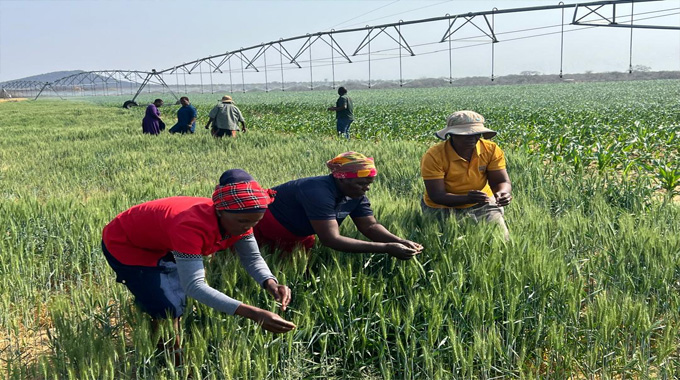
Sukulwenkosi Dube-Matutu, Features Writer
FOR Midlo Irrigation Scheme farmers in Matobo District, Matabeleland South Province, the rehabilitation of their scheme to incorporate climate-smart irrigation equipment has brought immense relief to the women who have long borne the brunt of the work.
Midlo Irrigation Scheme was rehabilitated and expanded by the Government in collaboration with its partners, in a move expected to boost production and increase incomes.
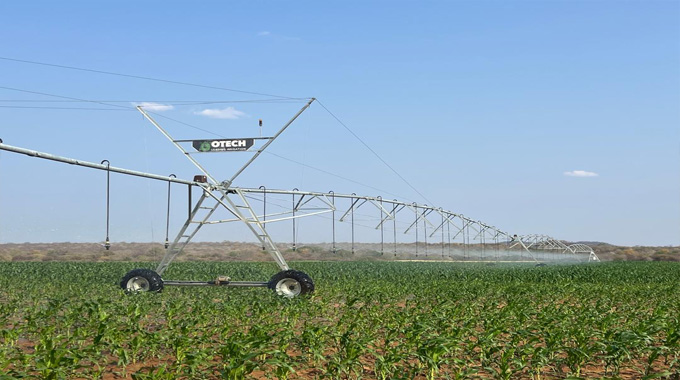
As part of the rehabilitation works, a solar power plant was installed at the irrigation scheme to pump water from Midlo Dam. Additionally, a centre pivot was introduced, now irrigating 15 hectares — a significant improvement from the previous canal system where farmers watered crops using syphons.
Women head over 40 percent of rural households, highlighting their dual role in managing both farms and homes. Initiatives rolled out under this programme focus on building the resilience of women farmers to the effects of climate change, implementing solutions such as solar-powered irrigation schemes.
In an interview, Midlo Irrigation Scheme chairperson Ms Dolly Moyo said the improved system has eased their workload considerably.
“Having our irrigation scheme rehabilitated has significantly helped us as we now have a more efficient way of watering our crops, which conserves water and ensures better yields. We used to rely on syphons, which meant spending long hours at the scheme. It was also difficult to irrigate the entire eight hectares.
“Now that we have a centre pivot, one person can supervise the watering process while the rest attend to chores at home. Most of our members are women, and it was hard for us to manage under the old system,” she said.
Midlo Irrigation Scheme was rehabilitated under the Building Climate Resilience of Vulnerable Agricultural Livelihoods in Southern Africa programme, implemented by the Ministry of Lands, Agriculture, Fisheries, Water and Rural Development in partnership with the Green Climate Fund and the United Nations Development Programme (UNDP).
The rehabilitation also saw the scheme expand from eight hectares to 20 hectares.
The irrigation scheme has 46 members, 32 of whom are women. It also includes youths, the elderly, and people with disabilities. Established in 2019, Midlo Irrigation Scheme now operates as a business unit with an Irrigation Management Committee (IMC) and four other committees, many of which are led by women.
Ms Lubelihle Dube, a member of the scheme, said this has given women an opportunity to assume leadership roles and play a significant part in driving the success and development of the scheme. She added that young women are also taking up key leadership positions, boosting confidence and empowerment.
Production has also become easier for Masholomoshe Irrigation Scheme farmers in Gwanda District, which was rehabilitated under the same programme.
Two centre pivots were installed to support the 39-hectare scheme, alongside a 66-kiloatt solar-powered system to pump water from Nkazhe Dam. The irrigation’s conveyance line was upgraded from an open canal to a closed PVC pipeline stretching about 2,5km.
An automatic weather station, rain gauge, and river level gauging station were also installed to help farmers access climate and weather information.
A farmer at the scheme, Ms Silibaziso Tshuma, said the rehabilitation has brought relief as they previously relied on syphons and a canal system, which were labour-intensive. She said that they often had to remove sand from the canal to improve water flow.
“When we were using syphons, a lot of water was lost along the way. Working at the scheme had become a burden. In a day, we would have about 10 people watering crops out of over 131 members. Our crops were not getting enough water, which limited production.
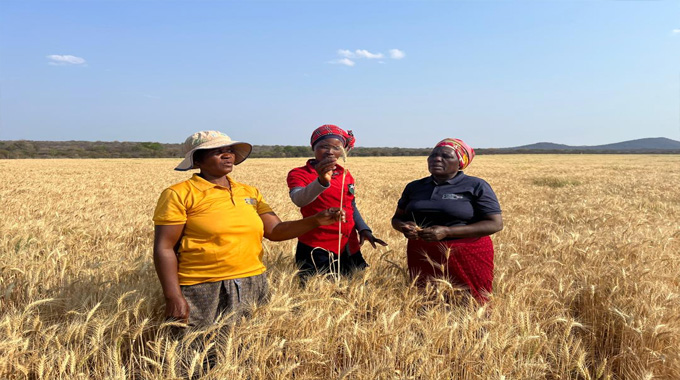
“The workload was unbearable and discouraged many farmers, some of whom pulled out. The majority of members are women, and keeping up with these demands was difficult considering our other household responsibilities,” she said.
Ms Tshuma added that with the introduction of climate-smart irrigation equipment, farmers are motivated again, and the workload has eased significantly for women.
UNDP Green Climate Fund project manager, Mr Rungano Benza, said the irrigation development component under the project seeks to address climate change adaptation and mitigation in irrigation schemes.
He said that smart irrigation technology systems are being incorporated to boost food production and mitigate the adverse impacts of climate change. These include floating pontoons, centre pivots, sprinklers, and solar mini-grids.
“The target is to implement water-conserving systems and farming practices that are climate-friendly and affordable for farmers. Previously, some schemes used water-consuming techniques such as flood irrigation and syphons, which were labour-intensive.
“Following rehabilitation, Midlo and Masholomoshe Irrigation Schemes are showing promising signs of growth and farmer-led success. Women are at the forefront of these enterprises, and having climate-smart irrigation equipment has made farming easier and more effective,” he said.
Government, working with partners, is rehabilitating irrigation schemes that have been lying idle in Matabeleland South to improve food and nutrition security and ensure the attainment of Vision 2030.
Women are crucial to farming in Zimbabwe, providing the majority of labour for food production, especially in rural areas where they constitute about 70 percent of the agricultural workforce.
In addition to farm work, women are also responsible for fetching water, gathering firewood, processing food, and preparing meals, making them essential to household well-being.
— @DubeMatutu