Online Reporter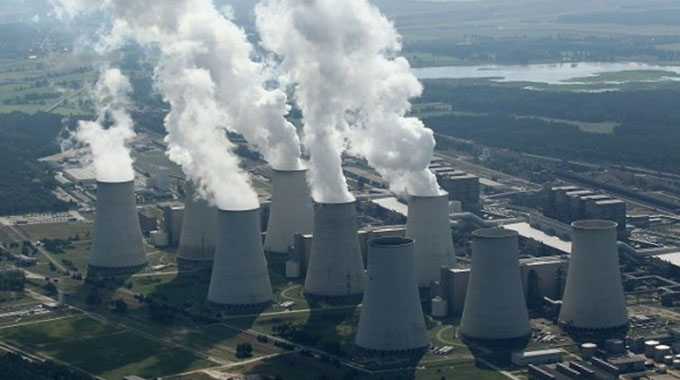
As global power politics increasingly revolve around energy security, Africa finds itself at a critical crossroads.
While the continent is being urged to commit fully to renewable energy transitions, world powers that champion green rhetoric are simultaneously entrenching their own dependence on fossil fuels.
The question Africa must confront honestly is this: should the continent continue to prioritise renewables at the expense of exploiting its vast coal resources to stabilise its power supply and drive industrialisation?
Recent geopolitical developments are instructive.
Energy competition among major powers has intensified, with oil and gas at the centre of economic and strategic rivalries.
Conflicts and diplomatic tensions associated with oil-rich regions such as Venezuela, the Middle East, and Eastern Europe, underscore the fact that fossil fuels continue to be the backbone of global power.
The same countries advocating rapid decarbonisation for Africa are quietly securing long-term oil, gas, and coal supplies to protect their own economies.
Europe’s current predicament offers a sobering lesson. Following supply disruptions and geopolitical tensions, several European countries have reopened coal-fired power stations to maintain their energy supply and keep factories running.
This reality exposes a fundamental contradiction: energy transitions are pursued when they are convenient, affordable and secure, not when they threaten economic stability.
Historically, Europe’s industrial rise was powered by coal. Coal-fuelled factories, railways, steel production and urbanisation laid the foundations for modern economies.
Africa, by contrast, is being asked to “leapfrog” this phase under conditions of chronic energy deficits, fragile grids, and limited industrial capacity.
While the moral case for climate responsibility is valid, the developmental asymmetry cannot be ignored.
Africa’s power challenge is not theoretical; it is lived daily. Load shedding, unreliable grids, and limited generation capacity constrain the manufacturing, mining, agricultural and digital economies.
Without sufficient baseload power, industrialisation remains aspirational.
Renewable energy, while essential for the future, currently faces structural limitations: intermittency, high storage costs, grid integration challenges and a heavy dependence on imported technologies.
Coal, on the other hand, offers baseload reliability.
Many African countries possess significant coal reserves that remain underutilised.
Strategically deployed, coal could stabilise national grids, support industrial hubs, and anchor economic growth, just as it has done elsewhere.
Importantly, modern clean-coal technologies, emissions controls and efficiency improvements mean that coal use today need not replicate the environmental damage of the past.
This is not an argument against renewables. Solar, wind and hydro must remain central to Africa’s long-term energy strategy.
However, the transition must be pragmatic, not ideological. A balanced energy mix, where coal, gas and renewables coexist, offers resilience and policy autonomy.
Energy sovereignty cannot be outsourced to global climate narratives that are divorced from African realities.
There is also a dimension of justice.
Africa contributes a minimal share of global carbon emissions, yet bears disproportionate pressure to decarbonise rapidly.
Meanwhile, industrialised nations continue to emit at scale while protecting their own economic interests.
Development pathways should not be uniform; they must reflect history, capacity, and context.
Africa’s real challenge is not choosing between coal and renewables, but choosing development on its own terms.
The future is renewable, but the present demands power. Africa must be allowed to navigate both realities strategically, responsibly, and sovereignly.
Timothy Pemba is a student of the Decolonisation of Africa with a deep interest in the continent’s socio-economic transformation and its role in the global landscape. He writes in a personal capacity; the opinions expressed do not reflect the views of any organisations with which he may be associated. He can be contacted via email at [email protected].