Chronicle Editor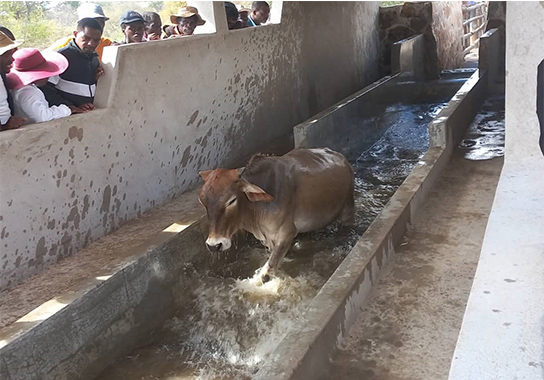
Sukulwenkosi Dube-Matutu, [email protected]
VILLAGERS from Zhokwe and Mawane in Ward 11, Gwanda District, have constructed a dip tank as part of efforts to contain tick-borne diseases.
In the past farmers were struggling to adhere to the recommended fortnight dipping regime as they had to drive their animals for a distance of 12km to reach the nearest dip tank. Some farmers were losing their animals along the way.
Last year in June the farmers contributed bags of cement and money to build the dip tank before getting assistance from the Zimbabwe Council of Churches, which provided more bags of cement.
The Department of Veterinary Services assisted with a perimeter fence. Over 800 cattle are expected to utilise the new facility, which was commissioned yesterday.
Project chairperson, Mr Cephas Moyo, said 110 households are set to benefit from the investment.
“As a community we realised the need for a dip tank as we had to drive our animals for a distance of 12km to reach the nearest dip tank. Each household contributed three bags of cement and we also raised some cash,” he said.
“At some point we were running out of resources to continue with the project and the Zimbabwe Council of Churches came on board.
“In April, we managed to complete our project and we are glad that today our dip tank is being commissioned.
“This dip tank will go a long way in improving the condition of our animals and we hope to see community members adhering to the recommended dipping regime so that our animals throughout the community can be safe.”
Mr Mbalekelwa Ndlovu who is project secretary said the intervention will ease the tick-borne diseases burden. Mr Ndlovu said the long distances were also affecting the condition of animals.
Ms Simelele Ngulube, a farmer from the area said their community is made up of mainly elderly people who cannot walk long distances to dip their cattle.
“The road that we have been using when we go to the dip tank is rocky and as a result some animals have been sustaining fractures along the way, which has been causing losses. This has also been discouraging people from dipping their animals. This will now be a thing of the past,” she said.
Ms Grace Vumani said she looks forward to dip her animals regularly at the new dip tank.

Speaking at the commissioning chief director in the Department of Veterinary Services, Dr Jairos Machakwa, applauded the community for initiating the project and assuming ownership of the project.
He urged the community to ensure that they adhere to the dipping regime and take all their animals for dipping. Dr Machakwa said dipping cattle is crucial as it protects them from heart water, anaplasmosis and Theilerosis popularly known as January Disease.
“In Zimbabwe cattle represent wealth and if we don’t safeguard them it means our livelihoods are affected,” he said.
Dr Machakwa commended the community for taking the lead instead of waiting for others to do it for them.
“Such projects are crucial in contributing towards the National Development Strategy 1 and realisation of Vision 2030. I urge you to work closely with extension officers in your area and I want to challenge other communities to emulate what you have done,” he said.
Dr Machakwa urged farmers to pay their dipping levy, embrace branding and obtain a movement permit when moving animals. – @DubeMatutu.



 Online Reporter