Online Reporter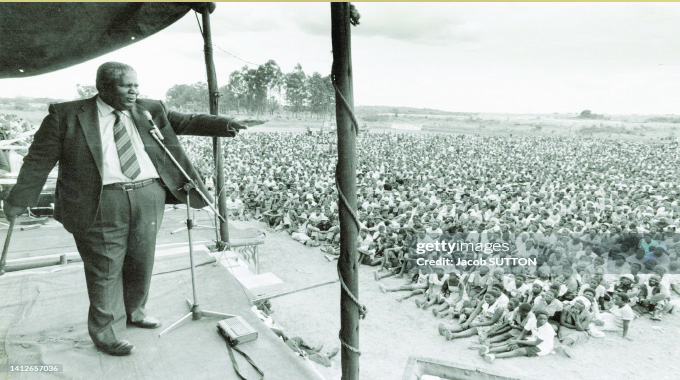
Elliot Ziwira, Deputy Features Editor
WITH hawk-like vigilance, the two young boys surveyed the dry stretch of land for movement, as a cloud of dust rose in the distance, curling like smoke above silhouetted forms.
Perhaps it was an approaching convoy, their minds whirled. For a fleeting moment, they thought it might be Bepe, the local businessman’s Bedford lorry making its routine delivery. But the absence of a diesel rattle signalled otherwise.
Moments later, the unmistakable pounding of hooves pierced the silence, shattering any illusions. The horses, ridden by menacing figures from the Rhodesian Light Infantry (RLI), had broken into a gallop, rapidly closing in on the family homestead.
Wire toy cars abandoned mid-play, the boys scrambled in panic, hoping to duck beneath the familiar safety of their grandmother’s granary. But fate, like the sun in the dry season, was unforgiving.
A white soldier, his voice laced with menace, yanked them back to reality.
“Hold it, piccaninnies! Tell me, where is Masweet?”
The name alone, Masweet, carried weight. Forget confectionery; it was about resistance. Cde Masweet was a feared and revered freedom fighter and commander, who operated in their Murehwa area.
The boys, barely eight, knew well what was at stake.
Feigning innocence, they responded in unison, “Come, we will show you where they are.”
Riding high on horseback and hoping to capture the revered “terr”, the Rhodie commander, accompanied by 14 troops, seven of them black, followed the children through the bush but not before radioing for reinforcements.
Before setting off, however, one of the boys pounded a drum under the eaves of the thatched kitchen — playfully, it seemed — but the rhythm was deliberate. It was a coded message, an alarm bell wrapped in Jerusarema, the local dance, disguised as resistance.
A kilometre-and-a-half later, the trail veered near Mahwohwa Business Centre. The boys pointed towards the counter in Kuzhangaira’s store.
“There are the sweets,” they said cheekily.
Red-faced with rage, the commander exploded: “You think I don’t know sweets? Bobjaans! I meant Masweet, a terrorist, filthy black like you, not these damn sweets.”
He made an attempt at flattening the closest boy with a single swish of his massive hand, but the alert lad dodged.
“Those are the only sweets we know, baas”, the other boy, out of danger’s way, stammered.
“You lie in your big, black piccaninny mouth. Now, get out of my sight,” he boomed.
But even as his fury echoed through the dust, he knew that the battle was already lost. The distant rumbling sound of army Pumas descending in the direction of Marandellas (Marondera) and soon enough the choppers that would be hovering overhead, meant little now.
Sororenzou, the granite giant of rock rabbit fame, that overlooked the area, had heard the drumbeat. Cde Masweet and his comrades were ready.
The boys bolted, mission accomplished.
Those two boys, though small in stature and unarmed, were part of a vital cog in the machinery of liberation: the mujibhas (male youth informants) and chimbwidos (female aides). They were the nerve endings of the liberation war; eyes that saw beyond the bush and ears that heard whispers of danger long before bullets flew.
They knew where guerrillas camped and memorised troop movements. They knew the difference between a Puma truck and a Reva. They could name all the white-owned farms where beasts were slaughtered for meat that would find its way to the comrades in hiding.
They were the flesh-and-blood radar of the Chimurenga/Umvukela.
Their crucial role in the liberation struggle resonates with Father Zimbabwe, Dr Joshua Mqabuko Nkomo’s words.
Addressing 5 000 people at Mandava Stadium in Zvishavane on February 16, 1980, he said: “This country wasn’t freed just by men with guns. . . It was a combination of all of you.”
Dr Nkomo’s truth has stood the test of time.
The people were the water, the guerrillas the fish.
Like all struggles, the liberation war was not waged in isolation.
It was rooted in the community. The fighters were the fish, swimming in the waters of the people, as Mao Zedong once philosophised and Zimbabwe’s war proved the adage.
Winning the hearts and minds of the people was more important than the number of guns carried. The struggle demanded politicised communities, aware of their historical deprivation and committed to reclaiming what had been stolen, land, dignity and memory.
As educationist and liberation war veteran Fay Chung wrote in Reliving the Second Chimurenga (2006), the early days of the struggle were fraught with betrayal and mistrust. Guerrillas were exposed to the enemy by villagers still ensnared in colonial propaganda.
ZANLA and ZIPRA responded by sending political commissars, armed not with rifles, but with ideology, values, and history lessons. These cadres fanned out across the countryside, holding pungwes (night vigils), where stories of resistance mingled with Chimurenga songs and dance.
Soon, the people became the war.
Even Rhodesian soldiers, battle-hardened and backed by superior weapons, admitted the power of this civilian intelligence network.
Chuck Hanson, an American Vietnam War veteran who served in the Rhodesian army, told Julie Frederikse in None But Ourselves: Masses vs Media in the making of Zimbabwe (1990): “Excellent. The best. Even better than Vietnam.
“They lived with the people; they were the people. That’s the ultimate factor in a war like this, having the indigenous population with you.
“They kept the gooks informed, with local, tactical, hard combat intelligence, not all the highfalutin stuff we put out — the sitreps we relayed and all that. That’s not intelligence, though we had plenty of that. They had the piccaninny who’d run and tell them, ‘The soldiers are coming’.”
Dave Brooks of the Rhodesian Special Air Services added: “The other side had the most infallible intelligence system in the world. . . the nhingi (mujibha)… the guy who just sits around all day and does nothing. No one would question him. . . It’s a difficult system to beat.”
Even Bob North of the Rhodesian Intelligence Corps confessed: “They would monitor our bases and you could guarantee after a couple of days of us taking in witnesses, we’d be stomped — hit, a base attack — because their knowledge was so good.
“Those mujibhas would give the terrs logistics, troop movements, troop strengths and that was one of their strengths. . . And I will tell you something — it wasn’t just the young boys who were involved. They had a lot of women working with them.”
The enemy had helicopters, the mujibhas had legs. The enemy had radios, the chimbwidos had songs, skirts and secrets stitched into waistbands. Pregnant-looking women turned out to be carrying AK-47s.
Their strength? Unity, strategy and disguise. And above all, belief.
Because their intelligence system involved a whole people, united through shared meanings, shared struggle and toil, it was difficult for Rhodesian soldiers to defeat the guerrillas, our freedom fighters, even though they had superior weapons and all the colonial apparatus for subjugation.
Heroes Day: Sacrifice beyond the gun
But it was not just information they passed on.
They provided food: isitshwala cooked under the moonlight, meat from their livestock and wild fruit for survival. They offered shelter and camouflage — caves, caves within caves and foliage so thick it whispered safety.
Many had their homes torched by enemy forces. Others watched their cattle shot dead or stolen, while some paid with their lives. But they never betrayed the cause.
Their pain was collective, their struggle, shared.
Therefore, as the nation prepares to honour its fallen and surviving heroes on August 11, it is pertinent that we pause to remember not just the ones who carried guns and shouted slogans from the battlefield, but also those whose quiet bravery and silent resolve made freedom possible — the mujibhas and chimbwidos, the cooks, couriers and human alarms who, without trigger fingers, helped turn the tide of a war that was anything but romantic.
As Heroes Day approaches, we should go beyond the seduction of the image of the soldier alone, to also remember the small boys with big ears. The girls with knowing smiles and the grandmother whose pounding pestle was a coded warning.
They were the drumbeat beneath the gunfire, the whisper between the bullets and the lifeblood of a struggle we all claim today.
Without the eyes and ears, the hands and backs, the cooks and couriers, the couriers and confidants, there would be no victory to celebrate.
So, as we hoist flags and lay wreaths on August 11, we should spare a thought for the barefoot heroes who never made the news, the ones who never wore fatigues, but who bore the weight of freedom on their slender, silent shoulders.
For, sometimes, the loudest sacrifice is made in silence!