Good morning. It is a refreshing and sunny Monday in Harare, Zimbabwe.
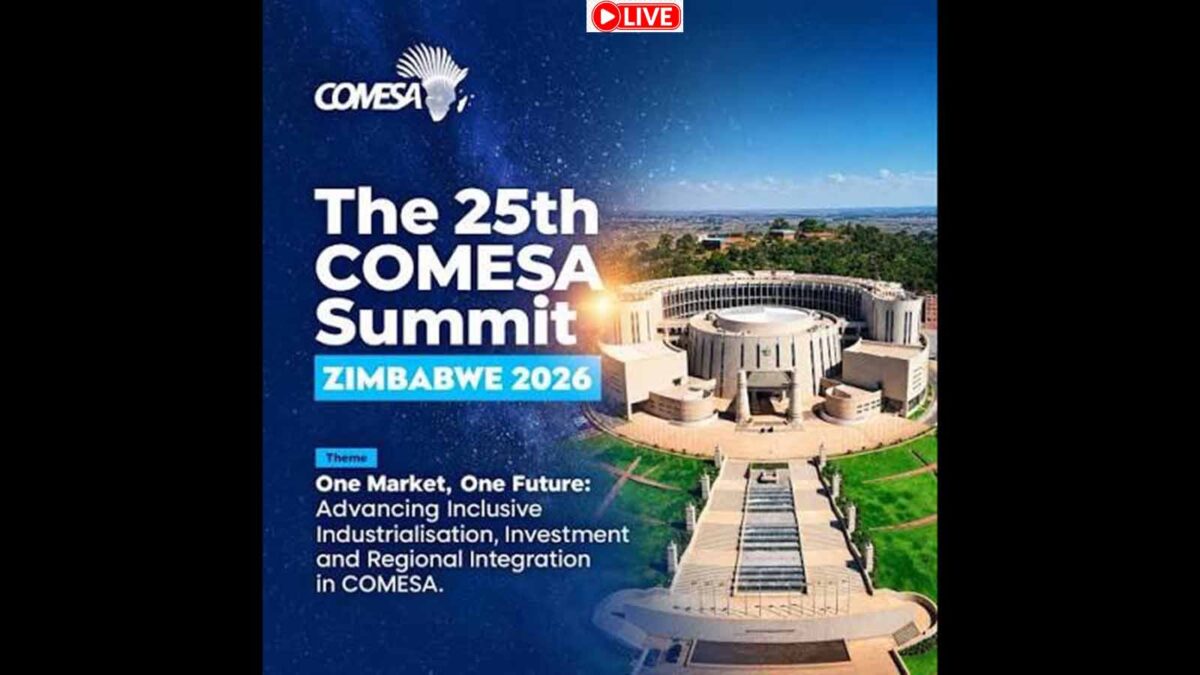
The 25th Common Market for Eastern and Southern Africa (COMESA) Summit started in Harare today, kicking off a four-day regional gathering that runs from October 19 to October 22, at the Harare International Conference Centre and the new Parliament Building in Mt Hampden.
Zimbabwe last hosted the regional bloc’s summit in 2009 in Victoria Falls, where the historic COMESA Customs Union was officially launched.
The schedule for the week in Harare includes the COMESA Green Industries Connect on Monday.
Alongside it, the COMESA Multisectoral International Exhibition is running up to October 21 at the HICC.
We will keep you informed over the next four days.
ZNCC president: Turn green industrialisation into economic opportunity
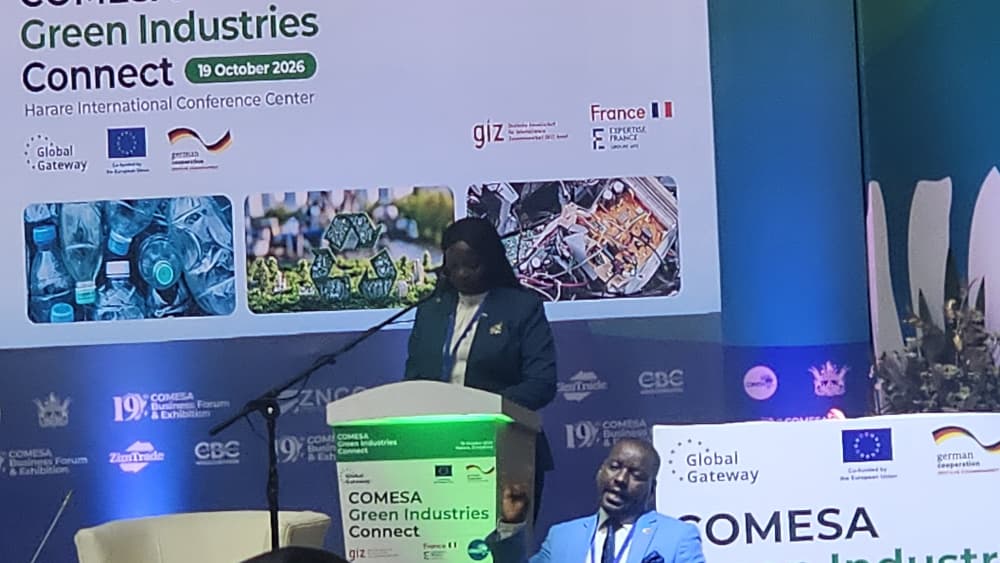
ZNCC president Josephine Takundwa has challenged COMESA businesses and leaders to turn green industrialisation into real economic opportunities.
Speaking at the opening of the COMESA Green Industries Connect at the HICC in Harare, she said green industrialisation is no longer just an environmental obligation but a chance to unlock new markets, attract investment and create jobs.
Ms Takundwa said the private sector must be at the centre of this transformation as investors, producers and innovators
.She said today’s sessions will focus on value addition in the leather industry, circular economy policies and investable circular business models.
The forum brings together delegates from 21 COMESA Member States
COMESA Business Council: Green transition is a $4.3 trillion opportunity
The private sector must treat the green transition as a business opportunity, not just an environmental issue, COMESA Business Council Vice President Dr Sheriff El Gabaly has said.
Speaking at the COMESA Green Industries Connect Forum at the HICC, Dr El Gabaly said circularity is a $4.3 trillion global opportunity that could create up to 142 million jobs.
He said global buyers and investors now demand products with less waste, lower emissions and more recycled content.
“Those that are early to secure their place in regional and global value chains will thrive. Those that do not will be left behind,” he said.
Dr El Gabaly said circular business models cut costs, secure materials and create new revenue streams from recycling and reuse, noting the global economy is only 7.2% circular.
He said the focus should be on electronics and e-waste, plastics and packaging, and leather and textiles.
Minister Ndlovu: Turn circular economy commitments into action
COMESA Member States must turn commitments on green industrialisation into action, Minister of Industry and Commerce Mangaliso Ndlovu has said.
Speaking at the COMESA Green Industries Connect Forum at the HICC today, Minister Ndlovu said ministers committed on 8 September to an inclusive circular economy transition and to the COMESA Green Pharmaceutical Manufacturing Strategy 2026-2035.
“Our immediate responsibility is to convert these commitments into implementation,” he said.
He urged Member States to integrate regional priorities into national industrial programmes, assign responsibilities, mobilise resources and monitor delivery.
Minister Ndlovu said governments must provide clear policies and conducive investment conditions, while businesses must invest in productive capacity and adopt cleaner technologies.
He said Zimbabwe is working with the Climate Technology Centre and Network on a national decarbonisation roadmap, with opportunities in iron and steel and mineral processing.
Investment in renewable energy and recycling lowers production costs and strengthens industrial capacity, he added.
What is a circular economy?
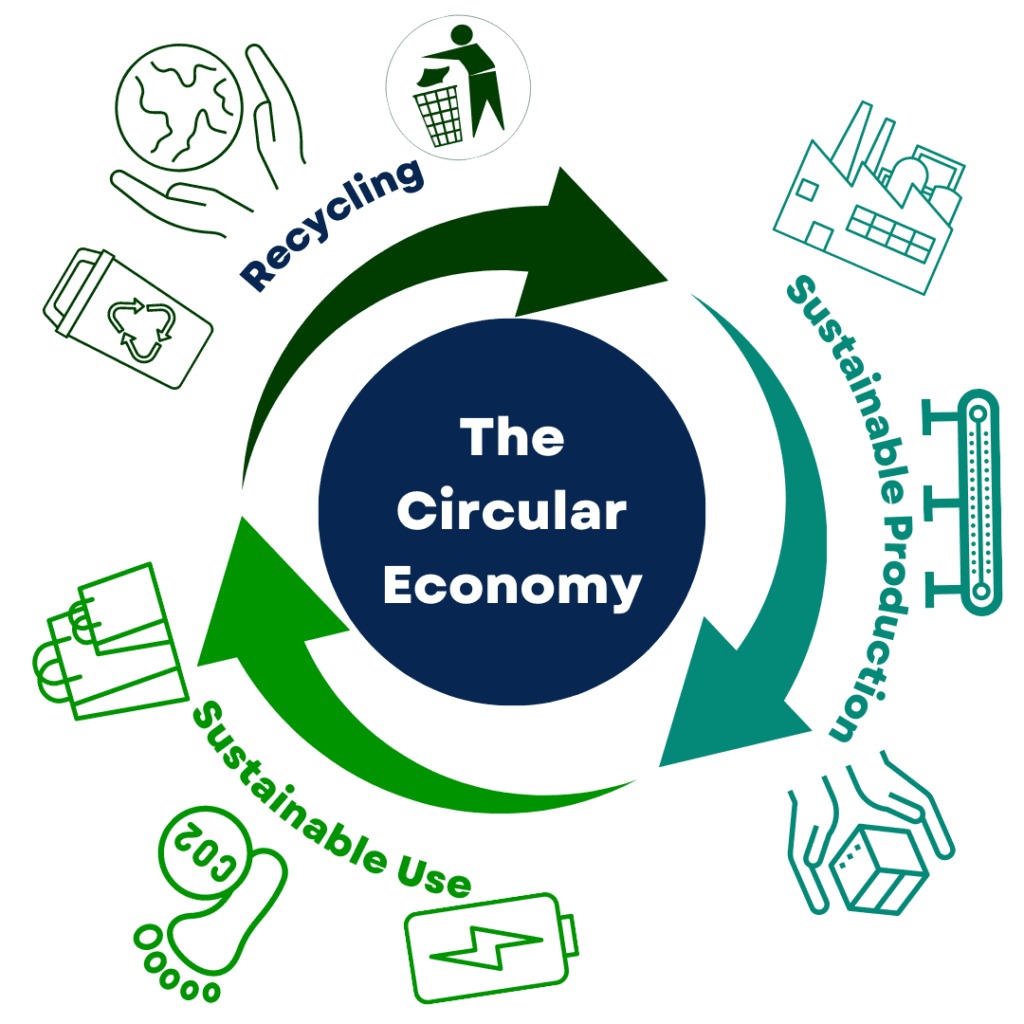
A circular economy keeps materials and products in circulation for as long as possible.
It enables resources used in such processes and activities to maintain their highest value for as long as possible, and aims for the elimination of waste through the superior design of materials, products, and systems (including business models).
A circular economy reduces material use, redesigns materials and products to be less resource intensive, and recaptures “waste,” or material that was previously considered to be a waste, as a resource that can serve as feedstock to manufacture new materials and products.
Why is it important?
Material recovery has an important role to play in a circular economy.
The circular economy, when designed in a thoughtful manner, has the potential to protect the environment, improve economics, and elevate communities.
How we extract, use, and dispose of our resources can have compounding effects.
Communities across this nation have been affected by the negative environmental and health impacts caused by a non-circular economy.
Many landfills and manufacturing and processing facilities are located close to communities. Safe jobs and healthy communities are the goals.
Minister Murwira: Africa must break colonial-era rules to build circular economy
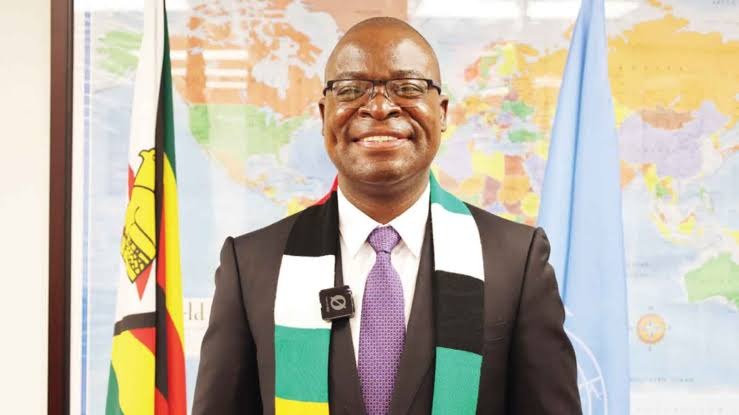
Africa must abandon colonial-era economic rules and return to indigenous circular practices, Foreign Affairs and International Trade Minister Prof Amon Murwira has said.
Speaking at the COMESA Green Industries Connect Forum at the HICC, Prof Murwira said a circular economy is not a foreign concept but a return to practices displaced by colonial rule.
“Circularity was always done. It is a matter of removing colonial rules,” he said.
Prof Murwira said Africa’s industrialisation cannot rely on natural resources alone but must be built on knowledge and capability.
“Industrialisation shall not simply be the existence of factors. It must be in the form of a systematic vision of knowledge and natural resources,” he said.
Prof Murwira also called for the removal of tariff and non-tariff barriers, saying COMESA’s founding commitments must be honoured.
“By forming COMESA, we are saying all tariffs and non-tariff barriers must fall. If in the end people do not see the benefit, then the union means nothing,” he said.