Online Reporter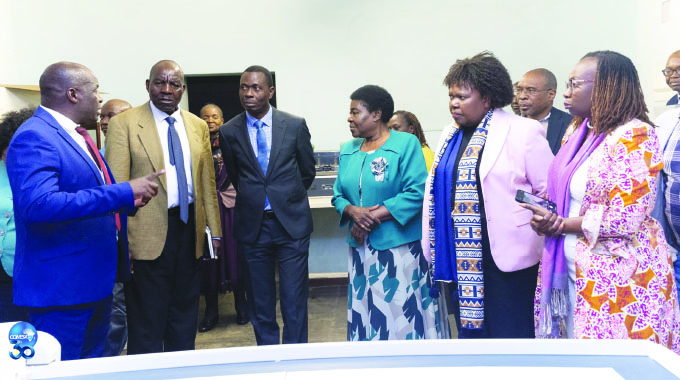
Sikhulekelani Moyo and Trish Mukwazo, Zimpapers Reporters
THE Common Market for Eastern and Southern Africa (Comesa) has officially handed over Satellite Leather Design studio equipment valued at 150 000 Euros to the Leather Institute of Zimbabwe (LIZ), marking a significant milestone in Zimbabwe’s leather value chain.
Funded by the European Union through the EU Development Fund (EUDF 11), the studio aims to elevate the focus on the upper value chain, ultimately enhancing the downstream impact for all stakeholders within the broader leather industry.
The Design Studio is set to improve the competitiveness of leather products, assisting small and medium enterprises in the sector to access both regional and global markets.
Speaking at the handover ceremony, Bulawayo Provincial Affairs and Devolution Minister Judith Ncube, said the studio functions as a critical building block for enhancing products, boosting design originality and strengthening branding capabilities across Zimbabwe’s leather industry.
“The studio will develop and deepen an understanding of design as a strategic tool. This means we will educate our industry payers to see design to just as aesthetics, but as critical components that enhance market competitiveness,” said Minister Ncube.
She added that the project aligns with the broader vision of the Regional Design Studio (RDS) in Ethiopia, which is a flagship project for the Africa Leather and Leather Products Institute (ALLPI) endorsed by the Council of Ministers meeting held in Madagascar in 2016.
With many players in the leather sector being small businesses, Minister Ncube said the studio will provide necessary materials, equipment and standard design patterns.
She said this support will enable local manufacturers to produce footwear and leather goods at a higher quality and consistency, reducing costs and saving time, thus empowering SMEs to meet international standards.
“SMEs often struggle to purchase inputs on a large scale, access large markets, and introduce innovative products due to limited resources and market constraints,” said the Minister.
She further highlighted that the design studio serves as a hub where designers can conceive, develop and perfect new products here in Zimbabwe, enhancing originality, technical expertise and branding potential.
Zimbabwe has set a strong foundation for its leather industry with the implementation of the Zimbabwe Leather Strategy (2021-2030).
This strategic blueprint aims to deeply enhance the sector’s development over the coming decade.
Minister Ncube said the leather value chain is notably well-structured, spanning from livestock farmers, which is the industry’s backbone.
Speaking at the launch, Comesa representative Ms Providance Mavubi said the equipment handover does not only marks a transformative milestone for Zimbabwe’s leather sector but also unlocks the vast potential of the Zimbabwe data industry, positioning it for global competitiveness.
“We are not merely inaugurating a new facility, we are unlocking the vast potential of Zimbabwe’s leather industry and positioning it for global competitiveness,” she said.
Ms Mavubi noted that upgrading the satellite design studio empowers Zimbabwean artisans, designers, and entrepreneurs to elevate their craft and produce leather goods that meet the highest global standards.
“We look forward to seeing Zimbabwe-branded leather products not only in local markets but on shelves worldwide, showcasing the quality and innovation that define Zimbabwean craftsmanship,” she said.
“Comes remains fully committed to supporting Zimbabwe’s leather sector and today’s handover marks the beginning of a new chapter.
“We anticipate this studio will become a centre of excellence where ideas flourish, skills are developed, and world-class products are created, driving exports, generating employment and empowering Zimbabwe’s youth and women.”
Chairman of Zimbabwe Leather Development Council Mr Clement Shoko, said that with the new technology, they can design a shoe and any other leather product.
“We now have a tool that we can now use to satisfaction. We can now go on the international stage,” he said.
Mr Shoko said they are in the process of significantly implementing a strategy for 2021-2030 with a second sub-objective, which talks about design strategy.
He expressed gratitude to all stakeholders involved in the project, including, European Union, the Government and the leather industry, for their support in establishing the studio.
“The moment we have got a specific design, you go into the implementation matrix, you will tick and say we have scored,” said Mr Shoko.
Mr Shoko said they, however, face a challenge of being unable to penetrate the market, which can significantly contribute to the sector’s growth.
“The market is the one that makes us busy. If we can penetrate the market, then we would be in a position to draw on those 95 percent of hides, convert them into leather and convert them into a product,” he said.
Stakeholders had the opportunity to tour the studio and were educated on how the equipment operates.
LIZ chairman Mr Cornelious Sunduza said the 58 000 Euros of the fund was used to purchase equipment, which includes computers.
He said during the establishment of the studio, they benchmarked what they wanted using the eight best studios in the world.