Online Reporter
Gibson Mhaka, Zimpapers Politics Hub
THE timing could hardly be more politically and economically significant.
On October 22, Zimbabwe will host the 25th COMESA Heads of State and Government Summit and assume the chairmanship of the regional bloc at a time when Africa is intensifying efforts to deepen economic integration, promote industrialisation and unlock investment.
Just three days later, on October 25, the region will observe SADC Anti-Sanctions Day, a day set aside to reaffirm the regional bloc’s opposition to the economic sanctions imposed on Zimbabwe.
The coincidence presents Harare with a unique diplomatic opportunity.
Zimbabwe’s assumption of the COMESA chairmanship should therefore not be viewed merely as another rotation of leadership within a regional economic bloc.
It offers the Second Republic an important platform to place the sanctions question within a much bigger African conversation, the quest for economic sovereignty, regional integration and an Africa that increasingly determines its own economic destiny.
This is where politics becomes particularly interesting.
COMESA’s ambition is to promote economic integration by creating a larger and more competitive regional market, facilitating trade and investment, strengthening industrialisation and improving the movement of goods, services and capital.
But can such an integrated market fully realise its potential when one of its members argues that external economic restrictions continue to constrain its access to international finance, investment and markets?
That is the question Zimbabwe should put before the region.
If COMESA is serious about building “one market, one future”, can there really be one regional market while one of its members remains constrained by sanctions and restricted access to international finance?
The question is not whether COMESA has the power to lift sanctions.
It does not.
Sanctions imposed by Western governments are matters for those governments and their respective foreign-policy and legal systems. COMESA cannot simply issue a resolution and make them disappear.
But the regional bloc has something else that matters in international diplomacy — collective political and economic voice.
Zimbabwe can use its chairmanship to encourage a broader conversation about how unilateral economic restrictions affect not only the targeted country, but also regional trade, investment, industrialisation and development.
This is not an entirely new argument.
SADC has consistently maintained that the sanctions imposed on Zimbabwe have consequences beyond the individuals or entities directly targeted, arguing that they have affected the country’s ability to access international finance, attract investment and participate fully in regional economic development.

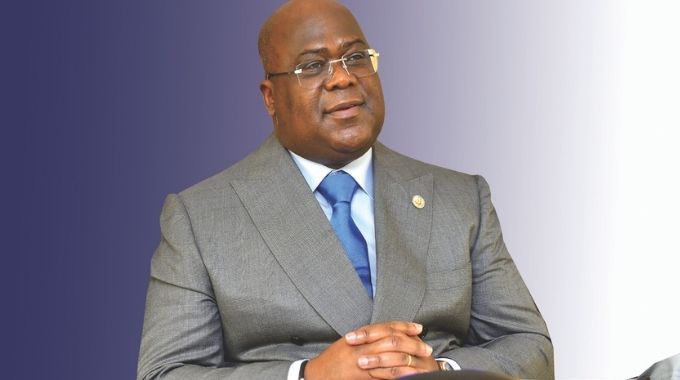
Former SADC chairperson Félix Tshisekedi, in 2022, linked the sanctions environment to Zimbabwe’s difficulties in attracting foreign direct investment, accessing credit and obtaining financial services.
That regional position provides Harare with an important foundation.
The issue, therefore, is how Zimbabwe can elevate the conversation from a national grievance into a regional economic-integration question.
For years, the sanctions debate has largely been framed as a dispute between Zimbabwe and Western countries.
That framing, while politically important, risks overlooking another dimension.
Zimbabwe is a member of regional and continental economic organisations whose success depends on the ability of their members to trade, invest and industrialise.
If one member faces economic constraints that affect its ability to access capital and investment, the consequences can potentially spill across borders.
A weak Zimbabwean economy does not exist in isolation from its neighbours.
Zimbabwe trades with Zambia, Mozambique, South Africa, Botswana and other countries in the region.
Its industries depend on regional supply chains, while millions of people across Southern and Eastern Africa depend on cross-border commerce.
Consequently, the question of Zimbabwe’s economic recovery has a regional dimension.
This is precisely why the COMESA chairmanship matters.
Zimbabwe should use the platform to make the case that regional integration must be accompanied by economic policy space for African countries to determine their own development paths.
That does not mean turning every COMESA meeting into an anti-Western rally.
Far from it.
A seasoned diplomatic approach would be to frame the issue around the principles COMESA itself is pursuing: trade, investment, industrialisation, economic resilience and inclusive development.
The argument becomes much harder to dismiss when presented in those terms.
Zimbabwe could, for instance, encourage COMESA member states to examine the practical economic consequences of sanctions and other external restrictions on regional investment flows, access to capital and cross-border trade.
It could encourage greater intra-COMESA investment as part of a strategy to reduce the region’s vulnerability to external economic shocks.
It could also push for stronger regional financial mechanisms capable of supporting businesses and productive sectors that struggle to access conventional international financing.
This is where the sanctions question intersects with the broader African agenda of economic sovereignty.
Africa cannot achieve meaningful economic independence simply by increasing the volume of speeches about sovereignty.
Economic sovereignty requires institutions, capital, infrastructure, markets and productive capacity.
It requires African countries to trade more with each other, invest more in each other and develop financial systems capable of supporting African businesses.
Zimbabwe’s COMESA chairmanship can therefore be used to advance precisely that conversation.
And there is an important economic reality behind it.
The success of regional integration is ultimately measured not by the number of summits held, but by whether ordinary businesses can trade more easily, whether industries can expand, whether investment increases and whether citizens benefit from greater economic opportunities.
That is why the sanctions question deserves to be brought into the economic-integration debate.
If sanctions make it more difficult for Zimbabwean companies to access international finance or investment, then the issue is not merely about Harare and Washington, London or Brussels.
It becomes a question of whether the regional economic architecture is capable of cushioning member states against external economic pressures.
This is also where Zimbabwe’s “Look East” and broader engagement and re-engagement policy can intersect with the COMESA agenda.
The Second Republic has repeatedly emphasised the importance of engagement with all countries while seeking to attract investment and expand Zimbabwe’s international economic partnerships.
The COMESA chairmanship provides another opportunity to translate that philosophy into regional economic action.
Zimbabwe should seek to strengthen intra-African trade while continuing to engage external partners.
The objective should not be isolation.
It should be diversified.
A region that has multiple sources of capital, technology, markets and investment is inherently more resilient than one overwhelmingly dependent on external economic systems.
This is perhaps the most constructive way of approaching the sanctions issue.
Rather than simply asking other African countries to condemn sanctions, Zimbabwe can challenge them to help build an economic environment in which sanctions have less capacity to undermine development.
That means deepening regional value chains. It means promoting local beneficiation.
It means developing regional infrastructure, strengthening African financial institutions, making intra-COMESA trade more efficient and creating investment opportunities capable of attracting both African and international capital.
Such an approach would also strengthen Zimbabwe’s argument on the international stage.
A country that can demonstrate that its regional partners are investing in its industries, trading with its businesses and supporting its economic transformation is in a stronger position to argue that economic restrictions are ultimately counterproductive.
The October 25 SADC Anti-Sanctions Day consequently assumes greater significance.
Coming only three days after the COMESA Summit, it can become an opportunity to reinforce the economic message coming out of Harare.
The two events should not be treated as unrelated diary dates.
October 22 can be about regional economic integration.
October 25 can be about the barriers that Zimbabwe and the region argue stand in the way of that integration.
That provides Zimbabwe with a coherent diplomatic narrative.
But Harare must also recognise that the COMESA chairmanship comes with responsibilities.
Zimbabwe cannot credibly champion regional integration while ignoring the need to improve its own investment climate, strengthen institutions, fight corruption, improve policy consistency and make it easier for businesses to operate.
The sanctions argument will carry greater weight if Zimbabwe continues addressing its domestic economic challenges.
The Second Republic’s reforms, therefore, remain important to the broader argument.
Economic diplomacy works best when it is supported by domestic economic transformation.
Zimbabwe must continue demonstrating that it is open for business, serious about investment, committed to industrialisation and determined to create an economy capable of participating competitively in regional value chains.
That is where the COMESA chairmanship can become more than ceremonial.
Zimbabwe can use it to demonstrate that the country’s economic interests are inseparable from those of the region.
It can advocate for stronger regional financial cooperation, greater intra-African investment and the removal of barriers that undermine trade and industrialisation.
And it can place the sanctions debate firmly within that framework.
Ultimately, Zimbabwe does not need COMESA to promise something it cannot deliver.
It needs COMESA to recognise that Africa’s economic integration cannot be complete if external economic pressures continue to weaken the productive capacity of one of its members.
That is the conversation Harare should lead.
The significance of October 22, therefore, lies not simply in Zimbabwe becoming the COMESA chair.
It lies in the possibility of using that position to connect three issues that are often discussed separately — sanctions, regional integration and economic sovereignty.
Three days later, SADC Anti-Sanctions Day can reinforce that message.
For Zimbabwe, the challenge is to turn the coincidence of these two major regional events into a coherent diplomatic campaign.
The ultimate objective should not be confrontation for its own sake.
It should be an Africa capable of financing its own development, trading more with itself, industrialising its economies and speaking with a stronger collective voice when external policies threaten the economic interests of its members.
That would give the sanctions debate a broader meaning.
And it would give Zimbabwe’s COMESA chairmanship a purpose far beyond occupying the chair.
If COMESA’s promise is “one market, one future”, then Zimbabwe’s question is simple: how can Africa build that common future if some of its economies remain constrained by external economic measures?
That is a question worthy of the COMESA Summit and one that should reverberate when SADC observes Anti-Sanctions Day on October 25.