Online Reporter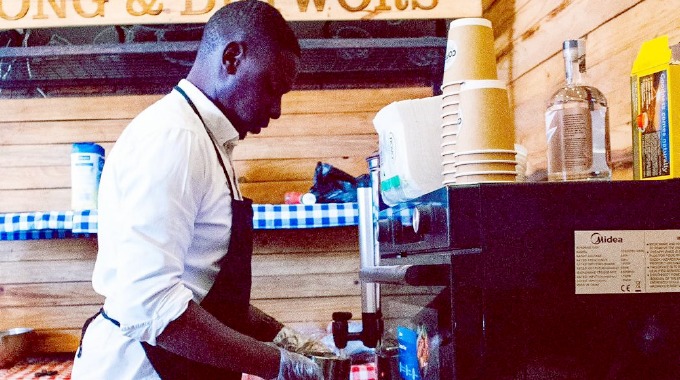
Bruce Ndlovu, Sunday Life Reporter
IT is a Saturday morning in Bulawayo and dozens have gathered for a party. However, this is a party with a difference. There is no rush to the bar, no thumping bass spilling into the streets and no familiar procession of revellers preparing to spend the afternoon drinking their way into the night.
Instead, there are people gathered over cups of coffee. Some are chatting animatedly while others sit back and take in the music. There are different generations in the room brought together not by the promise of a late-night party but by the simple pleasure of coffee, food, conversation and a relaxed atmosphere.
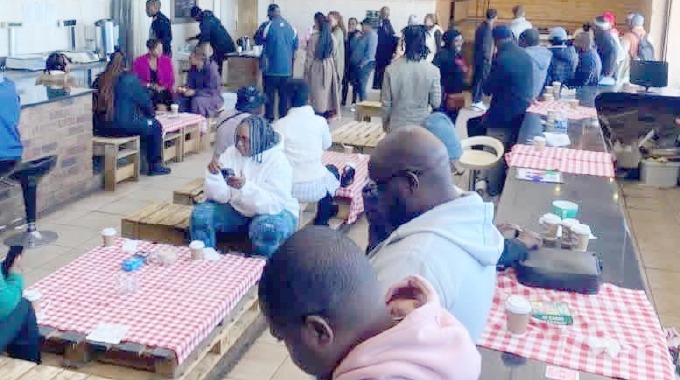
This is the Coffee Party, an event that is quietly attempting to challenge the template of entertainment in Bulawayo.
For organisers Tswarelo Mothobe and Thembalethu Ndlovu, the event is about more than creating another lifestyle gathering. It is an attempt to kick-start something they believe Zimbabwe has been missing for generations: a genuine coffee-drinking culture.
After two editions, the organisers say they have been encouraged by the response, with each event attracting between 60 and 80 people.
The numbers may not yet rival some of the city’s bigger entertainment events, but that is precisely the point.
The Coffee Party was never designed to become another massive gathering where hundreds of people converge for a few hours of loud music and alcohol.
It is deliberately intimate.
For Ndlovu, the morning setting is one of the event’s biggest attractions.
“I think I have realised that there are people who are comfortable with a morning event and then going about their day afterwards. It doesn’t disrupt their routine. Some people, because of family or work commitments are unable to attend events that stretch into the evening and night. I think there hasn’t been anything in the city catering for that demographic,” he told Sunday Life in an interview.
According to Ndlovu, the idea is to give people another way of experiencing entertainment.
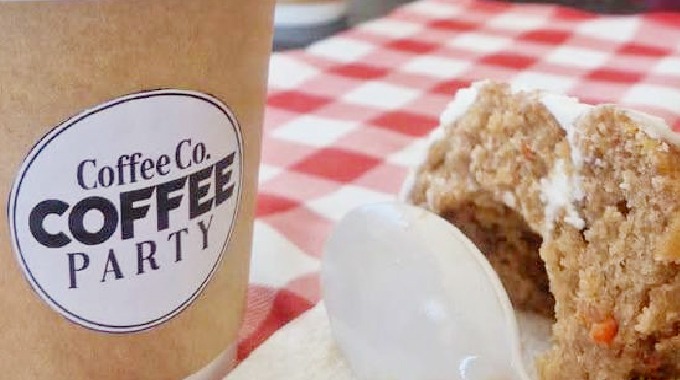
Rather than waiting for the afternoon before heading out, people can start their day at the Coffee Party, spend time with friends and strangers and still have the rest of the day ahead of them.
“People now know that they can start their day there, relax in a conducive atmosphere and still have the rest of their day ahead of them. Not everyone wants an atmosphere focused on partying late into the night. Some people simply want to come and enjoy themselves while the day is still calm,” Ndlovu said.
That atmosphere is central to the organisers’ vision.
“It reflects the kind of ambience we want to create. We want a place where people can have conversations and make friends. It’s not something heavy, it’s a very peaceful environment. I have been surprised by the number of people who want to attend,” he said.
But beneath the relaxed setting is a much bigger ambition. Mothobe believes Zimbabwe’s relationship with coffee is an anomaly.
The country lies within the geographical belt that allows coffee to be grown, with the Eastern Highlands in particular having a history of coffee production. Yet coffee has never achieved the cultural prominence it enjoys in many other parts of the world.
Mothobe attributes part of that disconnect to Zimbabwe’s colonial history.
“There are only a select few countries in the world where coffee can be grown, depending on altitude, and Zimbabwe is one of them. We fall within the belt aligned to the equator. Yet, despite that, Zimbabwe doesn’t really have a coffee-drinking culture. Colonially, we were fed tea,” he said.
The Coffee Party, therefore, is an attempt to change that relationship.
“However, it is our belief that every great country was built by people drinking, and it is our desire to build a coffee-drinking culture in the country,” Mothobe said. .
The irony, he believes, is that Zimbabwe already possesses much of what is required to build such a culture.
At the most recent Coffee Party, the organisers deliberately served locally produced coffee.
“In Zimbabwe, most coffee farmers are black. If you go to the Vumba or the Eastern Highlands, you find white people owning the farms, but it is predominantly black people working on them. The coffee roasters are also mostly black. So, we are trying to cultivate that culture among our people,” he said.
For Mothobe, coffee should not be viewed simply as a hot beverage consumed in the morning. It is an entire ecosystem.
“You can infuse it with different things, including alcohol or have it as a breakfast drink. There is a lot you can do with coffee,” he said.
The possibilities extend far beyond the cup. Coffee creates opportunities for farmers, milk producers, confectioners, roasters, suppliers and manufacturers of the equipment and utensils used to prepare and serve it.
“Coffee is also a value chain. You have milk farmers, confectioners, suppliers and people producing the utensils we use. The value chain is huge,” Mothobe said.
The organisers are already looking beyond the Coffee Party itself. They envision a broader coffee movement that could eventually bring together producers and consumers from Zimbabwe, Mozambique and beyond.
“We also get a lot of farmers from both the Mozambican and Zimbabwean sides. The initial vision is to grow in that regard. Eventually, we can have a coffee market, a coffee expo or even a coffee festival,” he said.
The journey towards that bigger vision, however, will be gradual. Mothobe said he imagined three or four Coffee Parties being held during the year, eventually building towards a larger gathering that could attract coffee producers and enthusiasts from different parts of the world.
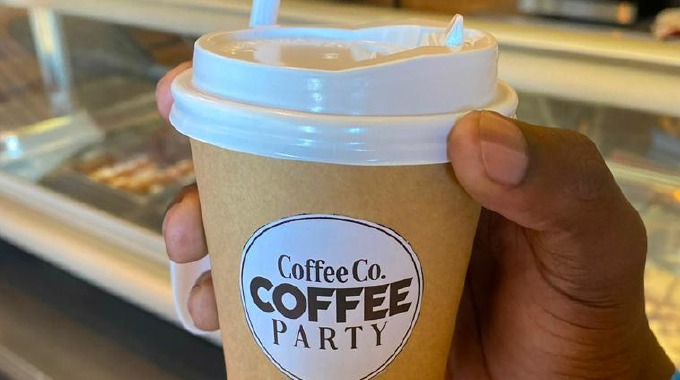
“Do our three or four Coffee Parties during the year, all leading up to a big event where people come from different parts of the world to market what they have,” he said.
The diversity of coffee itself is part of the attraction. Mothobe argues that coffee cannot be reduced to a single taste or identity because its character changes according to where and how it is grown and processed.
“As much as coffee is a bean, no two farms produce coffee that is exactly the same. That is what makes coffee unique. These are different farms following different processes of planting and harvesting, and because of that, Zimbabwean coffee is very diverse,” he said.
That diversity is being reflected in the event itself. The organisers are deliberately bringing together different creative disciplines, from music to visual art, while resisting the temptation to turn the Coffee Party into a conventional nightlife event.
Ndlovu said they want people to encounter things they would not necessarily expect at a traditional Bulawayo gathering.
“We were giving people something they weren’t expecting. When you look at most events in the city, people are used to commercial house or deep house, but that day the DJ was playing Arabic deep house,” he said.
The event has also created opportunities for other creatives, including sound engineers, musicians, DJs and visual artists.
“We also had Mdu Sevan, our sound engineer, who has been helping us a lot. We are connecting with visual artists, musicians and DJs, so we are engaging a lot of people and growing the idea,” Ndlovu said.
And then there is the community that has begun forming around the cup.
Mothobe says the first event challenged his assumption that Zimbabweans who were passionate about coffee were few and far between.
“You tend to think you are the only person who loves coffee. Then you meet someone else and think it’s just the two of you. But when you throw a party, you find 60 to 80 people in the room,” he said.
The response has also shown the organisers that not everyone who attends is an experienced coffee drinker.
“One thing you have to know is that coffee people can be snobs. They know their stuff. However, at this event, we had people coming to us saying, ‘Teach me, surprise me, show me something I don’t know.’ We have now built a little community,” Mothobe said.
Between the first and second editions, the event attracted a new audience beyond the organisers’ existing circle of friends and regulars.
For Mothobe, that is perhaps the strongest evidence that there is an appetite for something different.
“Besides the regulars and our own friends, we attracted a completely new crowd between the first and second events. It shows us that there is a community of people who have been yearning for an event of this kind,” he says.
In a city where entertainment can often follow a familiar script of music, braai and alcohol, the Coffee Party is deliberately seeking another frequency.
“A lot of our events tend to follow a similar template. They become all about braai and booze. This is something for people who are looking to get on a different frequency,” Mothobe said.
That difference is also why the organisers are wary of chasing numbers for their own sake.
While growing the event is part of their ambition, they do not want the Coffee Party to lose the intimacy that has helped define it.
“We may want the numbers to grow, but we understand what intimacy means and want to preserve it to a certain level. That way, we can still give people the quality of beverages and food that they have come to expect,” Mothobe said.