Online Reporter
Gibson Mhaka, Zimpapers Politics Hub
ZIMBABWE’S forthcoming assumption of the chairmanship of the Common Market for Eastern and Southern Africa (COMESA) provides a timely platform for the country to give greater economic substance to its foreign policy under the Second Republic.
When Zimbabwe hosts the 25th COMESA Heads of State and Government Summit in October, the regional bloc’s theme, “One Market, One Future: Advancing Inclusive Industrialisation,
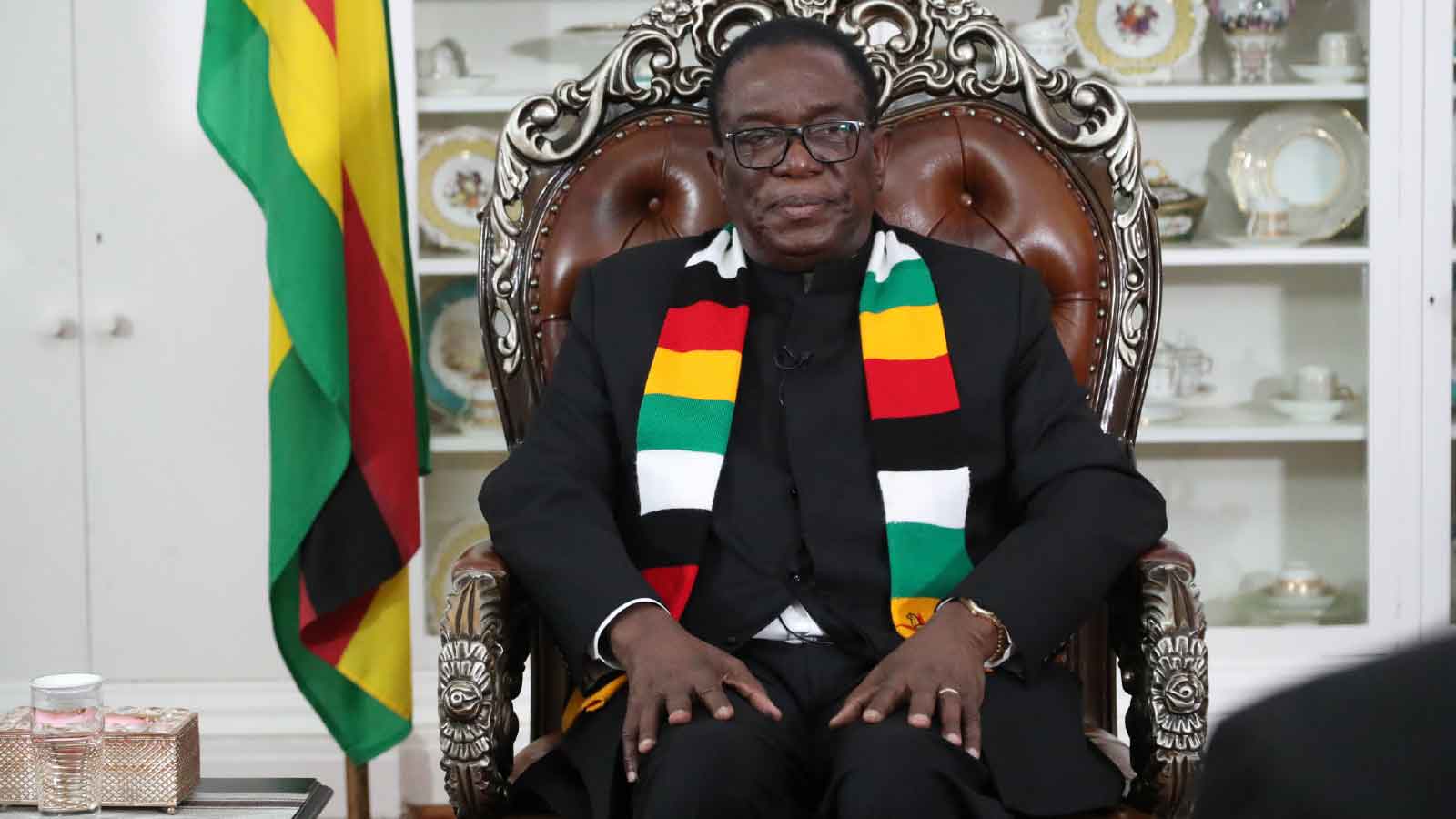
Investment and Regional Integration in COMESA,” will align closely with President Emmerson Mnangagwa’s broader diplomatic trajectory, which is anchored on the principle of “a friend to all and an enemy to none.”
Far from being merely a diplomatic slogan, this principle has increasingly become a defining feature of Zimbabwe’s engagement and re-engagement policy. Through it, the Second Republic has sought to rebuild relations with the international community while opening new avenues for trade, investment, technology transfer and economic co-operation.
The COMESA theme fits naturally within that trajectory because it acknowledges a fundamental reality of modern international relations: political friendship must increasingly translate into practical economic partnerships.
For Zimbabwe, this is particularly important as the country pursues the ambitious objective of becoming an upper-middle-income economy by 2030.
Vision 2030 cannot be achieved in isolation.
It requires Zimbabwe to be firmly integrated into regional and global markets, attract investment, expand industrial capacity, strengthen exports and build partnerships capable of accelerating economic transformation.
In this context, the COMESA chairmanship is more than a ceremonial regional responsibility.
It is an opportunity for Zimbabwe to place economic diplomacy at the centre of its regional leadership and demonstrate how the country’s foreign policy can contribute directly to national development.
President Mnangagwa has consistently maintained that Zimbabwe seeks friendship and mutually beneficial relations with all countries.
“Zimbabwe is a friend to all and an enemy of none. Flourishing relationships are being forged based on mutual respect, shared values and win-win benefits,” he has said.
There is considerable strategic wisdom in this approach.
In a world characterised by competing geopolitical interests, economic uncertainty and shifting alliances, countries can ill afford to limit themselves to a single political or economic sphere.
Zimbabwe’s engagement and re-engagement drive is therefore premised on the understanding that the country must cultivate relationships wherever opportunities for co-operation exist.
The objective is not simply to make friends for the sake of diplomatic protocol.
It is to create an environment in which political goodwill can facilitate investment, trade, tourism, infrastructure development, technology transfer and access to international markets.
This is where the words “One Market, One Future” acquire deeper significance.
COMESA’s vision of a more integrated market complements Zimbabwe’s own need to move beyond the limitations of its domestic market.
For a country seeking to industrialise, access to a larger regional market is indispensable.
Industries require consumers, investment and economies of scale.
A manufacturer producing exclusively for a relatively small domestic market may struggle to attain the scale necessary to compete internationally. However, access to the wider COMESA market creates opportunities for increased production, higher exports and greater employment creation.
Regional integration can therefore become a powerful catalyst for Zimbabwe’s industrialisation agenda.
The same applies to investment.
Zimbabwe requires significant capital to develop infrastructure, modernise industries, expand energy generation, increase agricultural production and strengthen value addition and beneficiation.
The engagement and re-engagement policy provides the diplomatic foundation for attracting such investment.
The COMESA chairmanship provides an additional economic platform from which Zimbabwe can showcase its investment opportunities and encourage regional investors to view the country not merely as a national market, but as a strategic gateway into a wider regional economy.
This represents one of the strongest connections between COMESA and Vision 2030.
An upper-middle-income Zimbabwe will require an economy that is productive, diversified and outward-looking.
It will need companies capable of competing beyond national borders, industries integrated into regional value chains and an investment environment that inspires confidence.
The COMESA theme speaks directly to each of these requirements.
Inclusive industrialisation is particularly significant.
Zimbabwe’s economic transformation cannot simply be measured by increased production figures.
Industrialisation must generate employment, expand opportunities for entrepreneurs, support small and medium enterprises and ensure that the benefits of economic growth reach ordinary citizens.
The word “inclusive” therefore carries particular importance.
It recognises that economic development must ultimately translate into improved livelihoods and broader prosperity.
The same philosophy underpins regional integration.
Integration should not be an elite exercise confined to Heads of State, diplomats and business executives.
It must ultimately make it easier for farmers to sell their produce, manufacturers to access regional markets, transporters to move goods and ordinary citizens to benefit from greater economic opportunities.
This is why reducing trade barriers must remain central to Zimbabwe’s approach to COMESA.
Tariff and non-tariff barriers, cumbersome border procedures and inadequate infrastructure can undermine the very regional integration that African countries have spent decades seeking to build.
Zimbabwe’s chairmanship therefore presents an opportunity to advocate practical reforms that make the movement of goods, services, capital and people easier and more efficient.
Such reforms would also reinforce the country’s engagement and re-engagement agenda.
Diplomacy becomes meaningful when relationships produce tangible benefits.
A country may establish excellent political relations with another State, but that relationship becomes considerably more valuable when it results in investment, expanded trade, new industries or co-operation in areas such as energy, agriculture and infrastructure.
This is the essence of the “win-win” approach repeatedly emphasised by President Mnangagwa.
The COMESA summit consequently offers Zimbabwe an opportunity to demonstrate that its foreign policy is increasingly being driven by economic interests without compromising its principles.
The timing is particularly significant.
Zimbabwe will assume the COMESA chairmanship shortly after President Mnangagwa’s tenure as chairperson of the Southern African Development Community (SADC).
These successive regional responsibilities underscore the country’s growing role in regional affairs and provide Zimbabwe with an opportunity to influence the economic direction of a broader geographical area.
COMESA brings together 21 member States and has, for more than three decades, pursued the objectives of free trade, economic co-operation and sustainable development.
Its market offers Zimbabwe significant opportunities to strengthen its export base and attract investment.
However, Zimbabwe’s role should not be limited to benefiting from the bloc.
As chair, the country has a responsibility to help advance the collective interests of member States.
This is where seasoned diplomacy will be required.
Zimbabwe will have to build consensus around sometimes competing national interests while advancing the broader objectives of industrialisation, investment and integration.
The forthcoming summit should therefore be approached as a working summit rather than merely another diplomatic gathering.
The COMESA Business Forum preceding the Heads of State and Government Summit will be particularly important because it brings the private sector into the regional integration conversation.
The forum should provide an opportunity to align political commitments with concrete business opportunities.
Zimbabwe can use the platform to showcase its investment opportunities while encouraging regional investors to participate in sectors aligned with Vision 2030.
Agriculture, mining, manufacturing, energy, tourism and infrastructure all present potential areas for regional co-operation.
The country’s diplomatic shift under the Second Republic is already creating a broader platform for such engagement.
On the multilateral stage, President Mnangagwa has reaffirmed Zimbabwe’s commitment to the principles of the United Nations and secured support for the country’s bid for a non-permanent seat on the UN Security Council for the 2027-2028 term.
That ambition is significant because it demonstrates that Zimbabwe’s foreign policy is not confined to the immediate region.
The country is seeking a meaningful voice at regional, continental and global levels.
The COMESA chairmanship can therefore be viewed as part of a broader diplomatic architecture.
At the regional level, Zimbabwe has played a prominent role through SADC.
At the COMESA level, it will assume another important leadership responsibility.
At the continental level, it continues to participate actively in the African union and support continental integration initiatives.
At the multilateral level, it is seeking greater representation within the United Nations system.
Taken together, these engagements reflect a country seeking to reposition itself within the international community.
But diplomacy must ultimately deliver for the people.
That is the standard against which Zimbabwe’s engagement and re-engagement policy should increasingly be judged.
If improved relations attract investment, create employment, open markets and strengthen industrial capacity, then diplomacy becomes a direct instrument of development.
If regional integration allows Zimbabwean products to reach new markets and enables the country to participate more effectively in regional value chains, then COMESA becomes an important vehicle for Vision 2030.
And if the country’s leadership within COMESA contributes to a more integrated and prosperous region, Zimbabwe’s diplomatic standing will be strengthened further.
This is why the theme of the 25th COMESA Summit is particularly relevant.
“One Market, One Future” captures the reality that African economies are becoming increasingly interconnected and interdependent.
“Advancing inclusive industrialisation” speaks directly to Zimbabwe’s ambition to build a productive economy capable of creating jobs and opportunities.
“Investment” speaks to the capital, partnerships and confidence required to accelerate economic transformation.
And “regional integration” provides the framework through which these objectives can be pursued collectively.
The theme, therefore, is not detached from Zimbabwe’s national agenda.
It reinforces it.
The engagement and re-engagement policy has created diplomatic space.
Vision 2030 provides the national development destination.
COMESA offers a regional economic platform through which many of those ambitions can be advanced.
The challenge now is implementation.
Zimbabwe must ensure that its diplomatic relationships produce measurable economic outcomes and that its leadership of COMESA translates into practical progress.
The country should use its chairmanship to champion fewer trade barriers, stronger regional value chains, increased investment flows and industrial policies that benefit ordinary citizens.
Ultimately, the success of the Second Republic’s foreign policy will not be measured by the number of diplomatic meetings held or communiqués issued.
It will be measured by whether Zimbabwe’s international relationships help create a more prosperous and secure future for its people.
That is precisely why the COMESA theme matters.
It offers Zimbabwe an opportunity to demonstrate that being “a friend to all and an enemy to none” is not merely about maintaining cordial diplomatic relations.
It is about building partnerships. It is about opening markets. It is about attracting investment. It is about industrialising. And, above all, it is about creating a future in which Zimbabwe’s economic transformation is strengthened by a more integrated and prosperous region.
As Zimbabwe prepares to assume the COMESA chairmanship, the moment should therefore be seized with strategic intent.
The diplomatic doors have been opened through engagement and re-engagement.
The regional platform is available.
Vision 2030 provides the destination.
What is required now is to convert diplomatic goodwill into investment, regional integration into trade, and political leadership into tangible economic progress.
That is the real promise contained in “One Market, One Future.”