Chronicle Editor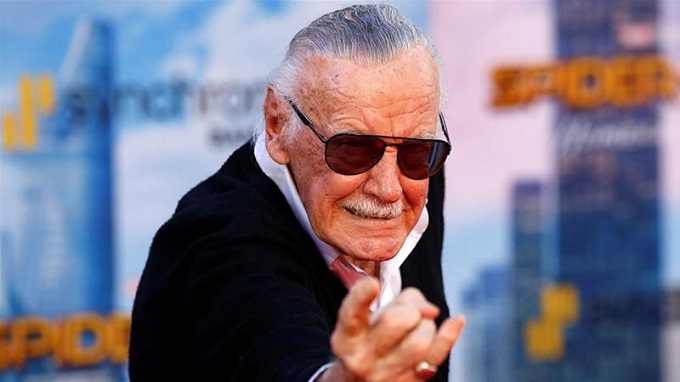
Stan Lee, who dreamed up Spider-Man, Iron Man, the Hulk and a cavalcade of other Marvel Comics superheroes that became mythic figures in pop culture with soaring success at the movie box office, died at the age of 95, his daughter said on Monday.
As a writer and editor, Lee was key to the ascension of Marvel into comic book titan status in the 1960s when, in collaboration with artists such as Jack Kirby and Steve Ditko, he created superheroes who would enthral generations of young readers.
“He felt an obligation to his fans to keep creating,” his daughter JC Lee said. “He loved his life and he loved what he did for a living. His family loved him and his fans loved him. He was irreplaceable.”
Lee was declared dead at Cedars-Sinai Medical Centre in Los Angeles, according to Kirk Schenck, a lawyer for Lee’s daughter. The cause of death was not disclosed. Americans were familiar with superheroes before Lee, in part thanks to the 1938 launch of Superman by Detective Comics, the company that would become DC Comics, Marvel’s archrival.
Lee was widely credited with adding a new layer of complexity and humanity to superheroes. They had love and money worries and endured tragic flaws or feelings of insecurity. “I felt it would be fun to learn a little about their private lives, about their personalities and show that they are human as well as super,” Lee said in 2010.
He had help in designing the superheroes but he took full ownership of promoting them.
His creations included web-slinging teenager Spider-Man, the muscle-bound Hulk, mutant outsiders The X-Men, the close-knit Fantastic Four and the playboy-inventor Tony Stark, better known as Iron Man.
Dozens of Marvel Comics movies, with nearly all the major characters Lee created, were produced in the first decades of the 21st century, grossing over $20bn in theatres worldwide, according to box office analysts. Spider-Man is one of the most successfully licensed characters ever.
Lee, as a hired hand at Marvel, received limited payback on the windfall from his characters.
In a 1998 contract, he wrestled a clause for 10 percent of profits from movies and TV shows with Marvel characters.
In 2002, he sued to claim his share, months after “Spider-Man” conquered movie theatres. In a legal settlement three years later, he received a $10m one-time payment.— Al Jazeera



 Online Reporter